
Supplementary Files
Keywords
Dermatology
Skin
How to Cite
Copyright © | All rights reserved.
The journal holds the exclusive copyright for the publication of this article under the terms of Brazilian law 9610/98.
Partial reproduction
The use of parts of the texts, figures and questionnaire of the article is free, being mandatory the citation of the authors and journal.
Total reproduction
It is expressly prohibited and must be authorized by the journal.
Abstract
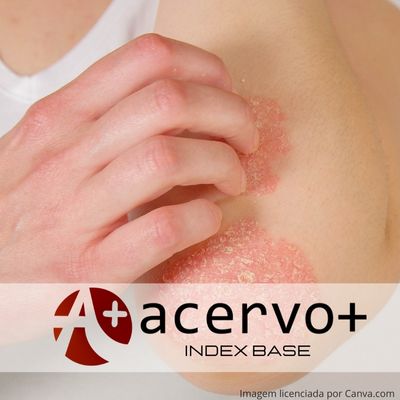
Objective: To provide, through a narrative review, a broad approach to psoriasis, a chronic and autoimmune disease that mainly affects the skin. Bibliographic review: Psoriasis was first cited before Christ and currently affects about 125 million people worldwide. It affects men and women equally, mainly between 18 and 39 years old and 50 and 59 years old. It is characterized by periods of remission and exacerbation. It can be classified as mild, moderate and severe and its clinical variants are the vulgar, glutathous, palmoplantar, inverse, erythrodermic, pustular, nail and arthropathic types. The etiology of this immune-mediated inflammation of the skin tissue involves the interaction of genetic and environmental factors. The diagnosis is essentially clinical, rarely requiring biopsy of the lesions, and should preferably be performed by a dermatologist. Psoriasis has no cure and treatment is aimed at remission of symptoms and reduction of periods of activity. Final considerations: Psoriasis needs proper diagnosis and treatment, in order to achieve maximum regression of skin lesions, providing an improvement in the quality of life of individuals affected by the disease.
References
AKMIYA K, et al. Risk Factors for the Development of Psoriasis. International Journal of Molecular Sciences, 2019; 20(18): 4347.
AMIM M, et al. Psoriasis and Co-morbidity. Acta Dermato-Venereologica, 2020; 100(3):00033.
ARMSTRONG A, READ C. Pathophysiology, Clinical Presentation, and Treatment of Psoriasis: A Review. JAMA, 2020; 323(19): 1945-1960.
BACHELEZ H. Pustular Psoriasis: The Dawn of a New Era. Acta Dermato-Venereologica, 2020; 100(3): 00034.
DAND N, et al. Psoriasis and Genetics. Acta Dermato-Venereologica, 2020; 100(3):00030.
GRIFFITHS CEM, et al. Psoriasis. Lancet, 2021; 397(10281): 1301-1315.
HOEGLER KM, et al. Generalized pustular psoriasis: a review and update on treatment. The Journal of the European Academy of Dermatology and Venereology, 2018; 32(10): 1645-1651.
KAUSHIK SB, LEBWOHL MG. Psoriasis: Which therapy for which patient: Psoriasis comorbidities and preferred systemic agents. Journal of the American Academy of Dermatology, 2019; 80(1): 27-40.
LEBWOHL M. Psoriasis. Annals of Internal Medicine, 2018; 168(7): 49-64.
PARAÍSO A, et al. O impacto da psoríase na qualidade de vida dos portadores: estigmatização e prejuízos biopsicossociais. Revista Eletrônica Acervo Científico, 2021; 38(1): 1-7.
PARRA SG, DAUDEN E. Psoriasis and Depression: The Role of Inflammation. Actas Dermo-Sifiliográficas, 2019; 110(1): 12-19.
REID C, GRIFFITHS CEM. Psoriasis and Treatment: Past, Present and Future Aspects. Acta Dermato-Venereologica, 2020; 100(3): 00032.
RENDON A, SCHAKEL K. Psoriasis Pathogenesis and Treatment. International Journal of Molecular Sciences, 2019; 20(6): 1475.
ROUSSET L, HALIOUA B. Stress and psoriasis. International Journal of Dermatology, 2018; 57(10): 1165-1172.
TOKUYAMA M, MABUCHI T. New Treatment Addressing the Pathogenesis of Psoriasis, 2020; 21(20): 7488.