
Keywords
Aloe
Medicina herbaria
Plantas medicinales
How to Cite
Copyright © | All rights reserved.
The journal holds the exclusive copyright for the publication of this article under the terms of Brazilian law 9610/98.
Partial reproduction
The use of parts of the texts, figures and questionnaire of the article is free, being mandatory the citation of the authors and journal.
Total reproduction
It is expressly prohibited and must be authorized by the journal.
Abstract
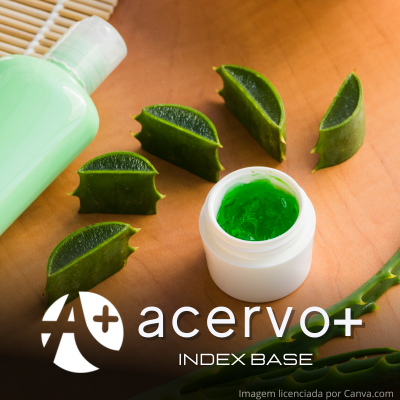
Objective: To highlight the importance of the species Aloe vera L. and its use in the field of aesthetics. Literature review: The results show that a colorless and viscous sap is obtained from its leaves, formed by water and active compounds such as polysaccharides, flavonoids, saponins, steroids, amino acids, mineral salts and vitamins. Its use in the beauty industry is advantageous due to its moisturizing and healing action, as it stimulates fibroblasts, in addition to providing more oxygen to the tissues, resulting in increased vascularization and the amount of collagen production in the healing process. Final considerations: The ease of cultivation and popularity of Aloe vera makes it a species used in the cosmetic and pharmaceutical industry and that arouses interest in the development of cosmetics with different purposes, as it presents active principles found in the colorless sap present inside its leaves, being used as a moisturizer and aid in the healing process.
References
ALONSO M, et al. On the isolation of immunostimulatory active acemannan from Aloe barbadensis. Biotecnología Aplicada, 2012; 29(2): 87-101.
AKHOONDINASAB MR, et al. Comparison of Healing Effect of Aloe Vera Extract and Silver Sulfadiazine in Burn Injuries in Experimental Rat Model. World Journal Plastic Surgery, 2014; 3(1): 29–34.
ALLEMANN IB e BAUMANN L. Botanicals in skin care products. International Journal of Dermatology, 2009; 48(9): 923-34.
ALVES GMC, et al. Purificação e Caracterização da β-Lapachona e Estudo de Estabilidade dos Cristais em Diferentes Condições de Armazenamento. Química Nova, 2008; 31(2): 413-416.
ARAÚJO MS e LIMA MMO. O uso de plantas medicinais para fins terapêuticas: os conhecimentos etnobotânicos de alunos de escolas pública e privada em Floriano, Piauí, Brasil. Revista de Educação em Ciências e Matemática, 2019; 15(33): 235- 250.
BACH DB e LOPES MA. Study of economic viability of the Aloe vera L. culture. Ciência e Agrotecnologia, 2007; 31(4): 1136-1144.
BASHIPOUR F e GHOREISHI SM. Experimental optimization of supercritical extraction of β-carotene from Aloe barbadensis Miller via genetic algorithm. The Journal Supercritical Fluids, 2012; 72: 312-9.
BASTOS EM, et al. Conhecimento botânico local em uma área de assentamento rural no Piauí, Nordeste do Brasil. Gaia Scientia, 2018; 12(2): 12-33.
BHUVANA KB, et al. Review on aloe vera. International Journal of Advanced Research, 2014; 2(3): 677-691.
BRASIL. Ministério da Saúde. Secretaria de Atenção à Saúde. Departamento de Atenção Básica. Política Nacional de Práticas Integrativas e Complementares no SUS: atitude de ampliação de acesso. 2. ed. Brasília: Ministério da Saúde, 2015.
BRUNING MCR, et al. A utilização da fitoterapia e de plantas medicinais em unidades básicas de saúde nos municípios de Cascavel e Foz do Iguaçu – Paraná: a visão dos profissionais de saúde. Ciência & Saúde Coletiva, 2012; 17(10): 2675-2685.
CHANG XL, et al. Effects of heat treatments on the stabilities of polysaccharides substances and barbaloin in gel juice from Aloe vera Miller. Journal of Food Engineering, 2006; 75(2): 245–251.
COSTA RC e NUNEZ CV. Mercado de bioprodutos fitoterápicos e fitocosméticos: gestão, tecnologias e inovação. Revista Fitos, 2016; 10(3): 220-372.
DAS S, et al. Isolation and characterization of novel protein with anti-fungal and anti-inflammatory properties from Aloe vera leaf gel. International Journal of Biological Macromolecule, 2011; 48(1): 38-43.
DAT A, et al. Aloe vera for treating acute and chronic wounds. Cochrane Database of Systematic Reviews. São Paulo Medical Journal, 2014; 132(6): 382.
DOMÍNGUEZ-FERNÁNDEZ RN, et al. El gel de Aloe vera: estructura, composición química, procesamiento, actividad biológica e importancia en la indústria farmacéutica y alimentaria. Revista Mexicana de Ingeniería Química, 2012; 11(1): 23-43.
DUARTE AFS, et al. O uso de plantas medicinais durante a gravidez e amamentação. Visão Acadêmica, 2018; 18(4): 126-139.
DUTILH JHA e CAMPOS-ROCHA A. Liliaceae in Flora e Funga do Brasil. Jardim Botânico do Rio de Janeiro, 2023.
DZIALO M, et al. The potential of plant phenolics in prevention and therapy of skin disorders. International Journal of Molecular Sciences, 2016; 17(2): 1-41.
EL-SHEMY HA, et al. Antitumor properties and modulation of antioxidant enzymes' activity by Aloe vera leaf active principles isolated via supercritical carbon dioxide extraction. Current Medicinal Chemistry, 2010; 17(2): 129-38.
ESHUN K e HE Q. Aloe vera: A valuable ingredient for the food, pharmaceutical and cosmetic industries: a review. Critical Reviews in Food Science and Nutrition, 2004; 44: 91-96.
FERRO AFP, et al. Oportunidades tecnológicas e estratégias concorrenciais de gestão ambiental: o uso sustentável da biodiversidade brasileira. Gestão & Produção, 2006; 13(3): 489-501.
FERREIRA FV e BARBOSA DE PAULA, L. Silver sulfadiazine versus herbal medicines: a comparative study of the effects in the treatment of burn injuries. Revista Brasileira de Queimaduras, 2013; 12(3): 132-139.
FERREIRA ET, et al. A utilização de plantas medicinais e fitoterápicos: uma revisão integrativa sobre a atuação do enfermeiro. Brazilian Journal of Health Review, 2019; 2(3): 1511-1523.
FIGUEIREDO B. Desenvolvimento e estabilidade preliminar de um fitocosmético contendo extrato de chá verde (Camelliasinensis) (L.) Kuntze (Theaceae). Revista Brasileira de Farmácia, 2014; 95(2): 770-788.
FREITAS VS, et al. Propriedades farmacológicas da Aloe vera (L.) Burm. f. Revista Brasileira de Plantas Medicinais, 2014; 16(2): 299-307.
FONTENELE RP, et al. Fitoterapia na Atenção Básica: olhares dos gestores e profissionais da Estratégia Saúde da Família de Teresina (PI), Brasil. Ciência & Saúde Coletiva, 2013; 18(8): 2385-2394.
GOMES TMF, et al. Plantas de uso terapêutico na comunidade rural Bezerro Morto, São João da Canabrava, Piauí, Brasil. Gaia Scientia, 2017; 11(1): 253-268.
GORSI FI, et al. Evaluation of antibacterial and antioxidant activity of Aloe vera (Aloe barbadensis Miller) gel powder using different solvents. Pure and Applied Biology, 2019; 8(2): 1265-1270.
GRACE OM. Perspectivas atuais sobre a botânica econômica do gênero Aloe L. (Xanthorrhoeaceae). South African Journal of Botany, 2011; 77: 980-987.
HAMMAN JH. Composition and applications of Aloe vera leaf gel. Molecules, 2008; 13: 1599-1616.
HAJHEYDARI Z, et al. Effect of Aloe vera topical gel combined with tretinoin in treatment of mild and moderate acne vulgaris: a randomized, double-blind, prospective trial. Journal Dermatological Treatment, 2013; 25(2): 123-129.
JACOBSON TKB, et al. Influência de fatores edáficos na produção de fenóis totais e taninos de duas espécies de barbatimão. Pesquisa Agropecuária Tropical, 2005; 35(3): 163-169.
JOSEPH B e RAJ SJ. Pharmacognostic and Phytochemical properties of Aloe vera linn-an overview. International Journal of Pharmaceutical Sciences Review and Research, 2010; 4(2): 106-110.
LANGMEAD L, et al. Anti-inflammatory effects of Aloe vera gel in human colorectal mucosa in vitro. Aliment Pharmacol Ther. 2004; 19(5): 521-527.
KLOPPER RR, et al. Aloes in Angola (Asphodelaceae: alooideae). Bothalia, 2009; 39:19−23.
KOLACZ NM. The effect of Burns & Wounds (B&W)/burdock leaf therapy on burn-injured amish patients. Journal of Holistic Nursing, 2014; 32(4): 327- 340.
LORENZI H e MATOS FJA. Plantas medicinais no Brasil: nativas e exóticas. 2. ed. São Paulo: Instituto Plantarum, 2008; 244 p.
MENDONÇA VM, et al. Fitoterapia tradicional e práticas integrativas e complementares no Sistema de Saúde do Brasil. Temas em Saúde, 2018; 18(1): 2447-2131.
MORIYAMA M. Beneficial effects of the genus Aloe on wound healing, cell proliferation, and differentiation of epidermal keratinocytes. PLoS One, 2016; 11(10): e0164799.
MOSCHETTA MR, et al. Proteção solar e preparação para o verão. Informação magistral revista de informação científica médica. 8 ed., 2008.
NASCIMENTO LC. Aloe vera. Arte Médica Ampliada. 2006; 26(1-2): 38-42.
PALHARIN, LHC, et al. Efeitos fitoterápicos e homeopáticos da babosa. Revista científica eletrônica de agronomia, 2008; 14: 1-6.
PANAHI Y, et al. Comparative trial of Aloe vera/olive oil combination cream versus phenytoin cream in the treatment of chronic wounds. Journal of Wound Care, 2015; 24(10): 459-60.
PAREEK A, et al. Mushrooming of herbal’s in new emerging market of cosmaceuticals. International Journal of Advanced in Pharmaceutical & Bio Science, 2012; 2(4): 473-480.
PARENTE LML, et al. Aloe vera: características botânicas, fotoquímicas e terapêuticas. Arte Médica Ampliada, 2013; 33(4): 160-164.
PEREIRA DC e FRASSON APZ. Uso da Aloe vera em produtos farmacêuticos e análise da estabilidade físico-química de creme aniônico contendo extrato glicólico desta planta. Revista Contexto & Saúde, 2007; 6(12): 27-34.
PIRIZ MA, et al. Plantas medicinais no processo de cicatrização de feridas: uma revisão de literatura. Revista Brasileira de Plantas Medicinais, 2014; 16(3): 628-636.
QUEIROGA VP. Aloe vera (babosa): tecnologias de plantio em escala comercial para o semiárido e utilização. 1 ed. Campina Grande: AREPB, 2019; 153p.
RAMOS AP e PIMENTEL LC. Ação da babosa no reparo tecidual e cicatrização. Brazilian Journal of Health, 2011; 2(1): 40-48.
RADHA MH e LAXMIPRIYA NP. Evaluation of biological properties and clinical effectiveness of Aloe vera: a systematic review. Journal of Traditional and Complementary Medicine, 2015; 5: 21-26.
RODRIGUES AM, et al. Avaliação de Aloe arborescens como coagulante para remoção de cor e turbidez em tratamento convencional de água. Ingeniería del agua, 2020; 24(2): 81-88.
SAAD GA, et al. Fitoterapia contemporânea: tradição e ciência na prática clínica. 2 ed. Rio de Janeiro: Guanabara Koogan, 2018; 578p.
SÁNCHEZ-MACHADO DI, et al. Aloe vera: Ancient knowledge with new frontiers. Trends in Food Science & Technology, 2017; 61: 94-102.
SANTOS ABN, et al. Plantas medicinais conhecidas na zona urbana de Cajueiro da Praia, Piauí, Nordeste do Brasil. Revista Brasileira de Plantas Medicinais, 2016; 18(2): 442-450.
SALUSTIANO EJS, et al. Comparison of the cytotoxic effect of lapachol, α-lapachone and pentacyclic 1,4-naphthoquinones on human leukemic cells. Investigation of New Drugs, 2010; 28: 139-144.
TRUITI MCT e SANFELICE AM. Produtos em filme: inovação na tecnologia de cosméticos. Acta Scientiarum Health Sciences, 2010; 32(1): 61-66.
VIEGAS JÚNIOR C, et al. Os produtos naturais e a química moderna. Química Nova, 2006; 29(2): 326-337.
WEISHEIMER N, et al. Fitoterapia como alternativa terapêutica no combate à obesidade. Revista de Ciências da Saúde Nova Esperança, 2015; 13(1): 103-111.
WAGNER H e WISENAUER M. Fitoterapia: fitofármacos, farmacologia e aplicações clínicas. 2 ed. São Paulo: Pharmabooks, 2006; 424p.
YUNES R, et al. Fármacos e fitoterápicos: a necessidade do desenvolvimento da indústria de fitoterápicos e fitofármacos no Brasil. Química Nova, 2001; 24(1): 147-152.