
Keywords
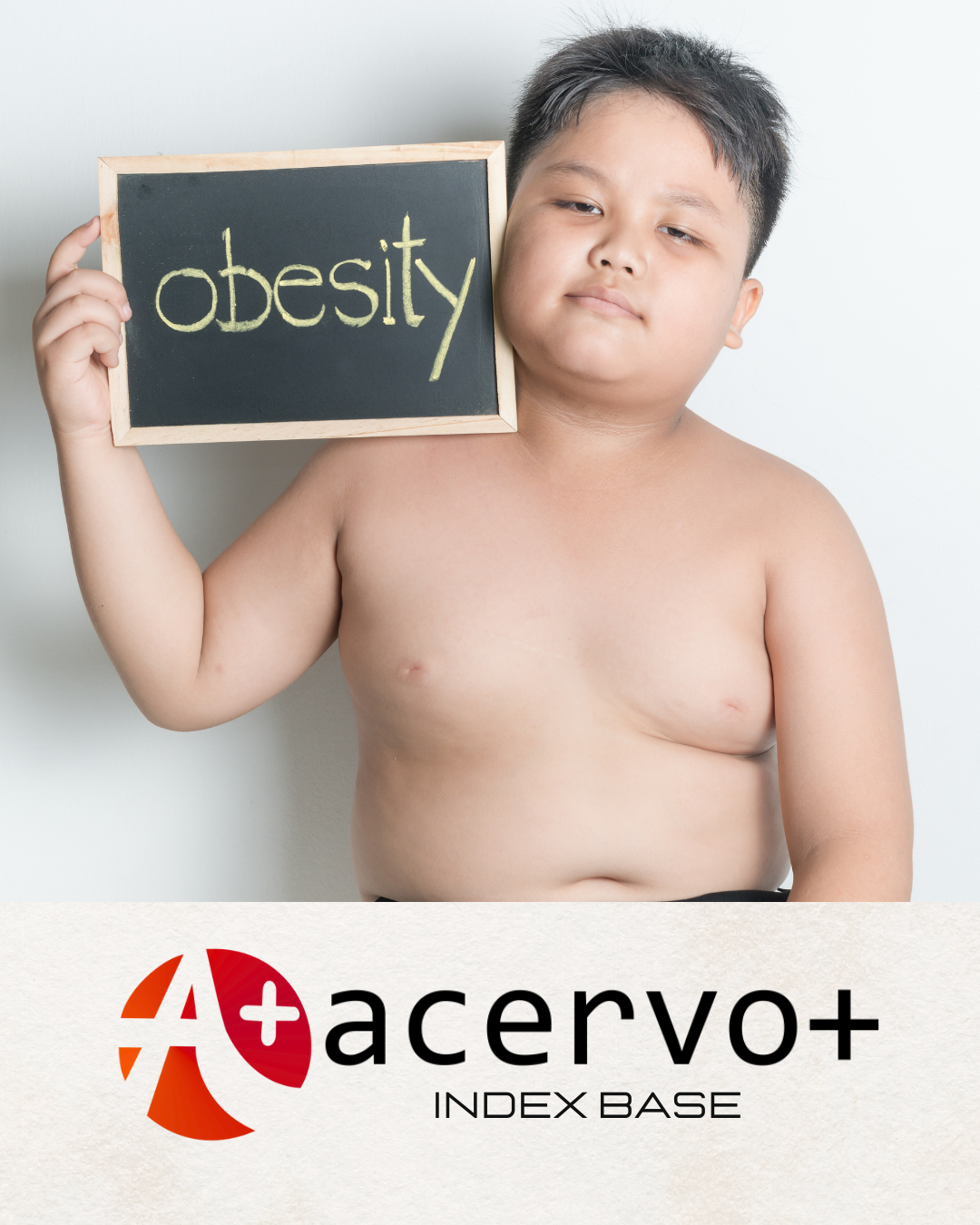
Childhood obesity
Nutritional surveillance
How to Cite
Copyright © | All rights reserved.
The journal holds the exclusive copyright for the publication of this article under the terms of Brazilian law 9610/98.
Partial reproduction
The use of parts of the texts, figures and questionnaire of the article is free, being mandatory the citation of the authors and journal.
Total reproduction
It is expressly prohibited and must be authorized by the journal.
Abstract
Objective: To analyze excess weight among children in the municipality of Patos, Paraíba, based on nutritional status recorded in the Food and Nutrition Surveillance System, using the weight-for-age indicator and comparing the years 2024 and 2025. Methods: An ecological and descriptive study based on aggregated secondary data of public access, extracted from SISVAN reports for the municipality of Patos, Paraíba, Brazil. Records of children followed up in Primary Health Care in the years 2024 and 2025 were analyzed. Nutritional status was classified according to the categories of the weight-for-age indicator, with emphasis on the proportion of high weight-for-age as an approximation of childhood excess weight. Results: In both years, a predominance of the adequate weight or eutrophic classification was observed, corresponding to 89.89% in 2024 and 89.8% in 2025. The proportion of children with high weight-for-age remained stable, with a slight increase from 7.60% in 2024 to 7.65% in 2025. The categories of low weight and very low weight showed reduced percentages. Conclusion: The results indicate stability in the child nutritional profile in the municipality, with persistence of excess weight at early ages, reinforcing the importance of food and nutrition surveillance for continuous monitoring.
References
ABARCA-GÓMEZ F, et al. Worldwide trends in body-mass index, underweight, overweight, and obesity from 1975 to 2016: a pooled analysis of 2416 population-based measurement studies in 128·9 million children, adolescents, and adults. The Lancet, 2017; 390: 2627–2642.
BARATTO PS, et al. Associações entre padrões alimentares infantis, ganho de peso excessivo e risco de obesidade: estudo de coorte aninhado em um ensaio clínico randomizado. Rev Paul Pediatr, 2025; 43:e2024117.
BENTHAM J, et al. Worldwide trends in children’s and adolescents’ body-mass index, 1990–2022. The Lancet, 2023; v. 401, n. 10384, p. 123–134.
BRASIL. Acompanhadas pelo SUS, mais de 340 mil crianças entre 5 e 10 anos possuem obesidade. Ministério da Saúde, 2022. Disponível em: https://www.gov.br/saude/pt-br/assuntos/noticias/2021/junho/obesidade-infantil-afeta-3-1-milhoes-de-criancas-menores-de-10-anos-no-brasil. Acessado em: 1 dez. 2025.
BRASIL. Orientações para a coleta e análise de dados antropométricos em serviços de saúde. Ministério da Saúde, 2022. Disponível em: https://bvsms.saude.gov.br/bvs/publicacoes/orientacoes_coleta_analise_dados_antropometricos.pdf Acessado em: 30 nov. 2025.
BRASIL. Sistema de Vigilância Alimentar e Nutricional – SISVAN. Ministério da Saúde, 2023. Disponível em: https://sisaps.saude.gov.br/sisvan/. Acessado em: 1 dez. 2025.
BRASIL. Ministério da Saúde. Secretaria de Atenção Primária à Saúde. Departamento de Promoção da Saúde. Sistema de Vigilância Alimentar e Nutricional (SISVAN): relatório consolidado do estado nutricional da população acompanhada na Atenção Primária à Saúde. Brasília: Ministério da Saúde; 2022.
BRASIL. Ministério da Saúde. Vigilância alimentar e nutricional no SUS: fundamentos, diretrizes e operacionalização. Brasília: Ministério da Saúde, 2023.
BRASIL. Conselho Nacional de Saúde. Resolução nº 466, de 12 de dezembro de 2012. Dispõe sobre diretrizes e normas regulamentadoras de pesquisas envolvendo seres humanos. Diário Oficial da União, Brasília, 2013. Disponível em: https://conselho.saude.gov.br/resolucoes/2012/Reso466.pdf. Acessado em: 25 out. 2025.
BRASIL. Conselho Nacional de Saúde. Resolução nº 510, de 7 de abril de 2016. Dispõe sobre as normas aplicáveis a pesquisas em Ciências Humanas e Sociais. Diário Oficial da União, Brasília, 2016. Disponível em: https://conselho.saude.gov.br/resolucoes/2016/Reso510.pdf. Acessado em: 25 out. 2025.
DE ONIS M, et al. Development of a WHO growth reference for school-aged children and adolescents. Bulletin of the World Health Organization, 2007; 85(9): 660–667.
GUEDES DP, MELLO ERB. Prevalence of overweight and obesity among Brazilian children and adolescents: systematic review and meta-analysis. ABCS Health Sciences. 2021; 46, e021301.
JAIME PC, et al. Trends in overweight and obesity among Brazilian children using primary health care data. Public Health Nutrition, 2022; v. 25, n. 10, p. 2800–2809.
MOREIRA NF, et al. Estado nutricional de crianças brasileiras a partir de dados do SISVAN. Cadernos de Saúde Coletiva, 2020; 28(1): 12–22.
NCD RISK FACTOR COLLABORATION. Worldwide trends in underweight and obesity from 1990 to 2022: a pooled analysis of population-based studies. The Lancet, 2024; 403: 1234–1246.
OLIVEIRA IAV, et al. Índice de massa triponderal como ferramenta de triagem do excesso de peso em crianças e adolescentes. Revista Contemporânea, 2022; 2(1): 45–60.
SILVA RM, et al. Vigilância nutricional na Atenção Primária à Saúde: desafios e potencialidades para o monitoramento do excesso de peso infantil. Saúde em Debate, Rio de Janeiro, 2021; v. 45, n. 130, p. 456–468.
SOARES MDCR, et al. Viabilidade do índice de massa triponderal no rastreio precoce de crianças escolares com obesidade central. Revista Contemporânea, 2022; 2(3):706-19.
SOUSA MNA, SANTOS EVL (Orgs.). Medicina e pesquisa: um elo possível. Curitiba: Editora Prismas, 2018.
UNICEF. Childhood obesity: protecting children from unhealthy food marketing. New York: United Nations Children’s Fund, 2023.
WORLD HEALTH ORGANIZATION. WHO European regional obesity report 2022. Copenhagen: WHO Regional Office for Europe, 2022.
WORLD HEALTH ORGANIZATION. WHO child growth standards. Geneva: WHO, 2006. Disponível em: https://www.who.int/tools/child-growth-standards. Acessado em: 16 nov. 2025.
WORLD HEALTH ORGANIZATION. Obesity and overweight. Geneva: WHO, 2023. Disponível em: https://www.who.int/news-room/fact-sheets/detail/obesity-and-overweight. Acessado em: 29 nov. 2025.