
Keywords
Epidemiology
Hydroelectric power plant
Amazon region
Health impact assessment
How to Cite
Copyright © | All rights reserved.
The journal holds the exclusive copyright for the publication of this article under the terms of Brazilian law 9610/98.
Partial reproduction
The use of parts of the texts, figures and questionnaire of the article is free, being mandatory the citation of the authors and journal.
Total reproduction
It is expressly prohibited and must be authorized by the journal.
Abstract
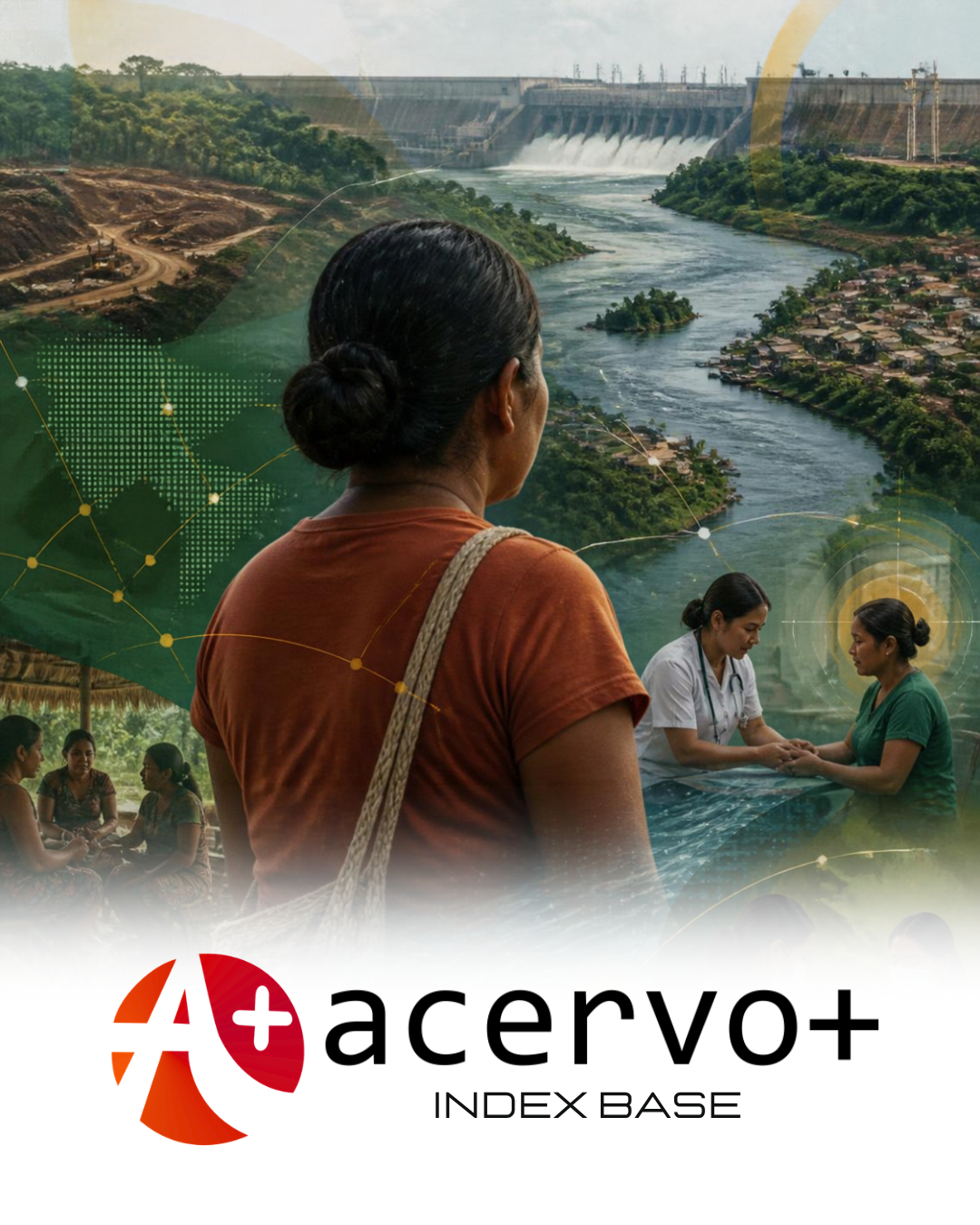
Objective: To describe the impacts of the construction of the Belo Monte Hydroelectric Power Plant and the incidence of Human Immunodeficiency Virus (HIV) infection among women in the Xingu region from 2000 to 2021. Methods: This is a cross-sectional, retrospective, analytical, and descriptive study that analyzed HIV cases reported among women living in the Direct Influence Area (DIA) of the Belo Monte Hydroelectric Power Plant between 2000 and 2021, using data obtained from the Notifiable Diseases Information System (SINAN). Results: An increase in the number of HIV cases among women was observed after the beginning of the hydroelectric plant construction, suggesting a possible association with the migration process. A total of 109 cases were reported during the study period from 2000 to 2021. Most affected women were between 20 and 34 years old, identified as mixed-race, had incomplete elementary education, and were heterosexual. In addition, 49 women were pregnant at the time of diagnosis. Conclusion: It was found that, in addition to the migratory process associated with the Belo Monte Hydroelectric Power Plant influencing the epidemiology of HIV occurrence, the lack of health actions focused on women regarding the virus increases vulnerability and neglect toward this population.
References
BRASIL. Ministério da Saúde. Protocolo Clínico e Diretrizes Terapêuticas para Prevenção da Transmissão Vertical do HIV, Sífilis e Hepatites Virais [recurso eletrônico]. Secretaria de Ciência, Tecnologia, Inovação e Insumos Estratégicos em Saúde. 2022.
BRASIL. Ministério da Saúde. Manual Técnico para o Diagnóstico da Infecção pelo HIV em Adultos e Crianças. Secretaria de Vigilância em Saúde, Departamento de Vigilância, Prevenção e Controle das Infecções Sexualmente Transmissíveis, do HIV/Aids e das Hepatites Virais. Brasília, 2018a.
BRASIL. Ministério da Saúde. Indicadores e Dados Básicos do HIV/AIDS nos Municípios Brasileiros. 2023.
BRASIL. Ministério da Saúde. Recomendações para Profilaxia da Transmissão Vertical do HIV e Terapia Antirretroviral em Gestantes. Secretaria de Vigilância em Saúde, Programa Nacional de DST e Aids. 2010.
BRASIL. Ministério da Saúde. Protocolo Clínico e Diretrizes Terapêuticas para Manejo da Infecção pelo HIV em Adultos. Departamento de Vigilância, Prevenção e Controle das Infecções Sexualmente Transmissíveis, do HIV/Aids e das Hepatites Virais. 2018b.
BRASIL. Ministério da Saúde. “AIDS: etiologia, clínica, diagnóstico e tratamento" Unidade de Assistência. 2011.
BRASIL. Ministério da Saúde. Políticas e diretrizes de prevenção das DST/aids entre mulheres. Coordenação Nacional de DST e Aids. 2003.
CAMPANY LN DA S, et al. HIV/aids no Brasil: feminização da epidemia em análise. Revista Bioética, 2021; v. 29, n. 2, p. 374–383.
CENSO de 2022. Instituto Brasileiro de Geografia e Estatística (IBGE). Rio de Janeiro.
CHAVES FN, CÉSAR MR de A. O Silenciamento Histórico das Mulheres da Amazônia Brasileira. Revista Extraprensa, 2019; v. 12, n. 2, p. 138-156.
COSTA RP, et al. Perfil, prevalência e fatores associados à infecção por HIV/AIDS em uma capital do norte brasileiro. Revista Eletrônica Acervo Saúde, 2024; 24(12), e18238.
ELETROBRÁS. Aproveitamento Hidrelétrico Belo Monte: Estudo de Impacto Ambiental. Leme Engenharia Ltda, Brasília, 2009.
FREIRE L, et al. Belo Monte: fatos e impactos envolvidos na implantação da usina hidrelétrica na região Amazônica Paraense. Sociedade & Natureza, 2019; v. 30, n. 3, p. 18–41.
GRISOTTI MA. Construção de Relações de Causalidade em Saúde no Contexto da Hidrelétrica de Belo Monte. Revista Ambiente & Sociedade, 2016; v.2, n.19, p.291-310.
HERRERA JA, MOREIRA RP. Resistência e conflitos sociais na Amazônia paraense: a luta contra o empreendimento Hidrelétrico de Belo Monte. Revista Campo-Território, 2013; v. 8, n. 16 Ago., p. 130–151.
KNAUTH DR et al. O diagnóstico do HIV/aids em homens heterossexuais: a surpresa permanece mesmo após mais de 30 anos de epidemia. Cadernos de Saúde Pública, 2020; v. 36, p. e00170118.
LIMA MCL, et al. Estigma e preconceito no atendimento às pessoas vivendo com HIV. Revista Eletrônica Acervo Saúde, 2025; 25(5), e19789.
LOUREIRO EV et al. Influência da usina hidrelétrica de belo monte nos casos de sífilis gestacional na região Xingu. International Journal of Development Research, 2022; v. 12, (02), 54123-54127.
MORAN EF. ROADS AND DAMS: INFRASTRUCTURE-DRIVEN TRANSFORMATIONS IN THE BRAZILIAN AMAZON. Ambiente & Sociedade, 2016; v. 19, n. 2, p. 207–220.
MORESCHI C, et al. Mulheres e vulnerabilidades ao HIV/AIDS. Saúde (Santa Maria), 2012; v. 38, n. 2, p. 85-94.
NUNES MO, et al. HIV/AIDS em mulheres em idade reprodutiva no Brasil (no período de 2016-2021): uma análise epidemiológica. Revista Brasileira de Revisão de Saúde, 2023; v. 2, pág. 7306–7315.
SANCHES DR M, et al. O IMPACTO DO DIAGNÓSTICO DO HIV NO PRÉ-NATAL E SUAS COMPLICAÇÕES NO PARTO E PUERPÉRIO: REVISÃO INTEGRATIVA. Brazilian Journal of Implantology and Health Sciences, 2024; v. 6, n. 11, p. 600–614.
SILVEIRA, M. A implantação de hidrelétricas na Amazônia brasileira, impactos socioambientais e à saúde com as transformações no território: o caso da UHE de Belo Monte. Tese (Doutorado em Geografia) – Pós-Graduação em Geografia, Universidade de Brasília-UnB, Brasília, 2016; 212p.
UNAIDS. 2022 GLOBAL HIV STATISTICS UNAIDS. [s.l: s.n.]. Disponível em: <https://www.unaids.org/sites/default/files/media_asset/UNAIDS_FactSheet_en.pdf>. Acessado em: 25 de janeiro de 2025.
VIEIRA AS, NASCIMENTO IP. Exploração sexual juvenil nas águas amazônicas e suas interfaces com a escola. Revista Amazônida: Revista do Programa de Pós-Graduação em Educação da Universidade Federal do Amazonas, 2018; v. 3, n. 2, p. 117–138.