
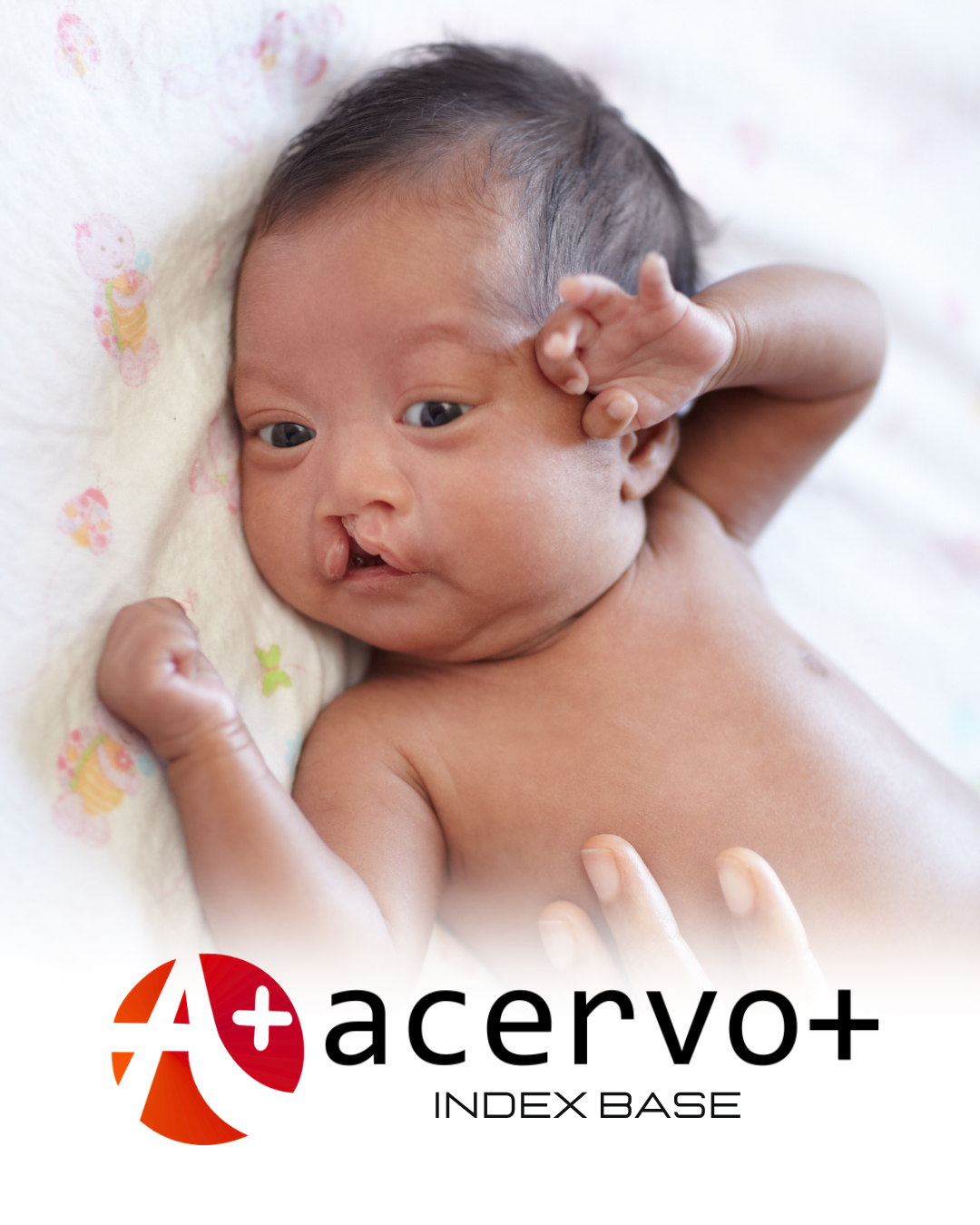
Keywords
Cleft palate
Cleft lip
Infant
Newborn
How to Cite
Copyright © | All rights reserved.
The journal holds the exclusive copyright for the publication of this article under the terms of Brazilian law 9610/98.
Partial reproduction
The use of parts of the texts, figures and questionnaire of the article is free, being mandatory the citation of the authors and journal.
Total reproduction
It is expressly prohibited and must be authorized by the journal.
Abstract
Objective: To evaluate the nursing staff's knowledge of care for neonates with cleft lip and/or palate. Methods: Quantitative, descriptive, and exploratory research. Nurses and nursing technicians working in neonatal and pediatric care units of a public teaching hospital in Paraná state were included in the study. Data collection was carried out using a structured questionnaire between July and October 2024. The study was approved by the Research Ethics Committee. Results: There was a predominance of young adult professionals (mean age 40.1 years), female (98.4%), and with a technical level (61.3%). Most reported having experience in the care of patients with clefts (91.9%) but were unaware of the classification of the different types of clefts (n=56; 90.3%). More than half of the respondents assessed that they had basic knowledge regarding the care provided to these patients (53.2%) and expressed interest in deepening their knowledge of the subject (96.8%). Among the seven variables investigated, six showed a higher frequency of incorrect answers. Conclusion: The results highlighted the need to expand training programs to address the identified knowledge gaps and promote quality of care, as well as to develop specific care protocols for the care of newborns with cleft lip and/or palate.
References
ARRUDA IAD, et al. Impactos da gestão de enfermagem na qualidade da assistência ao paciente. Revista Saúde em Foco, 2024; 16: 15-28.
ASKARIAN S, et al. The genetic factors contributing to the risk of cleft lip and palate and their clinical utility. Oral Maxillofac Surg, 2023; 27: 177-186.
BATISTA KC, et al. Fatores associados à adesão ao aleitamento materno em lactentes com fissura orofacial: revisão de escopo. Cogitare Enfermagem, 2024; 29: e92894.
CAMARGO AL, et al. Fissuras labiopalatinas: desenvolvimento infantil e abordagem cirúrgica. Brazilian Journal of Implantology and Health Sciences, 2025; 7(1): 2905-2914.
DO CARMO KM, et al. Perfil da enfermagem brasileira sob a perspectiva de classe, gênero e raça/cor da pele. Cuadernos de Educación y Desarrollo, 2024; 16(3): e3549.
FERREIRA AJP, et al. A atuação do enfermeiro na orientação de técnicas aerodinâmicas de pega na amamentação de RN com fenda palatina e lábio leporino. Revista Ibero-Americana de Humanidades, Ciências e Educação, 2025; 1(1): 343-358.
GAMA SGN, et al. Mortalidade materna: protocolo de um estudo integrado à pesquisa Nascer no Brasil II. Cadernos de Saúde Pública, 2024; 40(4): e00107723.
HAMMOND NL, DIXON MJ. Revisiting the embryogenesis of lip and palate development. Oral Diseases, 2022; 28(5): 1306-1326.
HATTORI Y, et al. Comparison of modified Furlow palatoplasty using small double-opposing Z-plasty and conventional Furlow palatoplasty: Long-term outcome. Journal of Plastic, Reconstructive & Aesthetic Surgery, 2024; 93: 261-268.
ICHIKAWA CRF, et al. Tendo uma criança com fissura labiopalatina: transformações na família. Saúde Coletiva (Barueri), 2025; 16(99): 16976-16991.
JUGESSUR A, et al. The genetics of isolated orofacial clefts: from genotypes to subphenotypes. Oral Diseases, 2009; 15(7): 437-453.
KASSIM MJN, et al. Consulta de enfermagem a pacientes com fissuras labiopalatais. Revista Eletrônica Acervo Saúde, 2021; 13(4): e6992.
LAI GP, et al. Precisão diagnóstica da ultrassonografia fetal pré-natal para detectar fenda palatina em fetos de alto risco. Journal of Ultrasound in Medicine, 2021; 41: 605-614.
MORI MM, et al. Multidisciplinary care for children with cleft lip and palate and their families: Family-Centered Care. Revista Gaúcha de Enfermagem, 2024; 45: e20230276.
MOTA JS. Utilização do Google Forms na pesquisa acadêmica. Revista Humanidades e Inovação, 2019.
OLIVEIRA APC, et al. State of Nursing in Brazil. Revista Latino-Americana de Enfermagem, 2020; 28: e3404.
OMS. Classificação Internacional de Doenças (CID-11). Genebra: OMS, 2022.
PARADOWSKA-STOLARZ A, MIKULEWICZ M, DUŚ-ILNICKA I. Cleft Lip and Palate. Journal of Personalized Medicine, 2022; 12(12): 2089.
SANTOS DTP, et al. Assistência multiprofissional ao recém-nascido com fissura lábio palatina. Revista Eletrônica Acervo Saúde, 2024; 24(11): e17496.
SHIBUKAWA BMC, et al. Factors associated with the presence of cleft lip and/or cleft palate in Brazilian newborns. Revista Brasileira de Saúde Materno Infantil, 2019; 19(4): 947-956.
SILVA DM, CUNHA FV. Atuação do enfermeiro frente ao RN com fissura labiopalatina. CCFEU, 2022; 2: e20224738.
SOUZA LCM, et al. Fissuras labiopalatinas: do diagnóstico ao tratamento**: revisão de literatura.** Revista Saúde e Desenvolvimento Humano, 2022; 10(2): 77-85.
SPINA V, et al. Classificação das fissuras lábio-palatinas: sugestão de modificação. Rev Hosp Fac Med São Paulo, 1972; 27(1): 5-6.
SUASSUNA CA, et al. Desafios na amamentação de recém-nascidos com fissura labiopalatina: implicações para práticas de saúde. Brazilian Journal of Health Review, 2024; 7(5): e73736.
UNIOESTE. Sobre nós: o HUOP. Cascavel: UNIOESTE, 2024. Disponível em: https://www.unioeste.br/. Acessado em: 24 jan. 2025.
VILLE APM, et al. Os desafios e estratégias para amamentação no recém-nascido com fissura labiopalatina. Residência Pediátrica, 2022; 12(1): 453.
VITORINO AM, et al. Itinerário terapêutico de crianças com fissura labiopalatina. Escola Anna Nery, 2024; 28: e20230090.