
Palabras clave
Prevención de enfermidades
Obesidad
Cómo citar
Copyright © | Todos los derechos reservados.
La revista posee los derechos de autor exclusivos para la publicación de este artículo en los términos de la ley brasileña 9610/98.
Reproducción parcial
El uso de partes de los textos, figuras y cuestionario del artículo es libre, siendo obligatoria la citación de los autores y revista.
Reproducción total
Está expresamente prohibido y debe ser autorizado por la revista.
Resumen
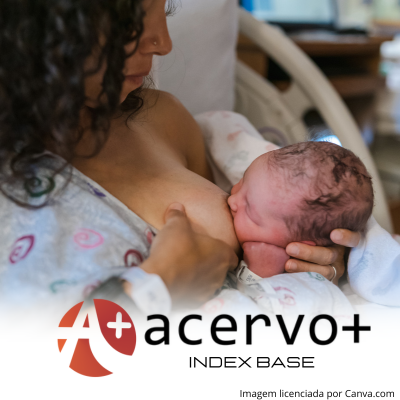
Objetivo: Investigar la relación entre la lactancia materna y la prevención de la obesidad infantil, evaluando su papel protector. Métodos: Se trata de una revisión integrativa, cuya investigación se realizó en las bases de datos PubMed y BVS con los descriptores “Breast Feeding”, “Disease Prevention” y “Obesity”, incluyendo estudios de libre acceso en inglés, publicados entre 2018 y 2023. Se incluyeron 21 artículos para el análisis. Resultados: La evidencia indica que la lactancia materna exclusiva hasta los 6 meses está asociada con una reducción del riesgo de obesidad infantil a los 4 años. La composición de la leche materna, incluidos los hormonas que regulan el apetito, fue identificada como un factor importante. Además, la lactancia prolongada y la introducción adecuada de alimentos complementarios fueron factores cruciales en la prevención del sobrepeso. Consideraciones finales: La lactancia materna actúa como un factor protector contra la obesidad infantil, pero la promoción de ambientes que fomenten una alimentación saludable y actividad física es esencial para complementar esta protección.
Referencias
AMARO A, et al. Programming of future generations during breastfeeding: the intricate relation between metabolic and neurodevelopment disorders. Life Sciences, 2022; 298: 120526.
BRASIL. Ministério da Saúde. Guia alimentar para crianças brasileiras menores de 2 anos. 2019. Disponível em: https ://www.gov.br/saude/pt-br/assuntos/saude-brasil/eu-quero-me-alimentar-melhor/D ocumentos/pdf/guia-alimentar-para-criancas-brasileiras-menores-de-2-anos.pdf/view. Acessado em: 22 de fevereiro de 2025.
BRASIL. Ministério da Saúde. Saúde da criança: Nutrição infantil – Aleitamento materno e alimentação complementar. 2009. Disponível em: https ://bvsms.saude.gov.br/bvs/publicacoes/saude_crianca_nutr icao_aleitamento_alimentacao.pdf. Acessado em: 22 de fevereiro de 2025.
BRIOLLAIS L, et al. DNA methylation mediates the association between breastfeeding and early-life growth trajectories. Clinical Epigenetics, 2021; 13(1): 231-248.
DEWEY KG, et al. Breastfeeding and risk of overweight in childhood and beyond: a systematic review with emphasis on sibling-pair and intervention studies. The American Journal of Clinical Nutrition, 2021; 114(5): 1774-1790.
HABOUSH-DELOYE A, et al. Obesity in early childhood: examining the relationship among demographic, behavioral, nutritional, and socioeconomic factors. Child Obes, 2021; 17(5): 349-356.
HARDER T, et al. Duration of breastfeeding and risk of overweight: a meta-analysis. American Journal of Epidemiology, 2005; 162(5): 397-403.
HILDEBRAND JS, et al. Breastfeeding associations with childhood obesity and body composition: findings from a racially diverse maternal–child cohort. Childhood Obesity, 2022; 18(3): 178-187.
HUPP MK, et al. Associations between mothers’ use of food to soothe, feeding mode, and infant weight during early infancy. Appetite, 2022; 168: 105736-105760.
KIM JH, et al. Breastmilk feeding during the first 4 to 6 months of age and childhood disease burden until 10 years of age. Nutrients, 2021; 13(8): 2825-2840.
KOLETZKO B, et al. Nutrition during pregnancy, lactation and early childhood and its implications for maternal and long-term child health: The Early Nutrition Project Recommendations. Annals of Nutrition & Metabolism, 2019; 74(2): 93-106.
MACÊDO R da C, et al. Associação entre aleitamento materno e excesso de peso em pré-escolares. Acta Paulista de Enfermagem, 2020; 33: 1-8.
MANNAN H. Early infant feeding of formula or solid foods and risk of childhood overweight or obesity in a socioeconomically disadvantaged region of Australia: a longitudinal cohort analysis. Int J Environ Res Public Health, 2018; 15(8): 1685-1696.
MANTZOROU M, et al. Exclusive breastfeeding for at least four months is associated with a lower prevalence of overweight and obesity in mothers and their children after 2-5 years from delivery. Nutrients, 2022; 14(17): 3599-3610.
MELLO ED, et al. Childhood obesity - towards effectiveness. Jornal de Pediatria, 2004; 80(3): 173-182.
NUNES LM. Efeito de intervenção educativa pró-aleitamento materno e alimentação complementar saudável junto a mães adolescentes e avós maternas sobre a qualidade da alimentação no primeiro ano de vida. Tese (Doutorado em Saúde da Criança e do Adolescente) – Universidade Federal do Rio Grande do Sul, Porto Alegre, 2016; 294.
ONG YY, et al. Timing of introduction of complementary foods, breastfeeding, and child cardiometabolic risk: a prospective multiethnic Asian cohort study. Am J Clin Nutr, 2023; 278: 83-92.
PAPOUTSOU S, et al. Timing of solid food introduction and association with later childhood overweight and obesity: The IDEFICS study. Maternal & Child Nutrition, 2018; 14(1): 12471.
PORTAL DE BOAS PRÁTICAS. Principais questões sobre sobrepeso e obesidade na infância. Disponível em: http ://portaldeboaspraticas.iff.fiocruz.br. Acessado em: 22 de fevereiro de 2025.
SANTIAGO ACT, et al. Breastfeeding in children born small for gestational age and future nutritional and metabolic outcomes: a systematic review. Jornal de Pediatria, 2019; 95(3): 264-274.
SINGHAL A. The impact of human milk feeding on long-term risk of obesity and cardiovascular disease. Breastfeeding Medicine, 2019; 14(1): 9-10.
SINKIEWICZ-DAROL E, et al. Leptin in human milk - one of the key regulators of nutritional programming. Molecules, 2022; 27(11): 3581-3793.
SBP. SOCIEDADE BRASILEIRA DE PEDIATRIA. Aleitamento materno pode auxiliar na prevenção da obesidade infantil. 2021. Disponível em: https ://www.sbp.com.br/. Acessado em: 22 de fevereiro de 2025.
SPANIOL AM, et al. Breastfeeding reduces ultra-processed foods and sweetened beverages consumption among children under two years old. BMC Public Health, 2020; 20(1): 330-339.
TSENOLI M, et al. Complementary feeding practices and the associated risk of childhood obesity among ethnic minority groups living in high-income countries: protocol for a systematic review and meta-analysis. BMJ Open, 2022; 12(3): 1-6.
USHEVA N, et al. Breastfeeding and overweight in European preschoolers: the ToyBox study. Nutrients, 2021; 13(8): 2880-2892.
WANG CA, et al. The interactions between genetics and early childhood nutrition influence adult cardiometabolic risk factors. Scientific Reports, 2021; 11(1): 1-13.
WASILEWSKA E, et al. Are obesity and asthma in school-age children still strongly related to breastfeeding in infancy? - A real-life study. Eur Rev Med Pharmacol Sci, 2022; 26: 1658-1667.
WU Y, et al. Exclusive breastfeeding can attenuate body-mass-index increase among genetically susceptible children: a longitudinal study from the ALSPAC cohort. PLoS Genet, 2020; 16(6): 1-14.