
Keywords
Tooth Abrasion
Abfraction
Cleft Lip and Palate
Operative Dentistry
How to Cite
Copyright © | All rights reserved.
The journal holds the exclusive copyright for the publication of this article under the terms of Brazilian law 9610/98.
Partial reproduction
The use of parts of the texts, figures and questionnaire of the article is free, being mandatory the citation of the authors and journal.
Total reproduction
It is expressly prohibited and must be authorized by the journal.
Abstract
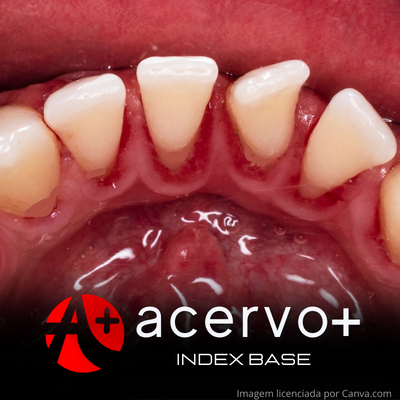
Objective: Review on the etiology, diagnosis, clinical features, prevention and treatment options, in Operative Dentistry, of non-carious cervical lesions (NCCL), in addition to establishing the possible relationship between the etiological factors and the occurrence of these lesions in patients with cleft lip and palate. Bibliographic review: NCCL are part of post-development dental abnormalities and are characterized by the loss of tooth structure in the cervical region, predisposing the patient to functional and aesthetic problems and symptoms of dentin hypersensitivity. These lesions are classified as erosion, abrasion and abfraction and have been shown to be frequent in patients with clefts, who are more susceptible to oral and dental alterations and malocclusion. Considering that the severity and prevalence of NCCL tend to increase with age, early diagnosis and determination of the etiology are important for prevention and the correct indication of the treatment to be performed. Final considerations: NCCL have a complex and multifactorial diagnosis. The diagnosis, prevention and treatment of these lesions in patients with cleft lip and palate must be carried out in the same way as indicated for patients without cleft lip and palate. A multidisciplinary team may be necessary for the diagnosis and elimination of causal factors, prior to restorative treatment.
References
ARAÚJO IGS, et al. A inter-relação periodontia e dentística observando os tecidos periodontais em restaurações em resina composta-Relato de caso clínico. Brazilian Journal of Health Review, 2023; 6(1): 125-135.
BARBOSA LP, et al. Lesões cervicais não cariosas: Etiologia e opções de tratamento restaurador. Revista Dentística Online, 2009; 8(18): 5-10.
BRANDINI DA, et al. Clinical evaluation of the association between noncarious cervical lesions and occlusal forces. The Journal of Prosthetic Dentistry, 2012; 108(5): 298-303.
CARVALHO PASM. Lesões cervicais não cariosas: etiologia, planos de tratamento e relação com profissões de stresse. Dissertação (Mestrado Integrado em Medicina Dentária) - Faculdade de Medicina Dentária da Universidade do Porto (FMDUP), Porto, Portugal, 2010; p. 1-26.
CATELAN A, et al. Erosão dental e suas implicações sobre a saúde bucal. Revista da Faculdade de Odontologia da Universidade de Passo Fundo (RFO UPF), 2010; 15(1): 83-86.
CREPALDI JL, et al. Análise da oclusão dentária em crianças portadoras de fissura labiopalatina bilateral. Rev. Assoc. Paul. Cir. Dent., 2012; 66(4): 303-309.
DYER D, et al. Studies in vitro of abrasion by diferent manual toothbrush heads and a standart toohpaste. Journal of Clinical Periodontology, 2000; 27(2): 99-103.
FELIPE GV e FERNANDES KGC. Erosão dentária e refluxo gastroesofásico. Brazilian Journal of Health Review. Brazilian Journal of Health Review, 2022; 5(3): 10712-10726.
FRANCISCONI LF, et al. Glass ionomer cements and their role in the restoration of non- carious cervical lesions. Journal of Applied Oral Science, 2009; 17(5): 364-369.
GONÇALVES PL e DEUSDARÁ ST. Lesões cervicais não cariosas na prática odontológica. Rev. Ciênc. Méd., 2011; 20(5-6): 145-152.
GRIPPO JO, et al. Attrition, abrasion, corrosion and abfraction revisited: a new perspective on tooth surface lesions. J Am Dent Assoc., 2004; 135(8): 1109-1118.
GUIMARÃES JC. Análise pelo método de elementos finitos 3D de diferentes lesões cervicais não cariosas sob a acção de cargas oclusais funcionais e não funcionais. Tese (Doutorado em Dentística) - Universidade Federal de Santa Catarina – UFSC, Florianópolis/SC, 2009; 165 p.
HARA AT, et al. Estudo das lesões cervicais não-cariosas: aspectos biotribológicos. RPG – Revista de Pós-Graduação da FOUSP, 2005; 12(1): 141-148.
HOEPPNER MG, et al. Considerações clínicas das lesões cervicais não cariosas. UEPG Ci. Biol. Saúde, 2007; 13(3/4): 81-86.
JARDIM CER, et al. Lesões cervicais não cariosas e sua relação com hábitos parafuncionais. Brazilian Journal of Health Review, 2021; 4(6): 27442-27459.
KAZOULLIS S, et al. Common dental conditions associated with dental erosion in schoolchildren in Australia. Pediatr Dent., 2007; 29(1): p.33-39.
LIMA LM, et al. Contribuição ao estudo da prevalência, do diagnóstico diferencial e de fatores etiológicos das lesões cervicais não cariosas. Revista Sul-Brasileira de Odontologia (RSBO), 2005; 2(2): 17-21.
MACHADO MAAM, et al. Erosão dentária versus hábitos dietéticos da Sociedade Moderna. Rev. Assoc. Paul. Cir. Dent, 2005; 59(6): 417-420.
MARQUES LL, et al. Alterações dentárias em pacientes portadores de fissuras labiopalatinas: revisão sistemática da literatura. Research, Society and Development, 2022; 11(15): e491111537697.
MATOS DAD, et al. Pattern of disocclusion in patients with complete cleft lip and palate. Journal of Applied Oral Science, 2006; 14(3): 157-161.
OLIVEIRA ACS, et al. Análise clínica de pacientes portadores de lesões cervicais não cariosas e sua relação com hábitos. Rev Sul-Bras Odontol., 2010; 7(2): 182-192.
PARADOWSKA-STOLARZ A e KAWALA B. Occlusal Disorders among Patients with Total Clefts of Lip, Alveolar Bone, and Palate. Biomed. Res. Int., 2014; e.583416.
PEDRINI D, et al. Conduta clínica em lesões cervicais não-cariosas. Rev. ABO Nac., 2008; 15(6).
PEGORARO LF, et al. Noncarious cervical lesions in adults. Prevalence and occlusal aspects. J Am Dent Assoc., 2005; 136(12): 1694-1700.
SALDIAS-VARGAS VP, et al. Enamel defects in permanent first molars and incisors in individuals with cleft lip and/or palate. Rev. fac. med., 2014; 62(4): 515-519.
SANTAMARIA MP, et al. Periodontal surgery and glass ionomer restoration in the treatment of gingival recession associated with a non-carious cervical lesion: report of three cases. J Periodontol., 2007; 78(6): 1146-1153.
SANTOS MA e CONFORTE JJ. As lesões cervicais não cariosas (LCNC) como causa do envelhecimento bucal precoce. Revista Ibero-Americana de Humanidades, Ciências e Educação, 2022; 8(5): 2164–2180.
SENNA PA, et al. Non-carious cervical lesions and occlusion: a systematic review of clinical studies. Journal of Oral Rehabilitation, 2012; 39(6): 450-462.
SOUSA AMT, et al. Fatores de risco oclusais e sua influência na etiologia das lesões cervicais não-cariosas. Revista Dentística on line, 2012; 11(23): 19-25.
SOUZA LCM, et al. Fissuras labiopalatinas: do diagnóstico ao tratamento. Revisão de literatura. Research, Society and Development, 2022; 11(17): e249111739067