
Palavras-chave
Profissionais de Enfermagem
COVID-19
Auriculoterapia
Como Citar
Copyright © | Todos os direitos reservados.
A revista detém os direitos autorais exclusivos de publicação deste artigo nos termos da lei 9610/98.
Reprodução parcial
É livre o uso de partes do texto, figuras e questionário do artigo, sendo obrigatória a citação dos autores e revista.
Reprodução total
É expressamente proibida, devendo ser autorizada pela revista.
Resumo
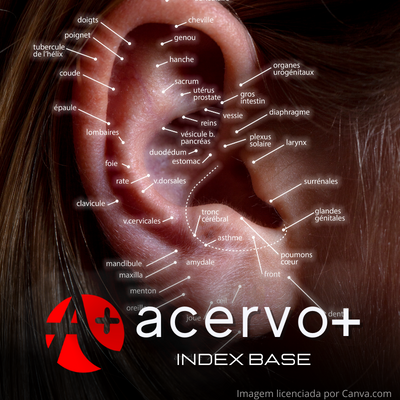
Objetivo: Analisar as percepções dos profissionais de enfermagem acerca da auriculoterapia enquanto terapêutica para o cuidado de alterações emocionais durante a pandemia da COVID-19 em âmbito hospitalar. Métodos: Abordagem qualitativa, com análise de 10 profissionais de enfermagem que realizaram tratamento de auriculoterapia. A coleta de dados ocorreu por meio de entrevista semiestruturada e foram analisados a partir da análise de conteúdo de Bardin. Resultados: Estabeleceram-se seis categorias: Auriculoterapia como terapêutica para redução dos sintomas de estresse, ansiedade e depressão; Auriculoterapia como terapêutica para promoção do bem estar físico e emocional; Auriculoterapia como terapêutica para promoção de relações interpessoais em profissionais de enfermagem; Auriculoterapia como terapêutica de promoção do autocuidado; Satisfação dos profissionais de enfermagem com a auriculoterapia; Percepções dos profissionais acerca da auriculoterapia realizada no local de trabalho. Conclusão: A auriculoterapia foi percebida como benéfica para melhorar as alterações emocionais dos profissionais de enfermagem durante o contexto pandêmico.
Referências
ARAÚJO JS de, et al. Auriculotherapy for the stress of the nursing team in the medium hospital complexity. J Nurs UFPE on line, 2018; 12(2): 371-8.
ASSIS BB, et al. Factors associated with stress, anxiety and depression in nursing professionals in the hospital context. Rev Bras Enferm., 2022; 75(Suppl 3): e20210263.
BANSAL P, et al. Clinician Wellness During the COVID-19 Pandemic: Extraordinary Times and Unusual Challenges for the Allergist/Immunologist. J Allergy Clin Immunol Pract., 2020; 8(6): 1781-1790.e3.
BARDIN L. Análise de conteúdo. 11ª ed. Lisboa: edições 70; 2011; 280p.
BUCHANAN TM, et al. Reducing anxiety and improving engagement in health care providers through an auricular acupuncture intervention. Dimens Crit Care Nurs., 2018; 37(2): 87-96.
CORRÊA HP, et al. Effects of auriculotherapy on stress, anxiety and depression in adults and older adults: a systematic review. Rev Esc Enferm USP, 2020; 54: e03626.
HOU PW, et al. The History, Mechanism, and Clinical Application of Auricular Therapy in Traditional Chinese Medicine. Evid Based Complement Alternat Med., 2015; 2015: 495684.
JURUENA MF. Early-life stress and HPA axis trigger recurrent adulthood depression. Epilepsy Behav. 2014; 38: 148-59.
KUREBAYASHI LFs, da SILVA MJ. Chinese auriculotherapy to improve quality of life of nursing team. Rev Bras Enferm., 2015; 68(1) :109-15, 117-23.
KUREBAYASHI LFS, et al. Auriculotherapy to reduce anxiety and pain in nursing professionals: a randomized clinical trial. Rev. Latino-Am. Enfermagem, 2017; 25: e2843.
LANDGREN K, et al. Ear Acupuncture in Psychiatric Care From the Health Care Professionals' Perspective: A Phenomenographic Analysis. Issues Ment Health Nurs., 2019; 40(2): 166-175.
LIU Z, et al. Mental Health Status of Healthcare Workers in China for COVID-19 Epidemic. Ann Glob Health, 2020; 86(1): 128.
MELO GAA, et al. Benefits of auriculoacupuncture in nursing professionals working at COVID-19 in light of the Comfort Theory. Esc Anna Nery, 2020; 24(spe): e20200311.
MINAYO MSC. O desafio do conhecimento: pesquisa qualitativa em saúde. 14ª ed. São Paulo: Hucitec; 2014; 416p.
OLIVEIRA AMG, et al. Articulation between Integrative Practices and Health Promotion: collective actions with acupuncture in the Family Health Strategy. Rev. APS. 2022; 25(Supl 1): 8 -28.
OLIVEIRA CMC, et al. Auriculotherapy in nursing professionals during the coronavirus pandemic: a multiple case study. Rev. Eletr. Enferm., 2021; 23: (65678): 1-9.
PAPPA S, et al. Prevalence of depression, anxiety, and insomnia among healthcare workers during the COVID-19 pandemic: A systematic review and meta-analysis. Brain Behav Immun., 2020; 88: 901-7.
PRADO JM, et al. Experimental and placebo auriculotherapy for stressed nurses: randomized controlled trial. Rev Esc Enferm USP, 2018; 52: e03334.
ROMOLI M, et al. Ear acupuncture and fMRI: a pilot study for assessing the specificity of auricular points. Neurol Sci., 2014; 35 Suppl 1: 189-93.
RIBEIRO J, et al. Saturação da Análise na Investigação Qualitativa: Quando Parar de Recolher Dados?. Rev. Pesq. Qual., 2018; 6(10): 3-7.
SILVA NO, et al. Effect of Chinese auriculotherapy on the mood of health professionals: A pilot study. Rev. Enferm. UFSM, 2021; 11: 1-21.
TONG A, et al. Consolidated criteria for reporting qualitative research (COREQ): a 32-item checklist for interviews and focus groups. Int J Qual Health Care, 2007; 19(6): 349-57.
VALIANI M, et al. The effect of auriculotherapy on stress, anxiety, and depression in ms patients: a double blind randomized clinical control trial (parallel design). Acta Medica Mediterranea, 2018; 34: 561-7.
XIANG YT, et al. Timely mental health care for the 2019 novel coronavirus outbreak is urgently needed. Lancet Psychiatry, 2020; 7(3): 228-229.