
Keywords
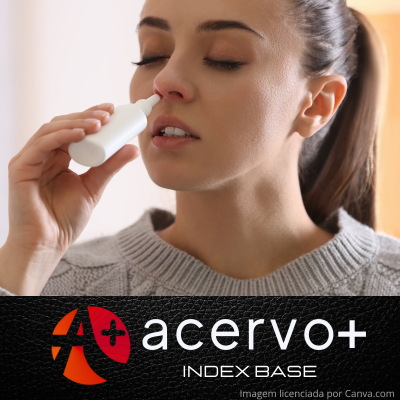
Nasal decongestants
Students
Vasoconstrictors agents
How to Cite
Copyright © | All rights reserved.
The journal holds the exclusive copyright for the publication of this article under the terms of Brazilian law 9610/98.
Partial reproduction
The use of parts of the texts, figures and questionnaire of the article is free, being mandatory the citation of the authors and journal.
Total reproduction
It is expressly prohibited and must be authorized by the journal.
Abstract
Objective: To evaluate the knowledge of medical students in a city in the interior of Minas Gerais about the organic complications and the propensity to rebound effect resulting from the abusive use of these medications. Methods: This is a cross-sectional study, with data analysis and bibliographic foundation. Data collection was carried out through questionnaires, after approval by the Research Ethics Committee. Results: There is a high rate of self-medication with nasal decongestants (47.2%) and a lack of awareness of their side effects, even among health science students. The first year has the highest rate of students using nasal decongestants on medical advice, but it is also the period with the highest percentage of use among the students in the course. Additionally, allergic rhinitis is the medical condition most frequently leading to the use of nasal decongestants. Conclusion: It is concluded that, regarding medical students' knowledge of side effects, only 23.62% claim to be aware of adverse effects, with tachycardia and dependency being the most cited. As it is a medical condition without severe involvement, even health science students do not seek medical advice nor inform themselves about the active ingredients, facilitating the development of complications due to indiscriminate use.
References
ARREDONDO E, et al. Overview of the Role of Pharmacological Management of Obstructive Sleep Apnea. Medicina, 2022; 58(2): 225.
AKHOURI S, HOUSE SA. Allergic rhinitis. In: StatPearls. Treasure Island (FL): StatPearls Publishing; July 16, 2023; 1.
BEHZADIFAR M, et al. Prevalence of self-medication in university students: systematic review and meta-analysis. Eastern Mediterranean Health Journal, 2020; 26(7): 846–857.
COLOM GORDILLO A, et al. Unintentional poisoning by cough and cold medications: Drugs with little usefulness and potential toxicity. Anales de Pediatría (English Edition), 2022; 97(5): 326–332.
DEGEORGE KC, et al. Treatment of the Common Cold. American Family Physician, 2019; 100(5): 281–289.
DE SUTTER AI, et al. Oral antihistamine-decongestant-analgesic combinations for the common cold. Cochrane Database of Systematic Reviews, 2022; 1.
DIONIZIO IC, et al. A dependência de descongestionantes nasais e seus efeitos colaterais. Revista Esfera Acadêmica Saúde, 2020; 5(2).
GREEN RJ, et al. Treating acute rhinitis and exacerbations of chronic rhinitis – A role for topical decongestants? South African Family Practice, 2020; 62.
LAGUE LG, et al. Prevalência do uso de vasoconstritores nasais em acadêmicos de uma universidade privada do Rio Grande do Sul. Rev. AMRIGS, 2013; 39–43.
LIMA JHC, et al. Os perigos do uso indiscriminado dos descongestionantes nasais derivados da nafazolina principalmente na pediatria / The dangers of the indiscriminate use of naphazoline derived nasal decondgeants, especially in pediatrics. Brazilian Journal of Development, 2021; 7(10).
MELO JRR, et al. Automedicação e uso indiscriminado de medicamentos durante a pandemia da COVID-19. Cadernos de Saúde Pública, 2021; 37.
MOKHATRISH M. et al. Pharmacists’ Attitudes Towards Long-Term Use of Nasal Decongestants: A Cross-Sectional Study. Journal of multidisciplinary healthcare, 2024; 17: 1079–1090.
NORMAN K, NAPPE TM. Alpha Receptor Agonist Toxicity. Disponível em: <https://pubmed.ncbi.nlm.nih.gov/29763199/>. Acesso em: 3 abr. 2024.
OSTROUMOVA OD, et al. [Rhinitis medicamentosa]. Vestnik Otorinolaringologii, 2020; 85(3): 75–82.
RODRIGUES LB, et al. Descongestionantes nasais tópicos por automedicação e a autopercepção da qualidade de vida por universitários de cursos de saúde / Topical nasal decongestants through self-medication and self-perception of quality of life by students of health occupations. Brazilian Journal of Health Review, 2020; 3(5): 14789–14802.
RUSSO E, et al. Use, Abuse, and Misuse of Nasal Medications: Real-Life Survey on Community Pharmacist’s Perceptions. Journal of Personalized Medicine, 2023; 13(4): 579.
SCHIFANO F, et al. Focus on Over-the-Counter Drugs’ Misuse: A Systematic Review on Antihistamines, Cough Medicines, and Decongestants. Frontiers in Psychiatry, 2021; 12(657397).
VAN CAUWENBERGE P, et al. Consensus statement on the treatment of allergic rhinitis. European Academy of Allergology and Clinical Immunology. Allergy. [Internet]. 2000; 2: 116-134.
WAHID NWB, SHERMETARO C. Rhinitis Medicamentosa. StatPearls [Internet]. Treasure Island (FL): StatPearls Publishing; 2024; 1.
WILLIAMS SP, SWIFT AC. Nasal sprays: commonly used medications that are often misunderstood. British Journal of Hospital Medicine, London, England: 2005; 84(10): 1–8.