
Keywords
Medical education
Consensus
How to Cite
Copyright © | All rights reserved.
The journal holds the exclusive copyright for the publication of this article under the terms of Brazilian law 9610/98.
Partial reproduction
The use of parts of the texts, figures and questionnaire of the article is free, being mandatory the citation of the authors and journal.
Total reproduction
It is expressly prohibited and must be authorized by the journal.
Abstract
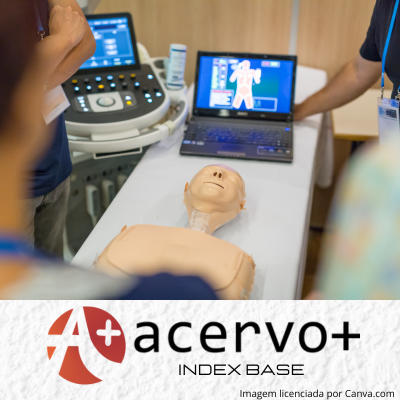
Objective: To translate and adapt into Portuguese the Global Consensus Statement on Simulation-Based Practice in Healthcare, an instrument created with the aim of promoting best practice standards in the use of simulation as a universal learning tool. Methods: The drafting of the declaration involved an interactive consultation process with 50 scientific and professional societies from 67 countries, spread over 6 continents. The translation process was carried out by experts in the field of healthcare simulation and proficiency in Portuguese, both Brazilian and Portuguese. The adaptation involved semantic, idiomatic, cultural and conceptual analysis, with the participation of one of the authors of the original article, guaranteeing the fidelity and applicability of the content to the Portuguese-speaking reality. Results: This process made it possible to identify challenges that cut across health systems, as well as barriers to the implementation of simulation at a global level. Ethical considerations in the implementation of simulated practice are presented. The main outcome is a set of practical recommendations and a call to action. Conclusion: This declaration, and this translation, is the result of an international collaborative effort aimed at establishing a consensus on the main priorities for the widespread adoption of simulation practices that benefit patients and healthcare professionals globally.
References
AJMI SC, et al. Cost-effectiveness of a quality improvement project, including simulation-based training, on reducing door-to-needle times in stroke thrombolysis. BMJ Quality & Safety, 2022; 31: 569-578.
AJMI SC, et al. Reducing door-to-needle times in stroke thrombolysis to 13 min through protocol revision and simulation training: a quality improvement project in a Norwegian stroke centre. BMJ Quality & Safety, 2019; 28: 939-948.
BARSUK JH, et al. Dissemination of a simulation-based mastery learning intervention reduces central line-associated bloodstream infections. BMJ Quality and Safety, 2014; 23(9): 749-756.
BARSUK JH, et al. Use of Simulation-Based Education to Reduce Catheter-Related Bloodstream Infections. Archives of Internal Medicine, 2009; 169(15): 1420-1423.
BRAZIL V, et al. Simulation as an improvement technique. Cambridge: Cambridge University Press, 2023. (Elements of Improving Quality and Safety in Healthcare Series).
CANADA. Values and Ethics Code for the Public Sector. Government of Canada, 2024. Available from: https ://www.tbs-sct.canada.ca/pol/doc-eng.aspx?id=25049. Access: 2025 mar 10.
DIAZ-NAVARRO C, et al. The ASPiH standards - 2023: Guiding simulation-based practice in health and care In: ASPiH Conference 2023, 2023, Birgton. Disponível em: https ://aspih.org.uk/standards-2/. Acesso em: 10 mar. 2025.
EOST-TELLING C, et al. Ageing simulation in health and social care education: A mixed methods systematic review. Journal of Advanced Nursing, 2021; 77(1): 23-46.
GORMLEY GJ e FENWICK T. Learning to manage complexity through simulation: students' challenges and possible strategies. Perspectives on Medical Education, 2016; 5(3): 138-146.
LEWIS KL, et al. The Association of Standardized Patient Educators (ASPE) Standards of Best Practice (SOBP). Advances in Simulation (London), 2017; 2: 10.
LIOCE L, et al. Healthcare Simulation Dictionary. Rockville, MD: Agency for Healthcare Research and Quality, 2020; 2.
MADRIGANO J, et al. Beyond Disaster Preparedness: Building a Resilience-Oriented Workforce for the Future. International Journal of Environmental Research and Public Health, 2017; 14(12): 1563.
MCLAUGHLIN C, et al. Multidisciplinary Simulation-Based Team Training for Trauma Resuscitation: A Scoping Review. Journal of Surgical Education, 2019; 76(6): 1669-1680.
MDUMA E, et al. Frequent brief on-site simulation training and reduction in 24-h neonatal mortality--an educational intervention study. Resuscitation, 2015; 93: 1-7.
MURPHY MK, et al. Consensus development methods, and their use in clinical guideline development. Health Technology Assessment, 1998; 2(3): 88.
MURRAY RE, et al. Design and validation of a data simulation model for longitudinal healthcare data. AMIA Annual Symposium Proceedings, 2011; 1176-1185.
NELISSEN E, et al. Clinical performance and patient outcome after simulation-based training in prevention and management of postpartum haemorrhage: an educational intervention study in a low-resource setting. BMC Pregnancy and Childbirth, 2017; 17(1): 301.
NICKSON CP, et al. Translational simulation: from description to action. Advances in Simulation (London), 2021; 6(1): 6.
PARK C, MURPHY T. Healthcare Simulationist Code of Ethics: Code of Ethics Working Group. Minnesota: SSH, 2018.
PURDY E, et al. Exploring equity, diversity, and inclusion in a simulation program using the SIM-EDI tool: the impact of a reflexive tool for simulation educators. Advances in Simulation (London), 2023; 8(1): 11.
SCHRAM A, et al. Patient safety culture improvements depend on basic healthcare education: a longitudinal simulation-based intervention study at two Danish hospitals. BMJ Open Quality, 2022; 11(1): 1658.
SCHWERDTLE N, et al. Education for sustainable healthcare: A transdisciplinary approach to transversal environmental threats. Medical Teacher, 2020; 42(10): 1102-1106.
SLATER BJ, et al. Global dissemination of knowledge through virtual platforms: Reflections and recommendations from APSA/IPEG. Journal of Pediatric Surgery, 2022; 57(9): 124-129.
SULLIVAN J, et al. The Impact of Simulation-Based Education on Nurses' Perceived Predeployment Anxiety During the COVID-19 Pandemic Within the Cultural Context of a Middle Eastern Country. Journal of Medical Education and Curricular Development, 2021; 8: 23821205211061012.
VAN TETERING AAC, et al. Simulation-Based Training in Emergency Obstetric Care in Sub-Saharan and Central Africa: A Scoping Review. Annals of Global Health, 2023; 89(1): 62.
WATTS PI, et al. Onward and Upward: Introducing the Healthcare Simulation Standards of Best PracticeTM. Clinical Simulation in Nursing, 2021; 58: 1-4.
WELDON SM, et al. Transformative forms of simulation in health care – the seven simulation-based ‘I’s: a concept taxonomy review of the literature. International Journal of Healthcare Simulation. 2023; 1-13.