
Palavras-chave
Gestação
Relação médico-paciente
Adesão ao tratamento
Transmissão vertical
Como Citar
Copyright © | Todos os direitos reservados.
A revista detém os direitos autorais exclusivos de publicação deste artigo nos termos da lei 9610/98.
Reprodução parcial
É livre o uso de partes do texto, figuras e questionário do artigo, sendo obrigatória a citação dos autores e revista.
Reprodução total
É expressamente proibida, devendo ser autorizada pela revista.
Resumo
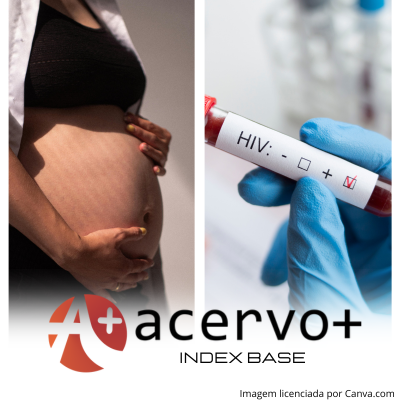
Objetivo: Analisar o papel da relação médico-paciente na adesão ao tratamento do HIV durante a gestação, com foco na prevenção da transmissão vertical. Revisão bibliográfica: A literatura destacou que, embora a cobertura do pré-natal e da terapia antirretroviral (TARV) seja elevada, a adesão ainda está aquém da meta necessária para eliminar a transmissão vertical. Entre os fatores que comprometem o cuidado, destacam-se o estigma, o medo da revelação do diagnóstico, a ausência de apoio social, barreiras estruturais e falhas na comunicação clínica. Por outro lado, práticas centradas na paciente, fundamentadas em empatia, escuta ativa, comunicação clara e respeito à autonomia, mostraram-se fundamentais para promover vínculos terapêuticos e favorecer a continuidade do tratamento. Considerações finais: A adesão ao tratamento do HIV em gestantes é fortemente condicionada pela qualidade da relação médico-paciente. O fortalecimento desse vínculo, aliado a estratégias interprofissionais e à abordagem humanizada, constitui elemento essencial para reduzir a transmissão vertical e alcançar melhores desfechos maternos e infantis.
Referências
ARAÚJO TCV, SOUZA MB. Adesão das equipes aos testes rápidos no pré-natal e administração da penicilina benzatina na atenção primária. Revista da Escola de Enfermagem da USP, 2020; 54: e03645.
ATTANASIO L, KOZHIMANNIL KB. Patient-reported communication quality and perceived discrimination in maternity care. Medical Care, 2015; 53(10): 863-871.
BRASIL. Boletim Epidemiológico - HIV e Aids. Brasília: Ministério da Saúde, 2024.
BRASIL. Protocolo Clínico e Diretrizes Terapêuticas para Prevenção da Transmissão Vertical de HIV, Sífilis e Hepatites Virais. Brasília: Ministério da Saúde, 2022.
BUREGYEYA E, et al. Facilitators and barriers to uptake and adherence to lifelong antiretroviral therapy among HIV infected pregnant women in Uganda: a qualitative study. BMC Pregnancy and Childbirth, 2017; 17(1): 94.
BYRD KK, et al. Adherence and viral suppression among participants of the Patient-centered HIV Care Model project: a collaboration between community-based pharmacists and HIV clinical providers. Clinical Infectious Diseases, 2020; 70(5): 789-797.
CROFT RL, BYRD CT, KELLY EM. The influence of active listening on parents’ perceptions of clinical empathy in a stuttering assessment: a preliminary study. Journal of Communication Disorders, 2022; 100: 106274.
CUNHA AC, et al. Diagnóstico de malformações congênitas: impactos sobre a saúde mental de gestantes. Estudos de Psicologia (Campinas), 2016; 33(4): 601-611.
DICLEMENTE-BOSCO K, et al. Empowerment in pregnancy: ART adherence among women living with HIV in Cape Town, South Africa. Social Science & Medicine, 2022; 296: 114738.
FENN N, et al. Empathy, better patient care, and how interprofessional education can help. Journal of InterprofessionalCare, 2022; 36(5): 660-669.
FRANÇA GV. Comentários ao Código de Ética Médica. 7. ed. Rio de Janeiro: Grupo GEN, 2019.
GEDEFIE A, et al. Prevalence and determinants of HIV among reproductive-age women (15–49 years) in Africa from 2010 to 2019: a multilevel analysis of demographic and health survey data. Frontiers in Public Health, 2025; 12: 1376235.
HOLZMANN APF, et al. Preventing vertical HIV virustransmission: hospital care assessment. Revista Brasileira de Enfermagem, 2020; 73(3): 1-9.
ISMAIL N, et al. Barriers to timely disclosure of HIV serostatus: a qualitative study at care and treatment centers in Dar es Salaam, Tanzania. PLoS One, 2021; 16(8): e0256537.
JOSEPH DAVEY D, et al. Opportunities to optimize outcomes of diagnosis and treatment of HIV and syphilis in pregnancy: the quest to eliminate maternal and vertical transmission. Current HIV/AIDS Reports, 2025; 22(1): e0739.
KANGUYA T, et al. Identifying barriers to ART initiation and adherence: an exploratory qualitative study on PMTCT in Zambia. PLoS One, 2022; 17(1): e0262392.
LEDDY AM, et al. Gender-based violence and engagement in biomedical HIV prevention, care and treatment: a scoping review. BMC Public Health, 2019; 19(1): 897.
LEVY M, et al. Health and social outcomes of HIV‐vulnerable and HIV‐positive pregnant and post‐partum adolescents and infants enrolled in a home visiting team programme in Kenya. Tropical Medicine & International Health, 2021; 26(6): 640-648.
LEYSER-WHALEN O, et al. Patient-provider satisfaction and communication in U.S. prenatal care: a systematic review. Maternal and Child Health Journal, 2024; 28(9): 1485-1494.
LIOI FM, et al. Tratamento como prevenção na perspectiva de pessoas vivendo com HIV/aids. Acta Paulista de Enfermagem, 2023; 36: 1-11.
LOPES BB, et al. Epidemiologia do HIV em gestantes e sua relação com o período da pandemia de COVID-19. Revista da Escola de Enfermagem da USP, 2023; 57: 1-7.
MBUAGBAW L, et al. Overview of systematic reviews on strategies to improve treatment initiation, adherence to antiretroviral therapy and retention in care for people living with HIV: part 1. BMJ Open, 2020; 10(9): e034793.
MIRANDA AE, et al. Perspectives and challenges for mother-to-child transmission of HIV, hepatitis B, and syphilis in Brazil. Frontiers in Public Health, 2023; 11: 1182386.
NACHEGA JB, et al. Adherence to antiretroviral therapy during and after pregnancy in low-, middle- and high-income countries: a systematic review and meta-analysis. AIDS, 2012; 26(16): 2039-2052.
OKORO O, ODEDINA F. HIV treatment in African American women—care that makes a difference. Journal of Racial and Ethnic Health Disparities, 2017; 4(3): 376-384.
OZIM CO, et al. Prevalence of human immunodeficiency virus (HIV) among pregnant women in Nigeria: a systematic review and meta-analysis. BMJ Open, 2023; 13(3): e050164.
PINHEIRO PNC, et al. O cuidado humano: reflexão ética acerca dos portadores do HIV/AIDS. Revista Latino-Americana de Enfermagem, 2005; 13(4): 569-575.
PONTIKI G, et al. Good communication and trust relationships with women are critical for HIV positive pregnant woman. European Journal of Midwifery, 2022; 6: 1-2.
QUINTÃO BLM, et al. Análise comparativa dos casos de HIV na América Latina. Research, Society and Development, 2022; 11(16): e188111637843.
RACHID M, SCHECHTER M. Manual de HIV/AIDS. Rio de Janeiro: Thieme Brasil, 2017.
RAFFO VT, et al. Os sintomas psicopatológicos na gestação e no puerpério de alto risco: estudo realizado em uma maternidade de um hospital geral de Curitiba-PR. Brazilian Journal of Development, 2021; 7(7): 75059-75071.
RATKA A. Empathy and the development of affective skills. American Journal of Pharmaceutical Education, 2018; 82(10): 7192.
SHORE JE, et al. The lived experience of antiretroviral therapy for pregnant women: antiretroviral therapy adherence as a balancing act. Journal of the Association of Nurses in AIDS Care, 2020; 31(4): 448-456.
SILVA CB, et al. Young women born with HIV: communication of seropositivity to partners. Saúde em Debate, 2023; 47: 129-141.
SOUZA D, et al. Relatos sobre um livro com experiências de estigma/discriminação de pessoas vivendo com HIV/AIDS no Brasil. Saúde em Debate, 2023; 47: 264-276.
TRINDADE LNM, et al. HIV infection in pregnant women and its challenges for the prenatal care. Revista Brasileira de Enfermagem, 2021; 74(Suppl 4): e20190784.
VEDAM S, et al. Patient-led decision making: measuring autonomy and respect in Canadian maternity care. Patient Education and Counseling, 2019; 102(3): 586-594.
VIEIRA ACB, et al. HIV prevalence among pregnant women in Vitória, Espírito Santo State, Brazil, 2000–2006. Revista de Saúde Pública, 2011; 45(4): 644-651.
WILKINSON D, et al. Ethics round table: choice and autonomy in obstetrics. Journal of Medical Ethics, 2024; 50(2): 117-124.
YANG L, et al. The end is in sight: current strategies for the elimination of HIV vertical transmission. Current HIV/AIDS Reports, 2023; 20(3): 121-130.