
Palavras-chave
Epigenética
Desenvolvimento fetal
Neurodesenvolvimento
Saúde mental
Como Citar
Copyright © | Todos os direitos reservados.
A revista detém os direitos autorais exclusivos de publicação deste artigo nos termos da lei 9610/98.
Reprodução parcial
É livre o uso de partes do texto, figuras e questionário do artigo, sendo obrigatória a citação dos autores e revista.
Reprodução total
É expressamente proibida, devendo ser autorizada pela revista.
Resumo
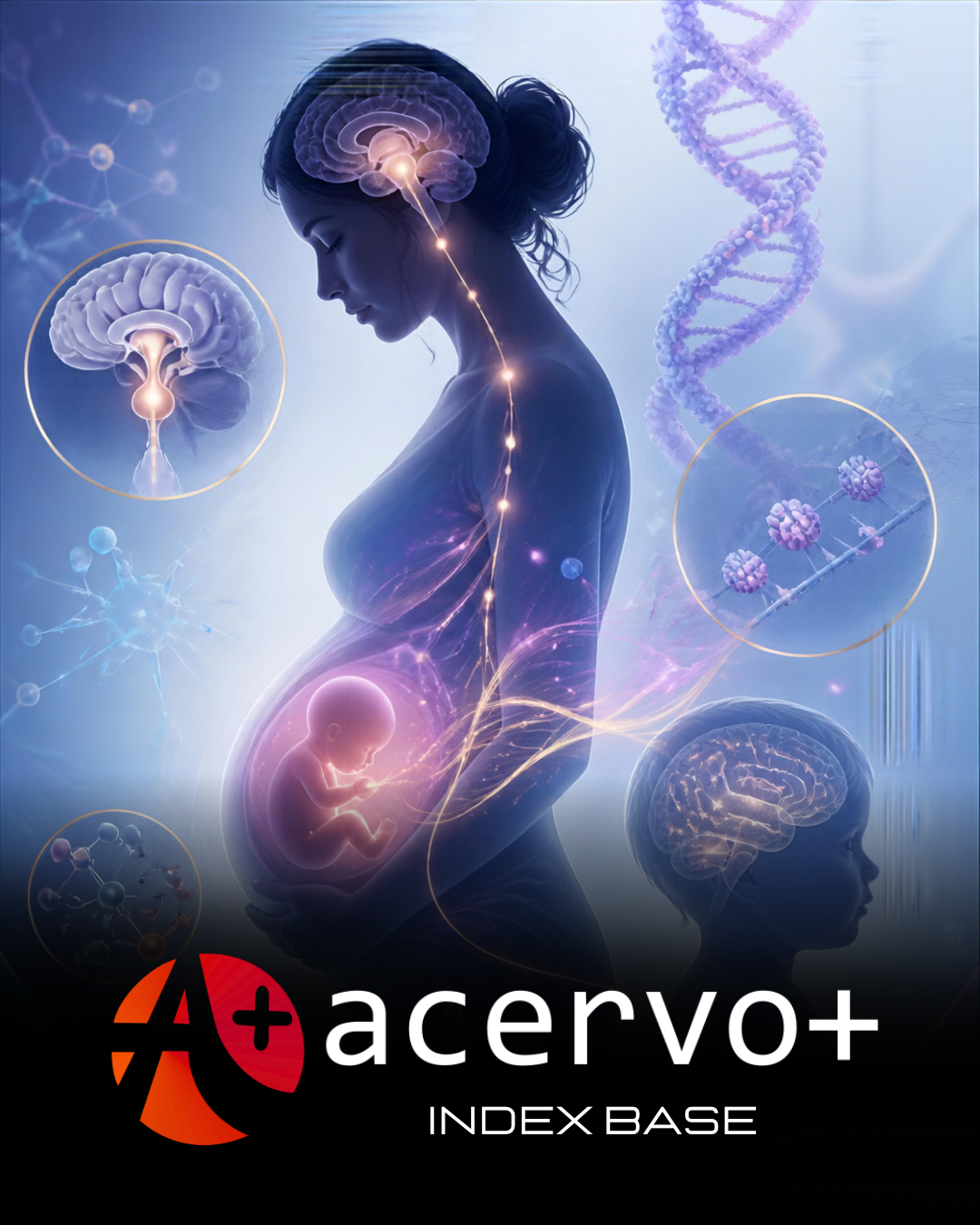
Objetivo: Compreender como o estresse materno durante a gestação influencia em modificações epigenéticas no eixo Hipotálamo-Hipófise-Adrenal (HHA) e suas repercussões no desenvolvimento psicológico da prole. Métodos: Trata-se de uma revisão integrativa da literatura, conduzida conforme as diretrizes PRISMA e a estratégia PICO. As buscas foram realizadas nas bases de dados PubMed e Portal de Periódicos CAPES, utilizando filtros de acesso aberto e artigos publicados nos últimos 10 anos. Foram incluídos ensaios clínicos e estudos observacionais que analisaram a metilação de genes fetais associada ao estresse materno gestacional e seus desfechos psicológicos no binômio mãe-bebê. Resultados: O estresse gestacional esteve associado a alterações epigenéticas em genes relacionados ao eixo HHA, especialmente NR3C1 e HSD11B2, comprometendo mecanismos placentários de proteção fetal e favorecendo maior exposição ao cortisol materno. Como consequência, observou-se predisposição da prole à hiper-reatividade hormonal, déficits de memória de trabalho, vulnerabilidade cognitiva e alterações comportamentais, variando conforme a janela gestacional de exposição e o sexo biológico fetal. Considerações finais: O estresse materno durante a gestação promove alterações epigenéticas capazes de impactar negativamente o neurodesenvolvimento fetal, evidenciando a necessidade de estratégias multiprofissionais voltadas à redução do estresse gestacional e à promoção da saúde mental materna e infantil.
Referências
ARGENTIERI MA, et al. Epigenetic pathways in human disease: the impact of DNA methylation on stress-related pathogenesis and current challenges in biomarker development. EBioMedicine, 2017; 18: 327-350.
ARGYRAKI M, et al. In-utero stress and mode of conception: impact on regulation of imprinted genes, fetal development and future health. Human Reproduction Update, 2019; 25(6): 777-801.
AZIZI N, et al. Parental pre-conception stress status and risk for anxiety in rat offspring: specific and sex-dependent maternal and paternal effects. Stress, 2019; 22(5): 619-631.
BAILEY NA, et al. DHEA: a neglected biological signal that may affect fetal and child development. Journal of Child Psychology and Psychiatry, 2024; 65(9): 1145-1155.
CALKINS K, et al. Fetal origins of adult disease. Current Problems in Pediatric and Adolescent Health Care, 2011; 41(6): 158-176.
FARAJI J, et al. Sex-dependent biobehavioural responses to transgenerational maternal stress: evidence of stress resilience and vulnerability in the F3 generation. Environmental Epigenetics, 2025; 11(1): dvaf031.
FÖCKING M, et al. Epigenetic factors in schizophrenia: mechanisms and experimental approaches. Molecular Neuropsychiatry, 2019; 5(1): 6-12.
FRANSQUET PD, et al. DNA methylation in blood cells is associated with cortisol levels in offspring of mothers who had prenatal post-traumatic stress disorder. Stress and Health, 2022; 38(4): 755-766.
IRWIN JL, et al. Maternal prenatal cortisol programs the infant hypothalamic-pituitary-adrenal axis. Psychoneuroendocrinology, 2021; 125: 105106.
JONES K, et al. Association between maternal perceived stress during pregnancy and offspring DNA methylation changes in HPA axis genes at birth in the ECHO Consortium. Environmental Epigenetics, 2025; 11(1): dvaf024.
LEVENDOSKY AA, et al. Pinpointing the timing of prenatal stress associated with infant biobehavioral reactivity. Psychoneuroendocrinology, 2025; 173: 107368.
LIU MY, et al. Prenatal stress modulates HPA axis homeostasis of offspring through dentate TERT independently of glucocorticoids receptor. Molecular Psychiatry, 2023; 28: 1383-1395.
MOISIADIS VG, et al. Glucocorticoids and fetal programming part 1: Outcomes. Nature Reviews Endocrinology, 2014; 10(7): 391-402.
OSBORNE S, et al. Antenatal depression programs cortisol stress reactivity in offspring through increased maternal inflammation and cortisol in pregnancy: The Psychiatry Research and Motherhood - Depression (PRAM-D) Study. Psychoneuroendocrinology, 2018; 98: 211-221.
REID BM, et al. Placenta DNA methylation levels of the promoter region of the leptin receptor gene are associated with infant cortisol. Psychoneuroendocrinology, 2023; 153: 106119.
RONALD A, et al. Prenatal maternal stress associated with ADHD and autistic traits in early childhood. Frontiers in Psychology, 2011; 1: 223.
TALGE NM, et al. Antenatal maternal stress and long-term effects on child neurodevelopment: how and why? Journal of Child Psychology and Psychiatry, 2007; 48(3-4): 245-261.
VAN DEN BERGH BR, et al. Antenatal maternal anxiety and stress and the neurobehavioural development of the fetus and child: links and possible mechanisms. A review. Neuroscience and Biobehavioral Reviews, 2005; 29(2): 237-258.
VANGEEL EB, et al. Newborn genome-wide DNA methylation in association with pregnancy anxiety reveals a potential role for GABBR1. Clinical Epigenetics, 2017; 9: 107.
WANG R, et al. Prenatal earthquake stress exposure in different gestational trimesters is associated with methylation changes in the glucocorticoid receptor gene (NR3C1) and long-term working memory in adulthood. Translational Psychiatry, 2022; 12(1): 176.
ZHANG W, et al. Timing of prenatal exposure to trauma and altered placental expressions of hypo
thalamic-pituitary-adrenal axis genes and genes driving neurodevelopment. Journal of Neuroendocrinology, 2018; 30(4): e12581.