
Keywords
Medicinal Plant
Stomach Disease
How to Cite
Copyright © | All rights reserved.
The journal holds the exclusive copyright for the publication of this article under the terms of Brazilian law 9610/98.
Partial reproduction
The use of parts of the texts, figures and questionnaire of the article is free, being mandatory the citation of the authors and journal.
Total reproduction
It is expressly prohibited and must be authorized by the journal.
Abstract
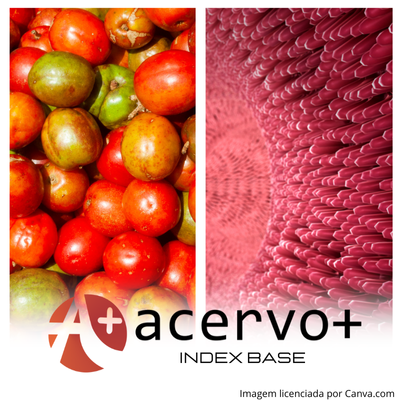
Objective: To investigate the gastroprotective activity of S. purpurea fruit juice (SFS). Methods: Aliquots of SFS were collected and analyzed using thin chromatography to study the phytochemical composition. The gastroprotective activity was achieved by the methods of acute induction of ulcers by HCl/ethanol and anti-inflammatory in mice and by absolute ethanol in rats with SFS at concentrations of 25; 50 and 100%. Stomach lesions were quantified by computerized planimetry and the results were expressed as mean ± standard error, with p< 0.05 and differences between groups determined by one-way analysis of variance and Tukey and Dunett T3 post-test with GraphPad software. Prism®. Results: The phytochemical composition of SFS showed flavonoids and cinnamic derivatives. In acute ulcer induction, it was possible to observe that SFS significantly reduced the injured area in the stomach in the models: HCl/ethanol by 95, 73 and 79%; anti-inflammatory in 41, 38 and 89%; and absolute ethanol at 44, 72 and 99%, for the respective concentrations of 25, 50 and 100%. Conclusion: S. purpurea juice presented flavonoids in its composition and relevant gastroprotective properties under the tested conditions.
References
AHMED SR, et al. Therapeutic promises of medicinal plants in Bangladesh and their bioactive compounds against ulcers and inflammatory diseases. Plants, 2021; 10(7): 1348.
ALI SS, et al. Understanding oxidants and antioxidants: Classical team with new players. Journal of Food Biochemistry, 2020; 44(3): e13145.
ALMEIDA CLF, et al. Spondias purpurea L. (Anacardiaceae): antioxidant and antiulcer activities of the leaf hexane extract. Oxidative Medicine and Cellular Longevity, 2017; 2017: 1-14.
ATEUFACK G, et al. Gastroprotective and ulcer healing effects of Piptadeniastrum africanum on experimentally induced gastric ulcers in rats. BMC Complementary and Alternative Medicine, 2015; 15: 1-10.
BRANDÃO LB, et al. Aspectos atuais no tratamento da Doença Ulcerosa Péptica. Revista de Saúde, 2019; 10(1): 3-7.
BRITO AS, et al. Antiulcer activity and potential mechanism of action of the leaves of Spondias mombin L. Oxidative Medicine and Cellular Longevity, 2018; 2018: 1-21.
BRITO LD, et al. In vivo assessment of antioxidant, antigenotoxic, and antimutagenicffects of bark ethanolic extract from Spondias purpurea L. Journal of Toxicology and Environmental Health, Part A, 2022; 85(8): 336-352.
CÂMARA JAR, et al. Avaliação in vitro do potencial antioxidante dos extratos etanólicos das cascas de Spondias dulcis Forst F. e Spondias purpurea L. Colloquium Vitae, 2019; 11(3): 1-9.
CERAVOLO IP, et al. Studies on activities and chemical characterization of medicinal plants in search for new antimalarials: A ten year review on ethnopharmacology. Frontiers in Pharmacology, 2021; 12: 734263.
DINAT S, et al. A systematic review of African natural products against gastric ulcers and Helicobacter pylori. Journal of Ethnopharmacology, 2023; 301: 115698.
DJAHANGURI B, et al. The production of acute gastric ulceration by indomethacin in therat. Scandinavian Journal of Gastroenterology, 1969; 4: 265-267.
ENGELS C, et al. Characterization of phenolic compounds in jocote (Spondias purpurea L.) peels by ultra high-performance liquid chromatography/electrospray ionization mass spectrometry. Food Research International, 2012; 46(2): 557-562.
FREITAS PHS, et al. Extratos glicólicos de “ora-pronobis” (Pereskia aculeata Miller): Avaliação do teor de compostos fenólicos e do potencial antioxidante. Brazilian Journal of Health Review, 2021; 4(1): 1748-1760.
GARAYEV E, et al. Bioassay-guided isolation and UHPLC-DAD-ESI-MS/MS quantification of potential anti-inflammatory phenolic compounds from flowers of Inulamontana L. Journal of Ethnopharmacology, 2018; 226: 176-184.
HAMAISHI K, et al. Anti-ulcer effect of tea catechin in rats. Biological and Pharmaceutical Bulletin, 2006; 29(11): 2206-13.
HSIA NY, et al. Increased risk of peptic ulcer in patients with early-onset cataracts: Anationwide population-based study. Plos One, 2018, 13(11): e0207193.
JAMES PB, et al. Traditional, complementary and alternative medicine use in Sub-Saharan Africa: a systematic review. BMJ Global Health, 2018, 3(5): e000895.
KAVITT RT, et al. Diagnosis and treatment of peptic ulcer disease. The American Journal of Medicine, 2019; 132(4): 447-456.
KOLGAZI M, et al. Caffeic acid attenuates gastric mucosal damage induced by ethanol in rats via nitric oxide modulation. Chemico-Biological Interactions, 2021; 334: 109351.
KUNA L, et al. Peptic ulcer disease: a brief review of conventional therapy and herbal treatment options. Journal of Clinical Medicine, 2019; 8(2): 179.
LIANG J, et al. Prophylactic efficacy of patchoulene epoxide against ethanolinduced gastric ulcer in rats: Influence on oxidative stress, inflammation and apoptosis. Chemico-biological Interactions, 2018; 283: 30-37.
MATULJA D, et al. Anticancer activities of marine-derived phenolic compounds and their derivatives. Molecules, 2022; 27(4): 1449.
MEHTA, D. Ulcer - Review on types, anti-ulcer drugs, anti-ulcer medicinal plants, anti-ulcer drug market, diagnostics and current global clinical trials status. Pharmacy Practice, 2016; 2016(2): 1-8.
MORIMOTO Y, et al. Effects of the new antiulcer agent KB-5492 on experimental gastric mucosal lesions and gastric mucosal defensive factors, as compared to those of teprenone and cimetidine. The Japanese Journal of Pharmacology, 1991; 57: 495-505.
MUSUMBA C, et al. Cellular and molecular mechanisms of NSAID-induced peptic ulcers. Alimentary Pharmacology & Therapeutics, 2009; 30: 517-531.
NASCIMENTO DCA, et al. Atividades farmacológicas comprovadas para o gênero Spondias: uma revisão de literatura. E-Acadêmica, 2022, 3 (2): e3832192- e3832192.
OMENA CMB, et al. Antioxidant, anti-acetylcholinesterase and cytotoxic activities of ethanol extracts of peel, pulp and seeds of exotic Brazilian fruits Antioxidant, anti-acetylcholinesterase and cytotoxic activities in fruits. Food Research International, 2012; 49 (1): p. 334-344.
OZELIN SD, et al. Preventive activity of Copaifera langsdorffii Desf. leaves extractand its major compounds, afzelin and quercitrin, on DNA damage in in vitro and in vivo models. Journal of Toxicology and Environmental Health, Part A, 2021, 84(14): 569-581.
PALLE S, et al. Gastroprotective and antiulcer effects of Celastrus paniculatus seed oil against several gastric ulcer models in rats. Journal of Dietary Supplements, 2018; 15(4): 373-385.
PEREIRA IA, et al. Traditional Plants Used in Southern Brazil as a Source to Wound Healing Therapies. Chemistry & Biodiversity, 2023; 20(2): e202201021.
PRAZERES LDKT, et al. Antioxidant and antiulcerogenic activity of the dry extract of pods of Libidibia ferrea Mart. ex Tul. (Fabaceae). Oxidative Medicine and Cellular Longevity, 2019; 2019: 1-24.
QUEIROZ JUNIOR NF, et al. Antioxidant and cytoprotective effects of avocado oil and extract (Persea americana Mill) against rotenone using monkey kidney epithelial cells (Vero). Journal of Toxicology and Environmental Health, 2021, 84(21): 875-890.
RODRIGUES FAM, et al. Spondias purpurea L. stem bark extract: Antioxidant and in vitro photoprotective activities. Journal of the Brazilian Chemical Society, 2021; 32: 1918-1930.
SERDAR CC, et al. Sample size, power and effect size revisited: simplified and practical approaches in pre-clinical, clinical and laboratory studies. Biochemia Medica, 2021; 31(1): 27-53.
SOUSA JA, et al. Use of medicinal plants and socioeconomic evaluation of urban and rural populations of Sobradinho (DF-Brazil). Revista Agrogeoambiental, 2020; 12(1).
SVERDÉN E, et al. Peptic ulcer disease. Bmj, 2019; 367.
WANG XY, et al. Gastroprotective activity of polysaccharide from Hericium erinaceus against ethanol-induced gastric mucosal lesion and pylorus ligation-induced gastric ulcer, and its antioxidant activities. Carbohydrate Polymers, 2018; 186: 100-109.