
Keywords
Humanization
Indigenous health.
How to Cite
Copyright © | All rights reserved.
The journal holds the exclusive copyright for the publication of this article under the terms of Brazilian law 9610/98.
Partial reproduction
The use of parts of the texts, figures and questionnaire of the article is free, being mandatory the citation of the authors and journal.
Total reproduction
It is expressly prohibited and must be authorized by the journal.
Abstract
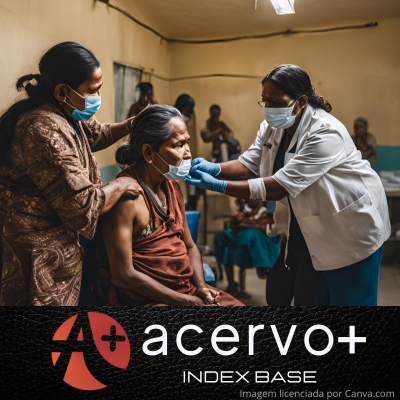
Objective: to verify how reception occurs in Indigenous Health Support Homes (CASAIs), identify the challenges and suggestions for overcoming them. Methods: This is a descriptive study of a qualitative nature with indigenous health professionals working in the Special Indigenous Health District (DSEI) in the State of Pará. Results: The majority of participants were nurses with qualifications and experience in indigenous health, with little understanding of the mother tongue of the ethnicities served, but considered regular communication with the user. The following stand out reception practices at CASAIs: reception and guidance; qualified listening; screening and assessment. The main challenges identified were: language barrier, lack of training, management difficulties, inadequate infrastructure, insufficient human resources and lack of understanding of interculturality. The suggestions made to overcome the challenges were: qualification and training, improvement of communication, adaptation of the physical structure, cultural adaptation of the reception, involvement of the indigenous community and institutionalization of systematization instruments. Final considerations: The suggestions reflect the need for a comprehensive and integrated approach, considering both technical and structural as well as cultural and human aspects to provide more appropriate and effective treatment for indigenous users.
References
ANDRADE GASCR, TERRA MF. Assistência de enfermagem à população indígena: um estudo bibliográfico. Arq Med Hosp Fac Cienc Med, 2018; 63(2):100-4.
BRASIL. Ministério da Saúde. Fundação Nacional de Saúde. Política Nacional de Atenção à Saúde dos Povos Indígenas, Brasília, 2002. 40 p. Disponível em: https://bvsms.saude.gov.br/bvs/publicacoes/politica_saude_indigena.pdf. Acessado em: 05 de janeiro de 2024.
CAMELO MS, et al. Acolhimento na atenção primária à saúde na ótica de enfermeiros. Acta Paulista de Enfermagem. 2016; 29(4): 463-8.
CARDOSO MD. Saúde e povos indígenas no Brasil: notas sobre alguns temas equívocos na política atual. Cad. Saúde Pública, 2014; 30(4): 860-866.
COSTA AB, et al. Percepção dos enfermeiros sobre o acolhimento e classificação de risco na Atenção Primária à Saúde (APS). Revista Enfermaría actual Costa Rica (Online), 2018; (35): 103-115.
COUTINHO LRP, et al. Acolhimento na Atenção Primária à Saúde: revisão integrativa. Saúde em debate, 2015; 39: 514-524.
FERNANDE MNF e SIMPSON CA. Saúde indígena: experiência de enfermagem com a etnia Munduruku. Biblioteca Lascasas, 2016; 12(2).
FERMINO JM, et al. Potencialidades e dificuldades nas práticas de acolhimento na rede de atenção básica conforme a política nacional de humanização. Saúde & Transformação Social/Health & Social Change, 2016; 6 (2): 054-069.
FERREIRA LB, et al. A Criação da Secretaria Especial de Saúde Indígena. Tempus Actas de Saúde Coletiva. 2013; 7(4): 83-95.
FLORINDO AA e HALLAL PC. Epidemiologia da atividade física. São Paulo: Editora Atheneu, 2011.
MALTA DC, et al. Doenças crônicas não transmissíveis e a utilização de serviços de saúde: análise da Pesquisa Nacional de Saúde no Brasil. Rev Saude Publica. 2017;51 Supl 1:4s
GUSMÃO ROM, et al. Acolhimento na atenção primária à saúde na percepção da equipe multiprofissional. Revista de Pesquisa Cuidado é Fundamental Online, 2021; 13:1590-1595.
MARINELLE NP, et al. Assistência à população indígena: dificuldades encontradas por enfermeiros. Revista Univap, 2012; 18:32.
MARTINS AL. Política de saúde indígena no Brasil: reflexões sobre o processo de implementação do Subsistema de Atenção à Saúde Indígena. Dissertação (Mestrado em Saúde Pública) – Universidade Federal de Brasília, Brasília, 2013.
MONTEIRO MAC, et al. Assistência de enfermagem à saúde das populações indígenas: Revisão de escopo. Cogitare Enfermagem, 2023; 28: e 88372.
MOURA EL, et al. Evidências sobre acolhimento e vínculo de enfermeiros da estratégia saúde da família junto aos adolescentes. Saúde em Foco, 2015; 2(2): 62-79.
PONTES ALM, et al. O modelo de atenção diferenciada nos Distritos Sanitários Especiais Indígenas: reflexões a partir do alto Rio Negro/AM, Brasil. Ciência & Saúde Coletiva, 2015; 20(10).
RIBEIRO AA, et al. O trabalho de enfermagem em uma instituição de apoio ao indígena. Texto Contexto Enferm, 2015; 24(1): 138-45.
ROCHA DF, et al. A luta dos povos indígenas por saúde em contextos de conflitos ambientais no Brasil (1999-2014). Ciência & Saúde Coletiva, 2019; 24(2): 383-392.
ROCHA ES, et al. Perfil de enfermeiros (as) que atuam na saúde indígena e não indígena. Cienc Cuid Saude. 2018;17(4):e45195.
VIANA JA, et al. A atuação do enfermeiro na saúde indigena: uma análise integrativa da literatura / Nurses ’performance in indigenous health: an integrative analysis of the literature. Brazilian Journal of Health Review, 2020; 3(2): 2113–2127.
WebQDA. Disponível em: https://www.webqda.net/o-webqda/. Acessado em: 23 de abril de 2024