
Keywords
Oncology
Mental Health
Caregiver Burden
How to Cite
Copyright © | All rights reserved.
The journal holds the exclusive copyright for the publication of this article under the terms of Brazilian law 9610/98.
Partial reproduction
The use of parts of the texts, figures and questionnaire of the article is free, being mandatory the citation of the authors and journal.
Total reproduction
It is expressly prohibited and must be authorized by the journal.
Abstract
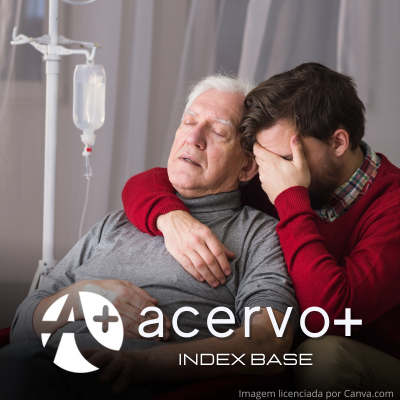
Objective: Understanding the mental health of caregivers of cancer patients. Methods: This is a qualitative study, developed under the perspective of Existential Phenomenology. The study was carried out at a University Hospital located in Belém-PA. The study population consisted of 26 caregivers of patients undergoing chemotherapy and radiotherapy oncology treatment, of both sexes, aged at least 18 years, literate and the main caregivers of the patient during their treatment. Data collection was carried out by approaching the target audience for the phenomenological interview. In this study, it was decided to carry out only the comprehensive analysis of the phenomenological method. Results: It was revealed that, in most cases, the role of caregiver was attributed by kinship, which shows an intimate relationship between the human being and their family relationships for a sense of security in a delicate moment in which they are inserted. During this study, it was highlighted in the speeches that the caregiver prioritizes the patient, sometimes denying their own feelings and needs in favor of the well-being of the patient under their care. Conclusion: Caregivers also have needs regarding their mental health, but despite the caregiver-patient-multidisciplinary team triad, all care is still focused on the patient.
References
AMORIM TV, et al. Operationality of concepts in Heideggerian phenomenological investigation: epistemological reflection on Nursing. Revista Brasileira de Enfermagem, 2019; 72(1): 304-308.
BERNARDES JF, et al. O acompanhante do paciente oncológico em fase terminal: percepção do técnico de enfermagem. Avances en Enfermería, 2019; 37(1): 27-37.
CAI Y, et al. Informal caregivers’ quality of life and management strategies following the transformation of their cancer caregiving role: A qualitative systematic review. International Journal of Nursing Sciences,2021; 8(2):227-236.
CARBOGIM FC, et al. Enfrentamento de familiares de pacientes em tratamento oncológico. Revista de Enfermagem e Atenção à Saúde, 2019; 8(1): 51-60.
CHONG E, et al. Systematic review of caregiver burden, unmet needs and quality-of-life among informal caregivers of patients with pancreatic cancer. Support Care Cancer, 2022; 31(74).
COPPETTI LC, et al. Care skill and overload of the family caregiver of patients in cancer treatment. Texto &Contexto - Enfermagem, 2020; 29: e20180451.
ESPÍNDOLA AV, et al. Relações familiares no contexto dos cuidados paliativos. Revista Bioética,2018; 26(3): 371-377.
FERREIRA MLSM, et al. Ser cuidador de familiar com câncer. Ciencia y Enfermería, 2018; 24(6): 1-11.
FONG ZV, et al. Patient and caregiver considerations and priorities when selecting hospitals for complex cancer care. Annals of Surgical Oncology, 2021;28(8):4183-4192.
GIRARDON-PERLINI NMO eÂNGELO M. The experience of rural families in the face of cancer. Revista Brasileira de Enfermagem, 2017; 70(3): 550-557.
GOMES MLP, et al. Escutando quem cuida: quando o cuidado afeta a saúde do cuidador em saúde mental. Revista Psicologia e Saúde, 2018; 10(1): 3-17.
GUERRERO-CASTAÑEDA RF, et al. Características de la entrevista fenomenológica en investigación en enfermería. Revista Gaúcha de Enfermagem, 2017; 38(2): e67458.
HEIDEGGER M. Ser e Tempo. 10ª ed. Petrópolis, RJ: Editora Vozes, 2015; 600p.
KELLEY DE, et al. Dyadic associations between perceived social support and cancer patient and caregiver health: An actor-partner interdependence modeling approach. Psychooncology, 2019; 28(7): 1453-1460.
LUO J, et al. Factors related to the burden of family caregivers of elderly patients with spinal Tumours in Northwest China. BMC Neurology, 2020; 20(1): 69.
MARTINS RS, et al. Corporeidade de adoecidos oncológicos em cuidados paliativos domiciliares: a vivência de familiares cuidadores. Revista de Pesquisa Cuidado é Fundamental Online, 2018; 10(2): 423-431.
MINAYO MCS. Pesquisa Social: teoria, método e criatividade. 1ª ed. Petrópolis, RJ: Editora Vozes, 2016; 96p.
MOLASSIOTIS A eWANG M. Understanding and Supporting Informal Cancer Caregivers. Current Treatment Options in Oncology, 2022; 23: 494–513.
NUNES DP, et al. Cuidadores de idosos e tensão excessiva associada ao cuidado: evidências do Estudo SABE. Revista Brasileira de Epidemiologia,2018; 21: e180020.
SALDANHA ZO, et al. O cuidado de enfermagem para a mulher que vivencia câncer de mama com metástase óssea. Enfermagem em Foco, 2020; 11(5): 34-39.
SAMUELSSON M, et al. Models of support to family members during the trajectory of cancer: A scoping review. Journal of Clinical Nursing, 2021; 30(21-22): 3072-3098.
SANTANA ITS, et al. Aspectos biopsicossociais do adoecimento por câncer para familiares de pacientes hospitalizados. Ciência,Cuidado e Saúde, 2017; 16(1).
SOUZA MA, et al. Pesquisa em enfermagem sustentada no referencial fenomenológico de Martin Heidegger: subsídios para o cuidado. Avances en Enfermería, 2018; 36(2): 230-237.
THANA K, et al. Burden and psychological symptoms among caregivers of patients with solid tumor cancers. European Journal of Oncology Nursing, 2021; 52: 101979.
TONETI BF, et al. O significado de uma terapia integrativa de relaxamento guiado para mulheres com câncer de mama. Revista da Escola de Enfermagem da USP, 2019; 53: e03497.
TONG A, et al. Consolidated criteria for reporting qualitative research (COREQ): a 32-item checklist for interviews and focus groups. International Journal for Quality in Health Care, 2007; 19(6): 349-357.
TREANOR CJ. Psychosocial support interventions for cancer caregivers: reducing caregiver burden. Current Opinion in Supportive and Palliative Care, 2020; 14(3): 247-262.
VARGAS GS, et al. Rede de apoio social à mulher com câncer de mama. Revista de Pesquisa Cuidado é Fundamental Online, 2021; 12: 73-78.
WARNER EL, et al. Social support enactments on social media during the first 6 months of young adult cancer caregiving. Journal of Cancer Survivorship: Research and Practice, 2022; 16(1): 61-72.