
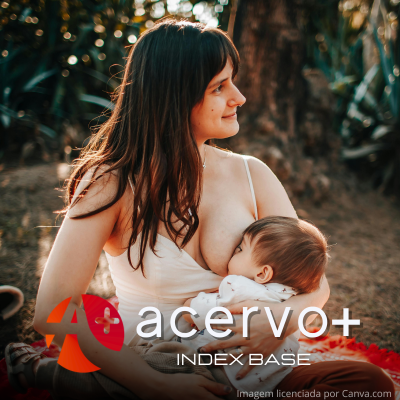
Keywords
Maternal well-being
Postpartum period
How to Cite
Copyright © | All rights reserved.
The journal holds the exclusive copyright for the publication of this article under the terms of Brazilian law 9610/98.
Partial reproduction
The use of parts of the texts, figures and questionnaire of the article is free, being mandatory the citation of the authors and journal.
Total reproduction
It is expressly prohibited and must be authorized by the journal.
Abstract
Objective: To identify the benefits of breastfeeding for maternal health, highlighting it as a crucial investment for well-being. Methods: Anintegrativereview was conducted using the MEDLINE, LILACS, and BDENF databases. The search was conducted using the descriptors "Breastfeeding," "Maternal well-being," and "Postpartum period," combined with the boolean operator AND, resulting in 10 articles. After analysis, 10 articles were selected for review. The inclusion criteria encompassed complete articles in Portuguese, Spanish, or English, published between 2014 and 2023, available for free, whose results meet the objective of this study. Duplicate articles, monographs, dissertations, theses, conference proceedings, integrative reviews, and incomplete texts were excluded. Results: Breastfeeding has comprehensive effects on maternal health, such as reducing postpartum weight retention, preventing metabolic syndrome, protecting against rheumatoid arthritis, breast cancer, diabetes mellitus, and polycystic ovary syndrome. (SOP). There are benefits for mental health, with a significant decrease in the incidence of postpartum depression. Finalconsiderations: Breastfeeding is a fundamental pillar in promoting maternal health, offering substantial benefits that go beyond infant nutrition.
References
ADAB B, et al. Breastfeeding, use of oral contraceptives and risk of rheumatoid arthritis among, chinese women: the Guangzhou Biobank Cohort Study. Rheumatology (Oxford), 2014; 53(5):860-6.
AZEVEDO BA, ATAÍDE RC. Determinantes da interrupção precoce do aleitamento materno: uma revisão narrativa. Revista Eletrônica Acervo Saúde, 2021; 13(9): e89391.
AZEVEDO RR, et al. O manejo clínico da amamentação: saberes dos enfermeiros. Esc. Anna Nery, 2015; 19(3).
BASREE MM, et al. Abrupt involution induces inflammation, estrogenic signaling, and hyperplasia linking lack of breastfeeding with increased risk of breast câncer. Breast Cancer Res, 2019; 21: 80.
CARREIRO JA, et al. Dificuldades relacionadas ao aleitamento materno: análise de um serviço especializado em amamentação. Acta Paul Enferm, 2018; 31(4).
CHAGAS CDD, et al. Efeitos do ganho de peso gestacional e do aleitamento materno na retenção de peso pós-parto em mulheres da coorte BRISA. Cad. Saúde Pública, 2017: 33(5).
CIAMPO ADL, CIAMPO RDL. Breastfeeding and the Benefits of Lactation for Women's Health. Rev Bras Ginecol Obstet., 2018; 40(6): 354-359.
DIJIGOW FB. et al. The influence of breastfeeding in postpartum oral glucose tolerance test in women with recent gestational diabetes mellitus. Revista Brasileira de Ginecologia e Obstetrícia, 2015; 37(12).
FARLAND VL, et al. History of breast feeding and risk of incident endometriosis: prospective cohort study. Research, 2017.
GUNDERSON AP, et al. Aleitamento materno e progressão para diabetes mellitus gestacional. Ann Intern Med. 2015;163(12):889-98.
HEDSTRÖM AK, et al. Breastfeeding is associated with reduced risk of multiple sclerosis in males, predominantly among HLA-DRB1*15:01 carriers. Mult Scler J Exp Transl Clin, 2020; 6(2):2055217320928101.
JEONG SH, et al. Risk Reduction of Breast Cancer by Childbirth, Breastfeeding, and Their Interaction in Korean Women: Heterogeneous Effects Across Menopausal Status, Hormone Receptor Status, and Pathological Subtypes. J Prev Med Public Health, 2017; 50(6):401-410.
KIM, HJ; KIM HS. Differences in Prevalence of Metabolic Syndrome by Breastfeeding Experience of Women in Their 30s and 40s. Asian Nurs Res, 2016; 10(2):136-42.
LANGER-GOULD A, et al. Amamentação, anos ovulatórios e risco de esclerose múltipla. Neurology, 2017; 89(6): 563-569
LIMA N. et al. Breastfeeding and maternal cardiovascular risk factors: 1982 Pelotas Birth Cohort. Scientific Reports, 2020; 9(1).
MIKŠIĆ S, et al. Positive effect of breastfeeding on child development, anxiety, and postpartum depression. Int J Environ Res Public Health, 2020; 17(8): 2725.
PETERS SA et al. Breastfeeding and the Risk of Maternal Cardiovascular Disease: A Prospective Study of 300 000 Chinese Women. J Am Heart Assoc., 2017; 21;6(6):e006081.
PORTA PR. et al. Effects of Breastfeeding on Endometriosis-Related Pain: A Prospective Observational Study. Int J Environ Res Saúde Pública, 2021; 18(20): 10602.
SANTOS CMC, et al. A estratégia pico para a construção da pergunta de pesquisa e busca de evidências. Rev Latino-am Enfermagem. 2007; 15(3).
SHUB A, et al. The effect of breastfeeding on postpartum glucose tolerance and lipid profiles in women with gestational diabetes mellitus.Int Breastfeed J, 2019; 4(14):46.
SULIGA E, et al. Breastfeeding and prevalence of metabolic syndrome among perimenopausal women. Nutrients, 2020; 12(9): 2691.
VIEIRA SDE, et al. Autoeficácia para amamentação e depressão pós-parto: estudo de coorte. Rev. Latino-Am. Enfermagem, 2018; 26:e3035.
YAMAMOTO M, et al. Effects of breastfeeding on weight change postpartum in Japanese women: The Japan environment and Children's Study (JECS). PLoS One, 2022; 17(5):e0268046.
RIBEIRO AK, et al. Aleitamento materno exclusivo: conhecimentos de puérperas na atenção básica. Revista Enfermagem Atual In Derme, 2022; 96 (38).
NASCIMENTO LC, et al. A importância das políticas públicas de incentivo ao aleitamento materno exclusivo em lactentes na Atenção Básica: uma revisão integrativa. Research, Society and Development, 2022; 11(11): e83111133272-e83111133272, 2022.
ARAÚJO SC, et al. Fatores intervenientes do desmame precoce durante o aleitamento materno exclusivo. Revista Eletrônica Acervo Saúde, 2021; 13(4): e6882-e6882.
PORTO JP, et al. Aleitamento materno exclusivo e introdução de alimentos ultraprocessados no primeiro ano de vida: estudo de coorte no sudoeste da Bahia, 2018. Epidemiologia e Serviços de Saúde, 2021; 30: e2020614.
LIMA BC, et al. Dilemas e Desafios no aleitamento materno exclusivo–estudo reflexivo. Revista Pró-univerSUS, 2021; 12 (2): 58-61.
CHRISTOFFEL, Marialda Moreira et al. Aleitamento materno exclusivo e os profissionais da estratégia saúde da família. Revista Brasileira de Enfermagem, 2021; 75: e20200545.