
Keywords
Quality of life
Adolescents
How to Cite
Copyright © | All rights reserved.
The journal holds the exclusive copyright for the publication of this article under the terms of Brazilian law 9610/98.
Partial reproduction
The use of parts of the texts, figures and questionnaire of the article is free, being mandatory the citation of the authors and journal.
Total reproduction
It is expressly prohibited and must be authorized by the journal.
Abstract
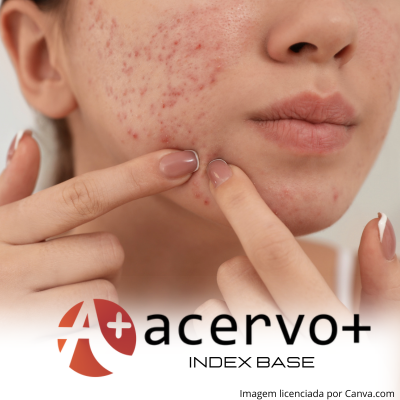
Objective: To verify the impact of acne vulgaris on the quality of life of adolescents and young adults treated at a dermatology outpatient clinic in the state of Pará in 2024. Methods: This is a cross-sectional, quantitative, descriptive study that analyzed patients aged 17 to 29 with acne vulgaris. Socioeconomic and demographic data were collected to outline the epidemiological profile of patients, and a Dermatology Life Quality Index (DLQI-BRA) questionnaire was applied. Results: The sample consisted of 40 patients, the majority of whom were female, between the ages of 17 and 29, living in the metropolitan region of Belém. These patients generally had grade 2 inflammatory acne, for which topical treatments were used. Regarding quality of life, the DLQI showed little effect of the dermatological disease on the daily lives of patients. Conclusion: Acne vulgaris did not have a significant impact on the quality of life of patients affected by this condition, as observed in this study. This result can be attributed to the fact that most patients already have total or partial remission of the lesions.
References
ALQAHTANI A et al. PsychologicalImpactof Acne Vulgarisonthe Young Saudi Population. Cureus. 2021;13(12): e20509.
CHOWDARY N et al. Qualityoflife in acne patients: A clinicalandDermatology Life Quality Index (DLQI) basedcross- sectionalstudy. JournalofPakistanAssociationofDermatologists. 2018; 28(4): 415-419.
DIOGO MLG et al. Effectof Blue Light on Acne Vulgaris: A SystematicReview. Sensors 2021; 21: 6943.
ESTADOS UNIDOS DA AMÉRICA (EUA). 2023. NHS: Acne Diagnosis. Disponível em: https://www.nhs.uk/conditions/acne/diagnosis/#:~:text=The%20severity%20of%20acne%20is,might%20also%20have%20some%20scarring. Acessado em: 10 de dezembro de 2024.
FIGUEIREDO A et al. Avaliação e tratamento do doente com acne - Parte I: Epidemiologia, etiopatogenia, clínica, classificação, impacto psicossocial, mitos e realidades, diagnóstico diferencial e estudos complementares. Rev. Soc. Port. Med. Interna 2011; 27: 59–65.
FRANÇA K, KERI J. Psychosocialimpactof acne andpostinflammatoryhyperpigmentation. AnBrasDermatol,2017, 92: 505-509.
HAZARIKA N e ARCHANA M. The psychosocial impact of acne vulgaris. Indian J Dermatol. 2016, 61: 515-520.
HENG AHS, CHEW FT. Systematic review of the epidemiology of acne vulgaris. Scientific Reports. 2020; 10(1): 5754.
KUNDALE DR, et al. Dermatology life quality index in patients of acne vulgaris presenting to a tertiary care hospital: an observational study. International Journal of Research in Dermatology, 2021; 7(5): 692-696.
LAYTON AM. Disorders of sebaceous glands. In: Burns T et al, Rook’s Textbook of Dermatology, 8th ed, Oxford Wiley-Blackwell Publication, 2010: 1-89.
LAYTON AM. Reviewing the global burden of acne: how could we improve care to reduce the burden? Br J Dermatol. 2021; 184(2): 219-225.
LIU L, et al. Prevalence and risk factors of acne scars in patients with acne vulgaris. Skin Res Technol. 2023; 29(6): e13386.
MAKRANTONAKI E, et al. An update on the role of the sebaceous gland in the pathogenesis of acne. Dermato-Endocrinology 2011; 3: 41–49.
MAVRANEZOULI I, et al. A systematic review and network meta-analysis of topical pharmacological, oral pharmacological, physical and combined treatments for acne vulgaris. Br J Dermatol. 2022; 187(5): 639-649.
MEIXIONG J, et al. Diet and acne: A systematic review. JAAD, 2022; 7: 95-112.
PURDY S e DEBERKER D. Acne vulgaris. BMJ Clin Evid. 2008; 15: 1714.
WILLIAMS H, et al. Acne vulgaris. The Lancet. 2012; 379(9813): 361–72.
WHITE GM. Recent findings in the epidemiologic evidence, classification and subtypes of acne vulgaris. J Am Acad Dermatol 1998; 39(2): 34–37.