
Keywords
Fungal Infections
Oncology
Neurosurgery
How to Cite
Copyright © | All rights reserved.
The journal holds the exclusive copyright for the publication of this article under the terms of Brazilian law 9610/98.
Partial reproduction
The use of parts of the texts, figures and questionnaire of the article is free, being mandatory the citation of the authors and journal.
Total reproduction
It is expressly prohibited and must be authorized by the journal.
Abstract
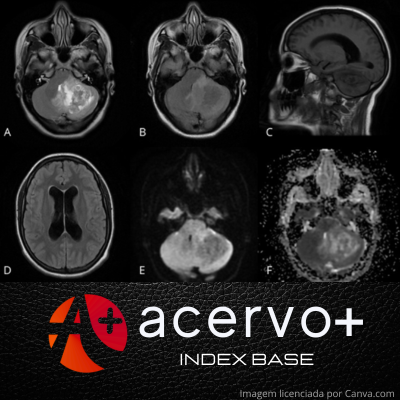
Objective: To report a rare case of cerebellar cryptococcoma mimicking metastasis in an oncology patient, highlighting the importance of differential diagnosis and appropriate management of opportunistic fungal infections. Case details: A 22-year-old previously immunocompetent woman was diagnosed with cervical cancer and underwent chemotherapy and radiotherapy. During treatment, she developed neurological symptoms, including headache and tremor in the left upper limb. Cranial magnetic resonance imaging revealed an expansive cerebellar lesion with characteristics suggestive of metastasis, along with signs of obstructive hydrocephalus. Surgical intervention with lesion resection was performed. Histopathological examination confirmed the presence of Cryptococcus neoformans, establishing the diagnosis of cerebellar cryptococcoma. Despite her previously intact immune status, the patient developed immunosuppression secondary to oncological treatment, predisposing her to fungal infection. Additional procedures, such as cerebrospinal fluid leak repair and ventriculoperitoneal shunting, were performed for hydrocephalus management. Antifungal therapy was initiated, leading to a favorable clinical outcome. Final considerations: This case highlights the importance of differential diagnosis in cerebellar lesions in oncology patients, particularly in cases with a strong suspicion of metastasis. Early recognition and appropriate management are essential to prevent severe neurological complications and improve prognosis.
References
BICANIC T, et al. Toxicity of Amphotericin B deoxycholate-based induction therapy in patients with HIV-associated cryptococcal meningitis. Antimicrob Agents Chemother, 2015; 59: 7224-31.
BRUNASSO L, et al. Seizure in isolated brain cryptococcoma: Case report and review of the literature. Surg Neurol Int, 2021; 12: 153.
CHANG SC, et al. Diffusion-weighted MRI features of brain abscess and cystic or necrotic brain tumors: comparison with conventional MRI. Clin Imaging, 2002; 26: 227-36.
DUARTE SBL, et al. Magnetic resonance imaging findings in central nervous system cryptococcosis: comparison between immunocompetent and immunocompromised patients. Radiol Bras, 2017; 50: 359-65.
GANGADHARAN SS, RAVEENDRANATH S. Cryptococcosis in oncology patients: a case series in a tertiary care cancer centre. Iran J Microbiol, 2023.
GAVITO-HIGUERA J, et al. Fungal infections of the central nervous system: A pictorial review. J Clin Imaging Sci, 2016; 6: 24.
KAMBUGU A, et al. Outcomes of cryptococcal meningitis in Uganda before and after the availability of highly active antiretroviral therapy. Clin Infect Dis, 2008; 46: 1694-701.
KAWAGUCHI T, et al. Successful treatment of disseminated cryptococcosis with liposomal amphotericin B and isavuconazole in an adult living with HIV: A case report and literature review. Journal of Infection and Chemotherapy, 2025; 31(1): 102534.
KLOCK C, et al. Histopathological aspects of neurocryptococcosis in HIV-infected patients: autopsy report of 45 patients. Int J Surg Pathol, 2009; 17: 444-8.
LI Y, et al. Microbiological, epidemiological, and clinical characteristics of patients with Cryptococcal meningitis at a tertiary hospital in China: A 6-year retrospective analysis. Frontiers in Microbiology, 2020; 11: 1837.
MACHADO M, et al. Criptococoma cerebral e pulmonar em paciente imunocompetente: relato de caso. Arquivos Brasileiros de Neurocirurgia Brazilian Neurosurgery, 2015; 34(4): 335-337.
MAY RC, et al. Cryptococcus: from environmental saprophyte to global pathogen. Nat Rev Microbiol, 2016; 14: 106-17.
MBANGIWA T, et al. Development and validation of quantitative PCR assays for HIV-associated cryptococcal meningitis in sub-Saharan Africa: a diagnostic accuracy study. The Lancet Microbe, 2024; 5(3): e261-e271.
OLIVEIRA EP, et al. Clinical and epidemiological characteristics of neurocryptococcosis associated with HIV in northeastern Brazil. Viruses, 2023; 15.
PAIVA ALC, et al. Cryptococcoma mimicking a brain tumor in an immunocompetent patient: case report of an extremely rare presentation. São Paulo Med J, 2018; 136: 492-6.
POLEY M, et al. Meningite criptocócica em um paciente aparentemente imunocompetente. J Investig Med High Impact Case Rep, v. 7, 2019.
ROCHA MF, et al. Reframing the clinical phenotype and management of cryptococcal meningitis. Pract Neurol, 2024; n-2024-004133.
SANTANDER XA, et al. Intraventricular cryptococcoma mimicking a neoplastic lesion in an immunocompetent patient with hydrocephalus: A case report. Surg Neurol Int, 2019; 10: 115.
SCHMALZLE SA, et al. Cryptococcus neoformans infection in malignancy. Mycoses, 2016; 59(9): 542-552.
SILLERO-FILHO VJ, et al. Cerebellar cryptococcoma simulating metastatic neoplasm. Arq Neuropsiquiatr, 2009; 67: 290-2.
TSENG H-K, et al. How Cryptococcus interacts with the blood-brain barrier. Future Microbiol, 2015; 10: 1669-82.
XIA S, LI X, LI H. Imaging characterization of cryptococcal meningoencephalitis. Radiol Infect Dis, 2016; 3: 187-91.
ZHANG J, et al. Antifungal susceptibility and molecular characteristics of Cryptococcus spp. based on whole-genome sequencing in Zhejiang Province, China. Front. Microbiol., 2022; 13: 991703.