
Keywords
Dolor de Espalda
Hernia Discal
Radiculopatía
Dolor lumbar
How to Cite
Copyright © | All rights reserved.
The journal holds the exclusive copyright for the publication of this article under the terms of Brazilian law 9610/98.
Partial reproduction
The use of parts of the texts, figures and questionnaire of the article is free, being mandatory the citation of the authors and journal.
Total reproduction
It is expressly prohibited and must be authorized by the journal.
Abstract
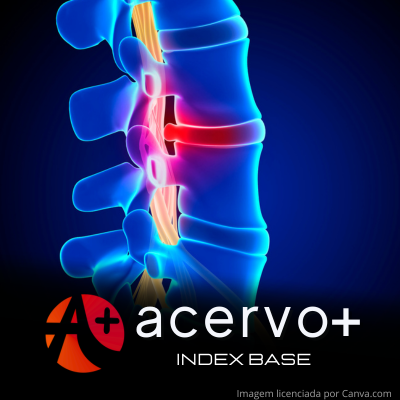
Objective: To describe intervertebral disc herniation, addressing its definition, epidemiology, etiology, clinical manifestations, diagnosis, and current therapeutic approaches, with an emphasis on clinical and surgical innovations. Literature review: This review covers the pathophysiology of disc herniation, the most prevalent risk factors such as disc degeneration, mechanical overload, and lifestyle habits, as well as neurological clinical presentations and their evaluation methods. Magnetic resonance imaging is highlighted as the examination of choice. Conservative treatment shows high success rates, while surgical approaches, especially minimally invasive ones, are indicated in refractory cases. Emerging techniques such as endoscopic surgery and regenerative therapies are also addressed. Final considerations: Intervertebral disc herniation requires a multidimensional approach based on updated evidence, focusing on clinical stratification and individualized management. The incorporation of minimally invasive techniques and the growing research into regenerative therapies represent promising advances, although they still require long-term validation.
References
AIRAKSINEN O, et al. European guidelines for the management of chronic nonspecific low back pain. European Spine Journal, 2021; 30(6): 1234-1247.
AKINOLA M, et al. Endoscopic spine surgery: advances and emerging indications. World Neurosurgery, 2023; 176: 39-48.
ALTMANN C, et al. Lumbar disc herniation: importance of symptom duration for surgical decision-making. Deutsches Ärzteblatt International, 2024; 121(1): 26-32.
BATTIE MC e VIDEMAN T. Lumbar disc degeneration: epidemiology and genetics. Journal of Bone and Joint Surgery, 2006; 88(1): 9-14.
CHUNG TS, et al. Advances in minimally invasive spine surgery. Journal of Neurosurgical Spine, 2020; 32(4): 421-430.
CUNHA M, et al. Hérnia de disco e impactos previdenciários: análise de afastamentos no Brasil. Revista Brasileira de Medicina do Trabalho, 2024; 22(1): 15-22.
DESMOULIN GT, et al. Mechanical aspects of intervertebral disc injury and implications on biomechanics. The Spine Journal, 2019; 19(4): 724-734.
D'ORIA S, et al. Minimally invasive transforaminal interbody fusion versus microdiscectomy without fusion for recurrent lumbar disk herniation: a prospective comparative study. Journal of the American Academy of Orthopaedic Surgeons, 2023; 31(22): 1157-1164.
FARDON DF, et al. Lumbar disc nomenclature: version 2.0. Recommendations of the combined task forces of the NASS, ASNR, and ASSR. Spine Journal, 2014; 14(11): 2525-2545.
HINCAPIÉ CA, et al. Incidence of and risk factors for lumbar disc herniation with radiculopathy in adults: a systematic review. European Spine Journal, 2025; 34(1): 263-294.
JENSEN TS, et al. Diagnosis and classification of disc herniation: recommendations from the spine societies. European Spine Journal, 2022; 31(2): 123-137.
KAYASTHA A, et al. Lumbar disc herniation with radiculopathy: a comparison of NASS guidelines and ChatGPT. North American Spine Society Journal, 2024; 19: 100333.
KHAN N, et al. Clinical guidelines for the evaluation and treatment of lumbar disc herniations: how accurate is the internet? World Neurosurgery, 2023; 178: 682-691.
PAIVA WS, et al. Prevalência de hérnia de disco em pacientes com lombalgia aguda em hospital terciário. Coluna/Columna, 2017; 16(3): 226-229.
PARK DK, et al. Unilateral biportal endoscopy for lumbar spinal stenosis and lumbar disc herniation. JBJS Essential Surgical Techniques, 2023; 13(2): 22.00020.
RAJA A, et al. Low back pain and herniated disc: epidemiology, risk factors and diagnostic considerations. BMJ Open, 2020; 10(2): 34811.
SOUFI KH, et al. Potential role for stem cell regenerative therapy as a treatment for degenerative disc disease and low back pain: a systematic review. International Journal of Molecular Sciences, 2023; 24(10): 8893.
WANG F, et al. Regenerative medicine for the treatment of chronic low back pain: a narrative review. Journal of International Medical Research, 2023; 51(2): 3000605231155777.
WANG H, et al. Outcomes of percutaneous endoscopic lumbar discectomy: a meta-analysis. Orthopaedic Surgery, 2023; 15(1): 45-52.
YE F, et al. Regenerative medicine strategies for intervertebral disc degeneration. Stem Cells International, 2022; 1-12.
ZENG Z, et al. Prediction and mechanisms of spontaneous resorption in lumbar disc herniation: narrative review. Spine Surgery and Related Research, 2023; 8(3): 235-242.
ZHANG QX, et al. How to enhance the ability of mesenchymal stem cells to alleviate intervertebral disc degeneration. World Journal of Stem Cells, 2023; 15(11): 989-998.
ZHANG Y, et al. Stem cell-based therapies for intervertebral disc degeneration: clinical progress and challenges. Frontiers in Bioengineering and Biotechnology, 2022; 10: 897654.
ZOU T, et al. Incidence of spontaneous resorption of lumbar disc herniation: a meta-analysis. Clinical Spine Surgery, 2024; 37(6): 256-269.