
Keywords
Pregnancy
Doctor-patient relationship
Treatment adherence
Vertical transmission
How to Cite
Copyright © | All rights reserved.
The journal holds the exclusive copyright for the publication of this article under the terms of Brazilian law 9610/98.
Partial reproduction
The use of parts of the texts, figures and questionnaire of the article is free, being mandatory the citation of the authors and journal.
Total reproduction
It is expressly prohibited and must be authorized by the journal.
Abstract
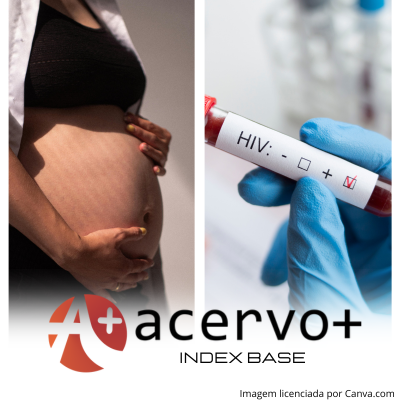
Objective: To analyze the role of the doctor-patient relationship in adherence to HIV treatment during pregnancy, emphasizing the prevention of vertical transmission. Literature review: The reviewed literature shows that despite high coverage of prenatal care and antiretroviral therapy (ART), adherence often falls short of the threshold necessary to eliminate vertical transmission. Several factors negatively influence this process, such as persistent stigma, fear of disclosure, insufficient social support, structural barriers, and challenges in doctor-patient communication. These barriers can compromise continuity of care and reduce treatment effectiveness. On the other hand, strategies based on empathy, active listening, clear communication, and respect for autonomy strengthen therapeutic bonds, improve trust, and facilitate treatment adherence. Patient-centered practices proved essential to overcome resistance, foster a sense of safety, and ensure long-term engagement. Final considerations: Adherence to HIV treatment among pregnant women is strongly influenced by the quality of the doctor-patient relationship. Strengthening this bond, in association with interprofessional strategies and a humanized approach, is key to reducing vertical transmission and improving maternal and child outcomes.
References
ARAÚJO TCV, SOUZA MB. Adesão das equipes aos testes rápidos no pré-natal e administração da penicilina benzatina na atenção primária. Revista da Escola de Enfermagem da USP, 2020; 54: e03645.
ATTANASIO L, KOZHIMANNIL KB. Patient-reported communication quality and perceived discrimination in maternity care. Medical Care, 2015; 53(10): 863-871.
BRASIL. Boletim Epidemiológico - HIV e Aids. Brasília: Ministério da Saúde, 2024.
BRASIL. Protocolo Clínico e Diretrizes Terapêuticas para Prevenção da Transmissão Vertical de HIV, Sífilis e Hepatites Virais. Brasília: Ministério da Saúde, 2022.
BUREGYEYA E, et al. Facilitators and barriers to uptake and adherence to lifelong antiretroviral therapy among HIV infected pregnant women in Uganda: a qualitative study. BMC Pregnancy and Childbirth, 2017; 17(1): 94.
BYRD KK, et al. Adherence and viral suppression among participants of the Patient-centered HIV Care Model project: a collaboration between community-based pharmacists and HIV clinical providers. Clinical Infectious Diseases, 2020; 70(5): 789-797.
CROFT RL, BYRD CT, KELLY EM. The influence of active listening on parents’ perceptions of clinical empathy in a stuttering assessment: a preliminary study. Journal of Communication Disorders, 2022; 100: 106274.
CUNHA AC, et al. Diagnóstico de malformações congênitas: impactos sobre a saúde mental de gestantes. Estudos de Psicologia (Campinas), 2016; 33(4): 601-611.
DICLEMENTE-BOSCO K, et al. Empowerment in pregnancy: ART adherence among women living with HIV in Cape Town, South Africa. Social Science & Medicine, 2022; 296: 114738.
FENN N, et al. Empathy, better patient care, and how interprofessional education can help. Journal of InterprofessionalCare, 2022; 36(5): 660-669.
FRANÇA GV. Comentários ao Código de Ética Médica. 7. ed. Rio de Janeiro: Grupo GEN, 2019.
GEDEFIE A, et al. Prevalence and determinants of HIV among reproductive-age women (15–49 years) in Africa from 2010 to 2019: a multilevel analysis of demographic and health survey data. Frontiers in Public Health, 2025; 12: 1376235.
HOLZMANN APF, et al. Preventing vertical HIV virustransmission: hospital care assessment. Revista Brasileira de Enfermagem, 2020; 73(3): 1-9.
ISMAIL N, et al. Barriers to timely disclosure of HIV serostatus: a qualitative study at care and treatment centers in Dar es Salaam, Tanzania. PLoS One, 2021; 16(8): e0256537.
JOSEPH DAVEY D, et al. Opportunities to optimize outcomes of diagnosis and treatment of HIV and syphilis in pregnancy: the quest to eliminate maternal and vertical transmission. Current HIV/AIDS Reports, 2025; 22(1): e0739.
KANGUYA T, et al. Identifying barriers to ART initiation and adherence: an exploratory qualitative study on PMTCT in Zambia. PLoS One, 2022; 17(1): e0262392.
LEDDY AM, et al. Gender-based violence and engagement in biomedical HIV prevention, care and treatment: a scoping review. BMC Public Health, 2019; 19(1): 897.
LEVY M, et al. Health and social outcomes of HIV‐vulnerable and HIV‐positive pregnant and post‐partum adolescents and infants enrolled in a home visiting team programme in Kenya. Tropical Medicine & International Health, 2021; 26(6): 640-648.
LEYSER-WHALEN O, et al. Patient-provider satisfaction and communication in U.S. prenatal care: a systematic review. Maternal and Child Health Journal, 2024; 28(9): 1485-1494.
LIOI FM, et al. Tratamento como prevenção na perspectiva de pessoas vivendo com HIV/aids. Acta Paulista de Enfermagem, 2023; 36: 1-11.
LOPES BB, et al. Epidemiologia do HIV em gestantes e sua relação com o período da pandemia de COVID-19. Revista da Escola de Enfermagem da USP, 2023; 57: 1-7.
MBUAGBAW L, et al. Overview of systematic reviews on strategies to improve treatment initiation, adherence to antiretroviral therapy and retention in care for people living with HIV: part 1. BMJ Open, 2020; 10(9): e034793.
MIRANDA AE, et al. Perspectives and challenges for mother-to-child transmission of HIV, hepatitis B, and syphilis in Brazil. Frontiers in Public Health, 2023; 11: 1182386.
NACHEGA JB, et al. Adherence to antiretroviral therapy during and after pregnancy in low-, middle- and high-income countries: a systematic review and meta-analysis. AIDS, 2012; 26(16): 2039-2052.
OKORO O, ODEDINA F. HIV treatment in African American women—care that makes a difference. Journal of Racial and Ethnic Health Disparities, 2017; 4(3): 376-384.
OZIM CO, et al. Prevalence of human immunodeficiency virus (HIV) among pregnant women in Nigeria: a systematic review and meta-analysis. BMJ Open, 2023; 13(3): e050164.
PINHEIRO PNC, et al. O cuidado humano: reflexão ética acerca dos portadores do HIV/AIDS. Revista Latino-Americana de Enfermagem, 2005; 13(4): 569-575.
PONTIKI G, et al. Good communication and trust relationships with women are critical for HIV positive pregnant woman. European Journal of Midwifery, 2022; 6: 1-2.
QUINTÃO BLM, et al. Análise comparativa dos casos de HIV na América Latina. Research, Society and Development, 2022; 11(16): e188111637843.
RACHID M, SCHECHTER M. Manual de HIV/AIDS. Rio de Janeiro: Thieme Brasil, 2017.
RAFFO VT, et al. Os sintomas psicopatológicos na gestação e no puerpério de alto risco: estudo realizado em uma maternidade de um hospital geral de Curitiba-PR. Brazilian Journal of Development, 2021; 7(7): 75059-75071.
RATKA A. Empathy and the development of affective skills. American Journal of Pharmaceutical Education, 2018; 82(10): 7192.
SHORE JE, et al. The lived experience of antiretroviral therapy for pregnant women: antiretroviral therapy adherence as a balancing act. Journal of the Association of Nurses in AIDS Care, 2020; 31(4): 448-456.
SILVA CB, et al. Young women born with HIV: communication of seropositivity to partners. Saúde em Debate, 2023; 47: 129-141.
SOUZA D, et al. Relatos sobre um livro com experiências de estigma/discriminação de pessoas vivendo com HIV/AIDS no Brasil. Saúde em Debate, 2023; 47: 264-276.
TRINDADE LNM, et al. HIV infection in pregnant women and its challenges for the prenatal care. Revista Brasileira de Enfermagem, 2021; 74(Suppl 4): e20190784.
VEDAM S, et al. Patient-led decision making: measuring autonomy and respect in Canadian maternity care. Patient Education and Counseling, 2019; 102(3): 586-594.
VIEIRA ACB, et al. HIV prevalence among pregnant women in Vitória, Espírito Santo State, Brazil, 2000–2006. Revista de Saúde Pública, 2011; 45(4): 644-651.
WILKINSON D, et al. Ethics round table: choice and autonomy in obstetrics. Journal of Medical Ethics, 2024; 50(2): 117-124.
YANG L, et al. The end is in sight: current strategies for the elimination of HIV vertical transmission. Current HIV/AIDS Reports, 2023; 20(3): 121-130.