
Keywords
Cleft lip and palate
Nutrition
Neonatology
How to Cite
Copyright © | All rights reserved.
The journal holds the exclusive copyright for the publication of this article under the terms of Brazilian law 9610/98.
Partial reproduction
The use of parts of the texts, figures and questionnaire of the article is free, being mandatory the citation of the authors and journal.
Total reproduction
It is expressly prohibited and must be authorized by the journal.
Abstract
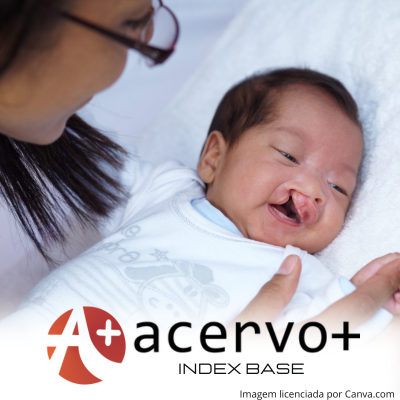
Objective: To assess the knowledge of the interdisciplinary neonatal health team at a referral hospital regarding feeding care for newborns with cleft lip and palate. Methods: This was an exploratory, descriptive, and cross-sectional study with a quantitative approach, conducted with 210 healthcare professionals from the institution's neonatology department through the administration of a questionnaire. Results: The professionals' main concern was related to the possibility of breastfeeding. Most recognized the semi-sitting position as ideal for feeding newborns and indicated the bottle as the safest utensil. However, many reported not knowing how to adjust the nipple and were unaware of maneuvers to facilitate feeding. Conclusion: The findings reveal significant gaps in the interdisciplinary team's knowledge, especially regarding feeding techniques and the use of appropriate utensils. Therefore, the implementation of training and continuing education programs for the team is essential to ensure safe and evidence-based practices in the care of newborns with cleft lip and palate.
References
ACHMAD H, et al. Nutritional improvement in children with cieft llp and cleft palate using a combination of an obturator and feeding bottle infant. Journal of Pharmaceutical. Negative Results, 2022; 13 (8).
ADEKUNLE AA, et al. Breastfeeding practices among mothers of children with orofacial clefts in an african cohort. Cleft Palate Craniofacial Journal, 2020; 57 (8): 1018-1023.
AL-LAMI HA, et al. Presurgical management trends and nasoalveolar molding usage for infants with cleft lip and palate in the capital of a developing country. Journal Orthodontics Science, 2024; 16 (13): 4.
BABAI I. Orofacial Clefts: Genetics of Cleft Lip and Palate. Genes, 2023; 14 (8): 1603.
BATISTA NT, et al. Factors associated with breastfeeding adherence in infants with orofacial clefts: a scoping review. Cogitare Enfermagem, 2024; 29.
CAMPOS CJG, SAIDEL MGB. Amostragem em investigações qualitativas: conceitos e aplicações ao campo da saúde. Revista Pesquisa Qualitativa, 2022; 10 (25): 1-21.
CERÓN-ZAPATA AM, et al. Maternal perception of breastfeeding in children with unilateral cleft lip and palate: a qualitative interpretative analysis. International Breastfeed Journal, 2022; 54: 571-581.
DENADAI R, LO LJ. Reducing delayed detection of isolated cleft palate-related deformity: a call for routine intraoral examination of newborns. Journal Pediatric, 2024; 24.
DUDDING T, et al. An introduction to the UK care pathway for children born with a cleft of the lip and/or palate. British Dental Journal, 2023; 234 (12): 943–946.
DUSINGIZIMANA T, et al. A qualitative analysis of infant and young child feeding practices in rural Rwanda. Public Health Nutrition, 2021;24(12):3592-601.
GÁRATE KMS, et al. Types of feeding and presence of harmful oral habits in children with cleft lip and/or palate: a pilot study. Pesquisas Brasileiras de Odontopediatria Clínica Integrada, 2020; 20: e0063.
HEYDARI MH, et al. Prevalence, trend, and associated risk factors for cleft lip with/without cleft palate: a national study on live births from 2016 to 2021. BMC Oral Health, 2024; 24 (1): 36.
HOOKWAY L, et al. The challenges of medically complex breastfed children and their families: a systematic review. Maternal and Child Nutrition, 2021; 17(4): e13182.
JARA M, et al. Breastfeeding and factors associated to feeding in babies with cleft palate. International Journal Medical Science, 2020; 7 (4): 1-10.
KASSIM MJN, et al. Consulta de enfermagem a pacientes com fissuras labiopalatais. Revista Eletrônica Acervo Saúde, 2021; 13 (4): e6992.
LIGOT FAC, et al. A qualitative study on the feeding methods of Filipino mothers of children with cleft lip and palate aged 0–24 months: a pilot study. Acta Medical Philippina, 2024; 58 (3): 23–33.
LOPEZ-BASSOLS I, et al. Assisted Nursing: a case study of an infant with a complete unilateral cleft lip and palate. Journal Human Lactation, 2021; 37 (2): 419-424.
LUYO-PEÑAFIEL BR, et al. Sociodemographic Factors Associated with Knowledge About Management of Cleft Lip and Palate Patients in Peruvian Dental Students: A Logistic Regression Analysis. Advances in Medical Education and Practice, 2023; 14: 1287-1298.
MADHOUN LL, et al. Breast milk feeding practices and barriers and supports experienced by mother–infant dyads with cleft lip and/or palate. The Cleft Palate-Craniofacial Journal, 2020; 57 (4): 477-486.
MAIA ALRB, et al. O lábio leporino: uma revisão de literatura. Medicina: Égide do bem estar populacional, 2020; 129-140.
MATTOS ELM, et al. Métodos utilizados no aleitamento materno em recém-nascidos portadores de fissura lábio palatina: revisão de literatura. Revista Foco, 2023; 16 (12): e3839.
MCWILLIAMS D, et al. "It's On Your Shoulders Now" Transitioning from Child-to-Adult UK Cleft Lip/Palate Services: An Exploration of Young Adults' Narratives. Cleft Palate Craniofacial Journal, 2024; 62 (6): 1039-1052.
MIRANDA-FILHO AEF, et al. Do orofacial clefts impair breastfeeding and increase the prevalence of anemia? Cleft Palate Craniofacial Journal, 2021; 60 (1): 63-68.
MORETTO MJ, et al. Tratamento multidisciplinar na reabilitação de pacientes portadores de fissura de lábio e/ou palato. Journal of Multidisciplinary Dentistry, 2020; 10 (1): 3-8.
MORI MM, et al. Vivências maternas durante a amamentação de filhos com fissura labiopalatina. Ciências Práxis, 2024;19(34):20-34.
NABATANZI M, et al. “Mine did not breastfeed”, mothers’ experiences in breastfeeding children aged 0 to 24 months with oral clefts in Uganda. BMC Pregnancy and Childbirth, 2021; 21 (100): 1-9.
OLIVEIRA LB, et al. Breastfeeding and cleft lip and palate: a systematic review and meta-analysis. Cleft Palate Craniofacial Journal, 2023; (20):10556656231170137.
OMS. Organização Mundial da Saúde. 2022. Disponível em: https://www.who.int/news-room/fact-sheets/detail/oral-health. Acessado em: 03 de setembro de 2025
PENNY C, et al. A Systematic Review of Feeding Interventions for Infants with Cleft Palate. Cleft Palate Craniofacial Journal, 2022; 59(12):1527-1536.
PUTRI FA, et al. As ocorrências globais de fissura labiopalatina em pacientes pediátricos e sua associação com fatores demográficos: uma revisão narrativa. Children, 2024; 11(3): 322.
ROESSING AB, et al. Unilateral Cleft lip and Palate: Long-Term Results of the Malek Technique. Cleft Palate Craniofacial Journal, 2024; 61(2): 219-230.
SANTOS EAMC, OLIVEIRA TM. Conhecimentos atuais em Fissuras Labiopalatinas: uma revisão narrativa. Revista Eletrônica Acervo Saúde, 2021; 3(2): e5870.
SILVEIRA AKG, et al. Estudo para detecção de fissuras labiopalatinas no pré-natal: revisão de literatura e relato de caso. Brazilian Applied Science Review, 2020; 6 (4): 3959-3975.
WU W, et al. Status de crescimento físico e métodos de alimentação de bebês chineses com lábio leporino com ou sem fenda palatina com menos de 1 ano de idade. Revista Brasileira de Pediatria, 2020; 8: 194.
ZHU Y, et al. Prevalence of cleft lip and/or cleft palate in Guangdong province, China, 2015-2018: a spatio-temporal descriptive analysis. BMJ Open, 2021; 11(8): e046430.