
Keywords
Early weaning
Benefits of breastfeeding
Guidelines for pregnant women
How to Cite
Copyright © | All rights reserved.
The journal holds the exclusive copyright for the publication of this article under the terms of Brazilian law 9610/98.
Partial reproduction
The use of parts of the texts, figures and questionnaire of the article is free, being mandatory the citation of the authors and journal.
Total reproduction
It is expressly prohibited and must be authorized by the journal.
Abstract
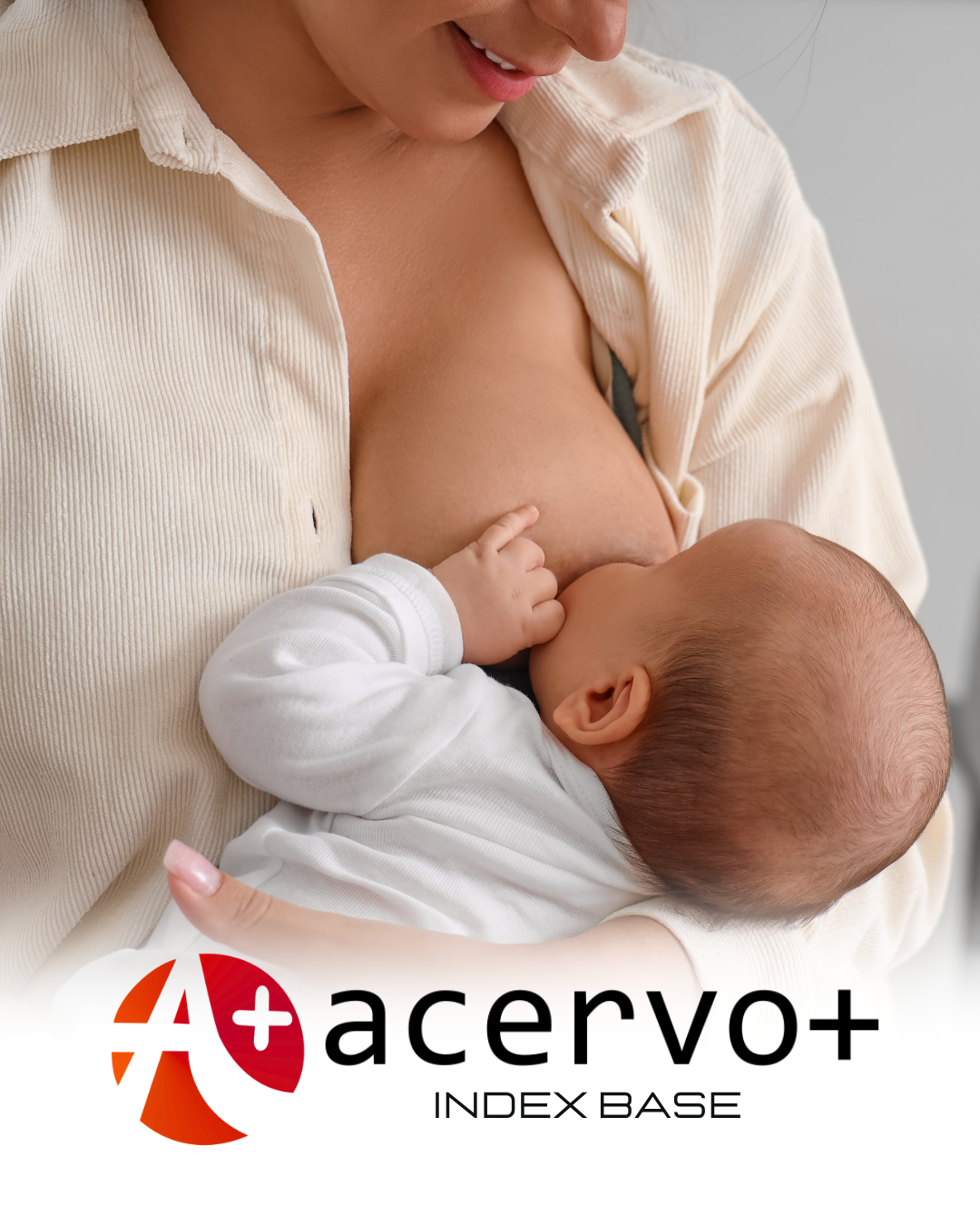
Objective: To highlight the importance of breastfeeding and the factors associated with early weaning, emphasizing the main guidelines on Exclusive Breastfeeding (EBF). Methods: An integrative review was conducted according to the PRISMA guidelines, gathering evidence from different studies and resulting in the inclusion of 32 articles in the final synthesis. Results: EBF plays a fundamental role in reducing infant mortality, the incidence of diarrhea and respiratory infections, as well as decreasing the risk of allergies. It also contributes to increased cerebral gray matter, improved cognitive performance, return to pre-pregnancy weight, and protection against ovarian cancer. Among the factors related to early weaning are low birth weight, pacifier use, breast complications, and low maternal education levels. The main guidelines include adequate fluid intake, frequent breastfeeding, a balanced diet, rest, proper latch, and family support. Conclusion: The need to encourage EBF is reinforced, recognizing and addressing the factors that contribute to its early interruption, in order to promote maternal and child health.
References
ALMEIDA IL, et al. A amamentação como um fator redutor de doenças na primeira infância. REAS, 2025; 25, p.1-10.
ALVES JS, et al. Orientações sobre amamentação na atenção básica de saúde e associação com o aleitamento materno exclusivo. Ciência & Saúde Coletiva, 2018; 23(4),p.1077-1088,
ANYANECHI CE, et al. Parturients’ Awareness and Perception of Benefits of Breast Feeding in the Prevention of Infant and Childhood Oral and Dental Diseases. Ghana Med J, 2017; 51(2); p. 83-87.
ARAÚJO MLS, et al. Estratégias para aumento da produção do leite materno entre lactantes. Revista Eletrônica Acervo Saúde. 2023; 23(9), p. 1-12.
BARBOSA GEF, et al. Dificuldades iniciais com a técnica da mamada e impacto na duração do aleitamento materno exclusivo. Rev. Bras. Saúde Mater. Infant., Recife, 2018; 18(3), p. 527-537.
BARRETO AA, LOPES IMD. Aleitamento materno exclusivo e fatores determinantes do desmame precoce: uma revisão integrativa da literatura. Research, Society and Development, 2023; 12(5), p.1-11.
BELFORT MB, et al. Breast Milk Feeding, Brain Development, and Neurocognitive Outcomes: A 7-Year Longitudinal Study in Infants Born at Less Than 30 Weeks' Gestation. THE JOURNAL OF PEDIATRICS. 2016; 177, p. 133-139.
CARVALHO LMN, PASSOS SG. Os benefícios do aleitamento materno para a saúde da criança: revisão integrativa. Revista Coleta Científica, 2021; 5(9), p. 70-87.
CORREIA ARL, et al. Importância do aleitamento materno no desenvolvimento infantil: Análise pela ótica da enfermagem. Revista Multidisciplinar do Nordeste Mineiro, 2022; 4(1), ISSN 2178-6925.
GALANTINI BS, et al. Vivência de gestantes em práticas educativas sobre aleitamento materno no período gestacional. REAS, 2024; 24(8), p.1-9.
GARCIA JB, et al. Dificuldades encontradas pelas puérperas no processo de amamentação no período hospitalar. REAEnf, 2024; 24, p.1-7.
GARZÃO BOU, et al. O vínculo empregatício e a licença maternidade como influências na duração do aleitamento materno exclusivo. Nutrivisa-Revista de Nutrição e Vigilância em Saúde, 2023; 10(1), e10012-e10012.
HASSUNUMA SHN, et al. Revisão integrativa e redação de artigo científico: uma proposta metodológica em 10 passos. Revista Multi: Educação & Meio Ambiente, 2024; 5(3), p. – .
HOLANDA ER, SILVA IL. Fatores associados ao desmame precoce e padrão espacial do aleitamento materno em território na Zona da Mata de Pernambuco, Brasil. Rev. Bras. Saúde Mater. Infant., Recife, 2022; 22(4), p. 813-822.
KIM JI, et al. Breastfeeding is associated with enhanced learning abilities in school-aged children. Child Adolesc Psychiatry Ment Health. 2017; 11(36), p. 1-29.
LIMA BC, et al. Dilemas e Desafios no aleitamento materno exclusivo – estudo reflexivo. Revista Pró-univerSUS. 2021; 12(2), p. 58-61.
MACHADO PY, et al. ORIENTAÇÕES SOBRE AMAMENTAÇÃO PARA GESTANTES DO PRÉ-NATAL NA ATENÇÃO PRIMÁRIA À SAÚDE. Arquivos de Ciências da Saúde da UNIPAR, Umuarama, 2023; 27(7), p. 3862-3879.
MARINHO LO, et al. Aleitamento materno exclusivo: dificuldades vivenciadas por puérperas. Conjecturas, 2022; 22(2), 987-1002.
MARTINS MC, et al. PERCEPÇÕES DE MÃES NUTRIZES AO VIVENCIAREM A PREMATURIDADE NA UNIDADE DE TERAPIA INTENSIVA NEONATAL. Cogitare Enferm, 2022; 27, p. 1-11.
MENDES, KDS, et al. Revisão integrativa: método de pesquisa para a incorporação de evidências na saúde e na enfermagem. Texto & Contexto Enfermagem, Curitiba, v. 28, e20200123, 2020.
MOSQUERA PS, et al. Frequência do aleitamento materno exclusivo aos 30 dias de vida: revisão de estudos longitudinais. Saúde Soc. São Paulo, 2022; 31(4), e210414pt.
MURAD TCAN, et al. Amamentação: O Escudo Imunológico contra Doenças Autoimunes – Uma Revisão Sistemática da Literatura. Revista Sociedade Científica, 2024; 7(1); p.3734-3742.
OLIVEIRA AS, CARNIEL F. Aleitamento materno: consequências do desmame precoce e o papel da enfermagem: uma revisão bibliográfica. Revista Eletrônica Acervo Científico, 2021; 20, p. e5659-e5659.
PEREIRA SSA, et al. Revisão da Intervenção de Enfermagem “Aconselhamento para a lactação” da Classificação da Intervenções de Enfermagem. R. Enferm. UFJF, 2023; 9(1), p.1-10.
ROCHA MCG, et al. Aleitamento materno exclusivo em crianças assistidas pela Estratégia Saúde da Família. REAS, 2024: 25, p.1-11.
ROCHA MCG, et al. Fatores de risco para a interrupção do aleitamento materno exclusivo em Maceió/AL. REAS, 2025; 25, p.1-11.
SALES GS, et al. Caracterização do aleitamento materno e complementar no município de Palmas/TO. Revista Cereus, 2022; 14(1), p. 246-258.
SANTOS MP, et al. Prevalência e fatores associados à interrupção precoce do aleitamento materno exclusivo: metanálise de estudos epidemiológicos brasileiros. Rev. Bras. Saúde Matern. Infant., Recife, 2017;17(1), p. 69-78.
SANTOS MV, et al. Mulheres lactantes e a percepção do valor útil para o aleitamento materno no espaço prisional.Ciênc. saúde coletiva, 2025; 30 (1), p.1-10.
SANTOS NNB, et al. Percepção materna sobre aleitamento: importância e fatores que influenciam o desmame precoce em um município do estado do Maranhão, Brasil. Revista Saúde e Desenvolvimento Humano, 2022; 10(2), p. 1-12.
SEGURA AS, et al. La importancia de la nutrición materna durante la lactancia,¿ necesitan las madres lactantes suplementos nutricionales?. Anales de Pediatría, 2016; 84(6), p. 347-e1.
SILVEIRA TAA, et al. A Importância da Lactação Exclusiva no fator de Prevenção de Câncer de Mama. Brazilian Journal of Implantology and Health Sciences, 2024; 6(8), p. 5321-5338.
SOUSA CS, et al. O impacto do desmame precoce na saúde da mãe e do bebê. REAS, 2024; 24(12), p.1-11.
TAKEMOTO AY, et al. Amamentação no século 21: epidemiologia, mecanismos, e efeitos ao longo da vida. Epidemiol Servi Saúde, 2016; 2(1), p. 1-24.
VIEIRA BRC, et al. O impacto da amamentação na promoção do bem-estar físico e emocional materno. REAS, 2025; 25(5), p.1-10.
WOLDEAMANUEL BT. Trends and factors associated to early initiation of breastfeeding, exclusive breastfeeding and duration of breastfeeding in Ethiopia: evidence from the Ethiopia Demographic and Health Survey 2016. International Breastfeeding Journal, 2020; 15(3), p. 1-13.
ZIWERT HE, et al. Avaliação das ações de assistência ao aleitamento materno desenvolvidas por profissionais da atenção primária às mulheres no puerpério. REAS, 2024; 24(8), p.1-9.