
Keywords
Vegetables
Public health
Food safety
Ver-o-Peso
How to Cite
Copyright © | All rights reserved.
The journal holds the exclusive copyright for the publication of this article under the terms of Brazilian law 9610/98.
Partial reproduction
The use of parts of the texts, figures and questionnaire of the article is free, being mandatory the citation of the authors and journal.
Total reproduction
It is expressly prohibited and must be authorized by the journal.
Abstract
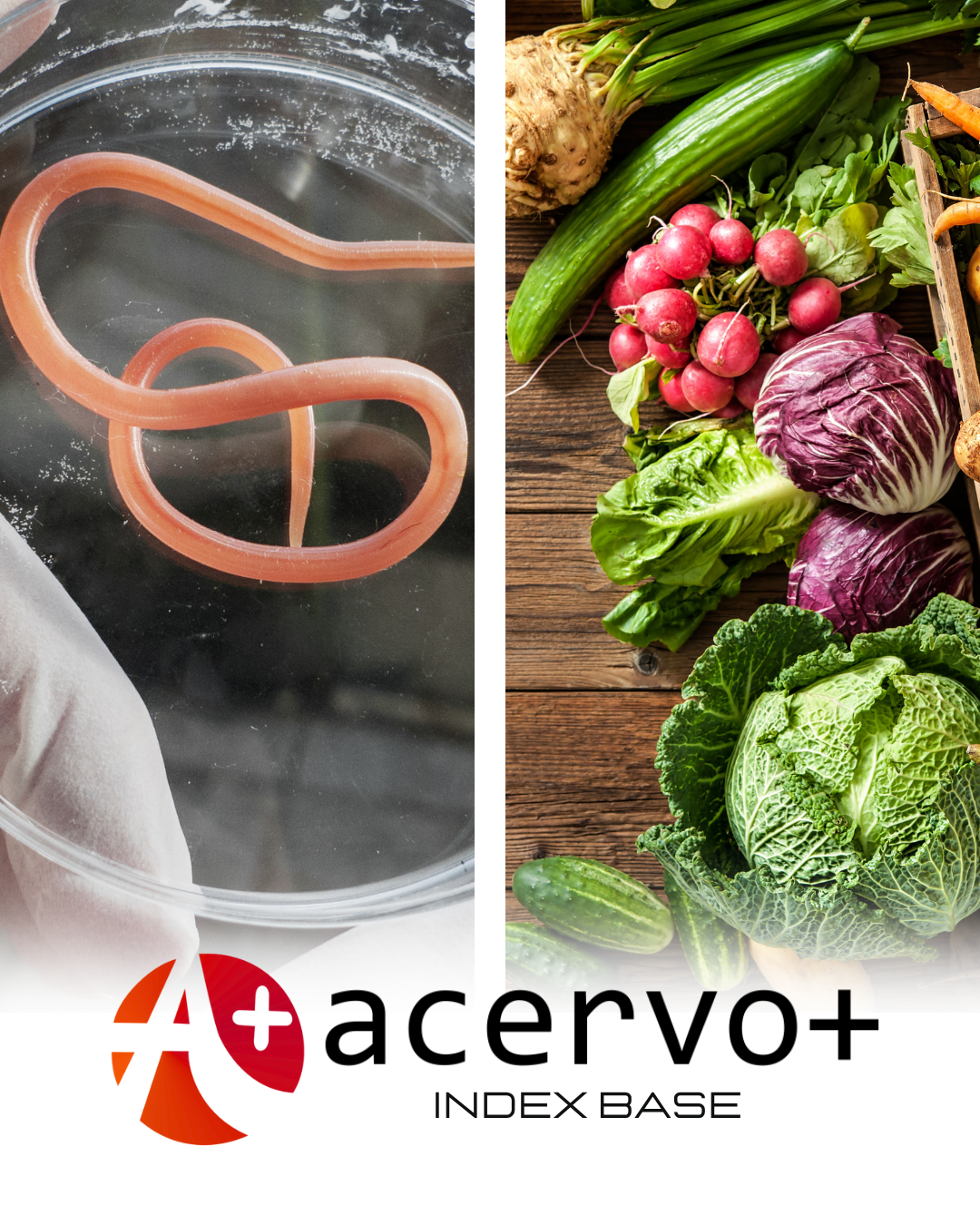
Objective: To evaluate the occurrence of intestinal parasites in vegetable samples from the Ver-o-Peso market in Belém, Pará. Methods: This study employs the Hoffman method with a qualitative approach. The study included samples of lettuce, kale, and parsley from the Ver-o-Peso market in Belém, Pará, to identify intestinal parasites. Twenty-five stalls were selected from three different areas (A, B, and C). Results: All selected stalls were contaminated by some intestinal parasite. Area B had the highest contamination, followed by area A, and finally, area C. The vast majority of samples contained protozoan cysts and the most common helminths, including hookworms, Entamoeba coli, Entamoeba histolytica, Giardia lamblia, and Strongyloides stercoralis. Conclusion: Finally, the contributions of this study aim to inform future interventions and public health policies aimed at food security and reducing the prevalence of intestinal parasites. Continued research in this area is essential to monitor contamination conditions and evaluate the effectiveness of implemented strategies, promoting sustainable improvements in the health and quality of life of affected communities.
References
BEHNIAFAR H, et al. The global prevalence of Trichuris trichiura infection in humans (2010-2023): A systematic review and meta-analysis. Journal of Infection and Public Health, 2024; 17(5): 5 mar.
BRASIL. Ministério da Saúde. Guia Prático para o Controle das Geo-helmintíases. Brasília: Ministério da Saúde, 2018; 35p. Disponível em: https://bvsms.saude.gov.br/bvs/publicacoes/guia_pratico_controle_geohelmintiases.pdf. Acesso: 5 mar.2024.
BRAZ AS, et al. Recommendations from the Brazilian Society of Rheumatology on the diagnosis and treatment of intestinal parasitic infections in patients with autoimmune rheumatic disorders. Revista Brasileira de Reumatologia (English Edition), 2015; 55(4): 368–380.
CELESTINO AO, et al. Prevalência de infecções parasitárias intestinais no Brasil: uma revisão sistemática. Revista da Sociedade Brasileira de Medicina Tropical, 2021; 54: e0033-2021.
CHÁVEZ-RUVALCABA F, et al. Foodborne Parasitic Diseases in the Neotropics – a review. Helminthologia, 2021; 58(2): 119–133.
DIXON BR. Giardia duodenalis in humans and animals – Transmission and disease. Research in Veterinary Science, 2020; 135.
EINARSSON E, et al. An up-date on Giardia and giardiasis. Current Opinion in Microbiology, 2016; 34: 47–52.
FERNANDES NDS, et al. Avaliação Parasitológica de Hortaliças: da Horta ao Consumidor Final. Saúde e Pesquisa, 2015; 8(2): 255.
FINK MY e SINGER SM. The Intersection of Immune Responses, Microbiota, and Pathogenesis in Giardiasis. Trends in Parasitology, 2017; 33(11): 901–913.
FRANCISCO TALAMINI DO AMARANTE A, et al. Os parasitas de ovinos. São Paulo: Editora Unesp Digital, 2014; 11p. (Nota: Formatado como Livro/Capítulo, conforme a regra de "casos extraordinários").
GALGAMUWA LS, et al. Prevalence and intensity of Ascaris lumbricoides infections in relation to undernutrition among children in a tea plantation community, Sri Lanka: a cross-sectional study. BMC Pediatrics, 2018; 18(1).
GUILLÉN N. Pathogenicity and virulence of Entamoeba histolytica, the agent of amoebiasis. Virulence, 2023; 14(1).
HAJARE ST, et al. Prevalence of Ascaris lumbricoides infections among elementary school children and associated risk factors from Southern Ethiopia. Journal of Parasitic Diseases, 2022.
HOOSHYAR H, ROSTAMKHANI P. Accurate laboratory diagnosis of human intestinal and extra- intestinal amoebiasis. Gastroenterology and Hepatology from Bed to Bench, 2022; 15(4).
JORGE ANTONINO AC, et al. Prevalence of enteroparasites in vegetables marketed in the city of Jaguaré, Espírito Santo, Brazil. Revista de Salud Pública, 2020; 22(4): 1–6.
LEITSCH D. A review on metronidazole: an old warhorse in antimicrobial chemotherapy. Parasitology, 2017; 146(9): 1–12.
LI J, WANG Z, et al. Detection of human intestinal protozoan parasites in vegetables and fruits: a review. Parasites & Vectors. 2020;13:574.
MARTIN RJ, et al. Ivermectin: An Anthelmintic, an Insecticide, and Much More. Trends in Parasitology, 2021; 37(1): 48–64.
MAYRON MORAIS ALMEIDA, et al. Interactions between malnutrition, soil-transmitted helminthiasis and poverty among children living in periurban communities in Maranhao State, Northeastern Brazil. Revista Do Instituto De Medicina Tropical De Sao Paulo, 2020; 62.
MELO TG, et al. Contaminação parasitária em hortaliças comercializadas no município de jataí-GO. Revista de Ciências Médicas e Biológicas, 2022; 21(2): 259–266.
MORÁN P, et al. Amoebiasis: Advances in Diagnosis, Treatment, Immunology Features and the Interaction with the Intestinal Ecosystem. International Journal of Molecular Sciences, 2023; 24(14): 11755–11755.
NASCIMENTO AB, et al. Análises parasitológicas de hortaliças comercializadas na feira livre do Ver-o-Peso, Belém – PA. Revista Eletrônica Acervo Saúde, 2020; 41: e2135.
OJHA SC, et al. Geohelminths: public health significance. The Journal of Infection in Developing Countries, 2014; 8(01): 005-016.
Página - IPHAN - Instituto do Patrimônio Histórico e Artístico Nacional. Disponível em: http://portal.iphan.gov.br/pagina/detalhes/828. Acesso em: 12 dez. 2024.
PARIJA SC, et al. Epidemiology and clinical features of soil-transmitted helminths. Tropical parasitology, 2017; 7(2): 81–85.
RIVERO J, et al. Trichuris trichiura (Linnaeus, 1771) From Human and Non- human Primates: Morphology, Biometry, Host Specificity, Molecular Characterization, and Phylogeny. Frontiers in Veterinary Science, 2021; 7: 9 fev.
ROJAS-LÓPEZ L, et al. Giardia duodenalis. Trends in Parasitology, 2022; 0: 21 jan.
RONQUILLO AC, et al. Ancylostoma duodenale as a cause of upper gastrointestinal bleeding: a case report. The Brazilian Journal of Infectious Diseases, 2019; 23(6): 471–473.
SANTOS JJF, GOMES RSL CS. Plantas alimentícias não convencionais e medicinais: conhecimento e aplicações em feiras-livres de Belém, Pará, Brasil. Revista Fitos. 2022;16(3):346-356.
TESFAYE GOBENA, et al. Prevalence of Protozoan Pathogens Among Diarrheic Children Under 5 Years in Public Hospital of Ethiopia During the Global COVID 19 Pandemic. Inquiry, 2024; 61.
VANDENPLAS Y, et al. Probiotics: an update. Jornal de Pediatria, 2015; 91(1): 6–21.
ZANETTI AS, et al. Diversity, geographical distribution, and prevalence of Entamoeba spp. in Brazil: a systematic review and meta-analysis. Parasite, 2017; 28: 17.