
Keywords
Menopause
Papanicolaou Test
Colposcopy
Estrogen
How to Cite
Copyright © | All rights reserved.
The journal holds the exclusive copyright for the publication of this article under the terms of Brazilian law 9610/98.
Partial reproduction
The use of parts of the texts, figures and questionnaire of the article is free, being mandatory the citation of the authors and journal.
Total reproduction
It is expressly prohibited and must be authorized by the journal.
Abstract
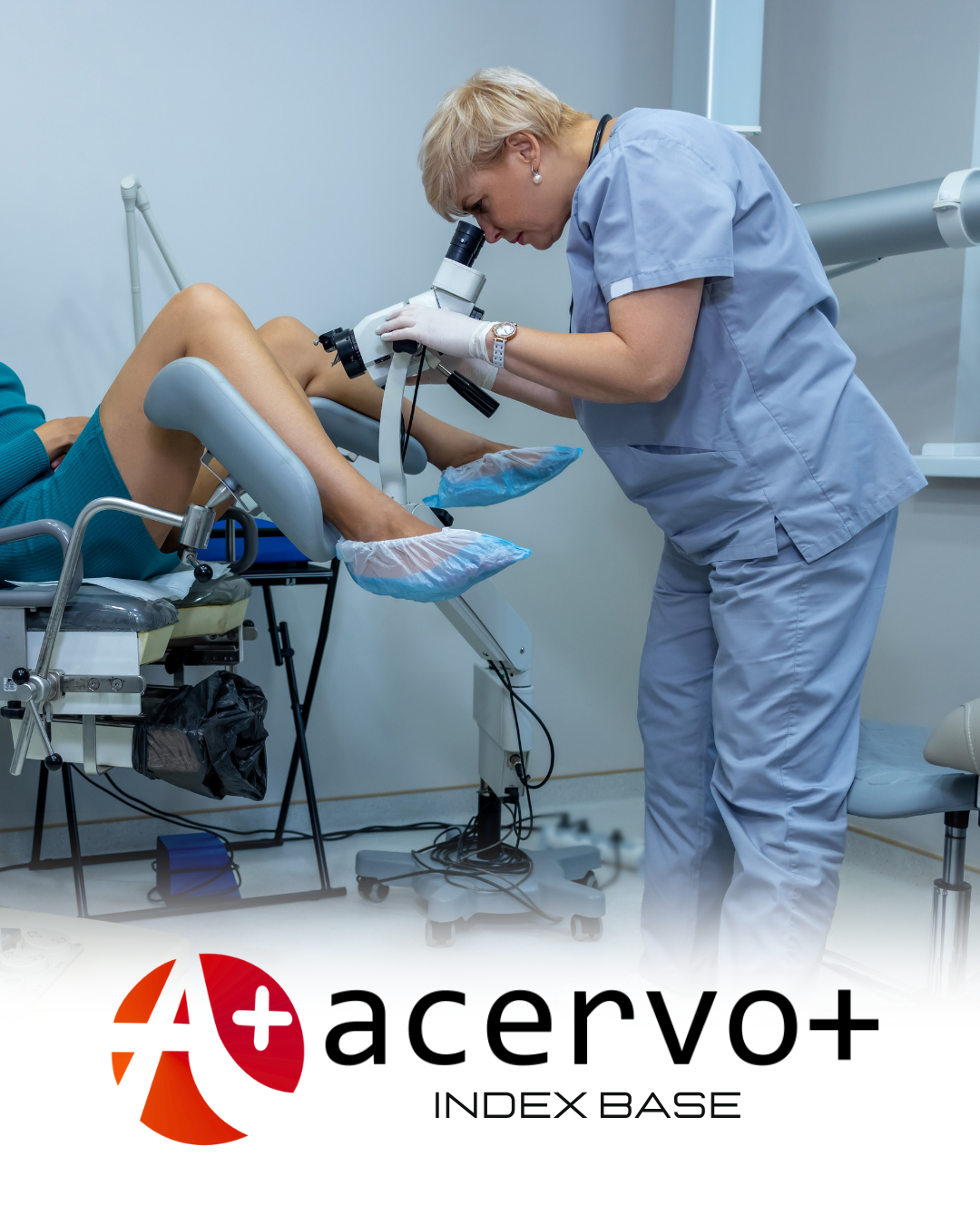
Objective: To verify the effect of topical estrogen on the transformation zone topography in colposcopy of hypoestrogenic patients, and its impact on differentiating cytological changes due to atrophy from true intraepithelial lesions, aiming to improve the management of cervical diseases in postmenopausal women. Methods: A retrospective study was conducted with climacteric women aged 50 years or older, presenting abnormal cervical cytology and initial negative colposcopy. Patients underwent treatment with conjugated topical estrogen for three months and were subsequently reassessed through repeat cytology and colposcopy. Results: A total of 98 patients were included, with a mean age of 57 years and a mean of 9.5 years since menopause. The rate of satisfactory colposcopies increased from 20.4% to 32.7% after estrogen use. Of the 78 women with type 3 transformation zone at baseline, 66 maintained the same topography. After treatment, 68% had negative cytology. High-grade squamous intraepithelial lesion (HSIL) persisted in 33.3% of cases, with 16.7% of these being diagnosed with microinvasive carcinoma. Conclusion: Topical conjugated estrogen improved cervical cytology accuracy in late postmenopausal women. No significant improvement was observed in transformation zone topography or in the rate of satisfactory colposcopies.
References
ABATI A, et al. Squamous atypia in the atrophic cervical vaginal smear: a new look at an old problem. Cancer, 1998; 84: 218–25.
ANSARI M, et al. Smear patterns and spectrum of premalignant and malignant cervical epithelial lesions in postmenopausal Indian women: a hospital-based study. Diagn Cytopathol, 2012; 40: 976–83.
BACKES LTH, et al. Cytomorphological analysis of cervical cytological smears of women aged over 60 years. J Bras Patol Med Lab, 2019; 55: 1-5.
BRUNO MT, et al. Management of ASC-US/HPV positive post-menopausal woman. Virol J, 2019; 16: 39.
CAKMAK B, KOSEOGLU DR. Comparison of cervical cytological screening results between postmenopausal and elderly women. Turkish Journal of Pathology, 2014; 30: 38.
CANO A, et al. Expression of estrogen receptors, progesterone receptors, and an estrogen receptor-associated protein in the human cervix during the menstrual cycle and menopause. Fertil Steril, 1990; 54: 1058–64.
CHUERY ACS, et al. Efficacy of vaginal use of topical estriol in postmenopausal women with urogenital atrophy. Clin Exp Obstet Gynecol, 2011; 38: 143–5.
EUN TJ, PERKINS RB. Screening for Cervical Cancer. Medical Clinics of North America, 2020; 104: 1063–78.
FLANNELLY G, et al. A study of treatment failures following large loop excision of the transformation zone for the treatment of cervical intraepithelial neoplasia. Br J Obstet Gynaecol, 1997; 104: 718–22.
FLYNN K, RIMM DL. Diagnosis of “ASCUS” in women over age 50 is less likely to be associated with dysplasia. Diagn Cytopathol, 2001; 24: 132–6.
FREEMAN-WANG T, WALKER P. Colposcopy in special circumstances: Pregnancy, immunocompromise, including HIV and transplants, adolescence and menopause. Best Pract Res Clin Obstet Gynaecol, 2011; 25: 653–65.
GHOUSSOUB RA, RIMM DL. Degree of dysplasia following diagnosis of atypical squamous cells of undetermined significance is influenced by patient history and type of follow-up. Diagn Cytopathol, 1997; 17: 14–9.
HALFORD J, et al. A review of histological outcomes from peri-menopausal and post-menopausal women with a cytological report of possible high grade abnormality: an alternative management strategy for these women. Pathology, 2010; 42: 23–7.
KISHI Y, et al. Colposcopy for postmenopausal women. Gynecol Oncol, 1985; 20: 62–70.
MANLEY KM, et al. Unsatisfactory colposcopy: Clinical decision-making in conditions of uncertainty. BMC Med Inform Decis Mak, 2017; 17: 1-7.
MUSTAFA FE-ZA, ELHANBALY R. Distribution of estrogen receptor in the rabbit cervix during pregnancy with special reference to stromal elements: an immunohistochemical study. Sci Rep, 2020; 10: 13655.
PATERSON ME, et al. Effects of the climacteric and sequential mestranol and norethisterone on the cervix and genital tract. Br J Obstet Gynaecol, 1982; 89: 657–64.
PATTON AL, et al. Atypical squamous cells, cannot exclude a high-grade intraepithelial lesion and its clinical significance in postmenopausal, pregnant, postpartum, and contraceptive-use patients. Cancer, 2008; 114: 481–8.
PICCOLI R, et al. Atypical squamous cells and low squamous intraepithelial lesions in postmenopausal women: implications for management. Eur J Obstet Gynecol Reprod Biol, 2008; 140: 269–74.
PRENDIVILLE WJ, et al. Medical dilatation of the non-pregnant cervix: the effect of ethinyl oestradiol on the visibility of the transformation zone. Br J Obstet Gynaecol, 1986; 93: 508–11.
RATREE S, et al. Histopathology of Women with “Atypical Squamous Cells Cannot Exclude High-Grade Squamous Intraepithelial Lesion” (ASC-H) Smears. Asian Pac J Cancer Prev, 2019; 20: 683–6.
REMOUE F, et al. High intraepithelial expression of estrogen and progesterone receptors in the transformation zone of the uterine cervix. Am J Obstet Gynecol, 2003; 189: 1660–5.
RICHARDS A, DALRYMPLE C. Abnormal cervicovaginal cytology, unsatisfactory colposcopy and the use of vaginal estrogen cream: an observational study of clinical outcomes for women in low estrogen states. J Obstet Gynaecol Res, 2015; 41: 440–4.
ROBERTS ADG, et al. The Value of Cervical Colposcopic Assessment in the Management of Genital Hormone Deficiency. J Gynecol Surg, 1986; 2: 141–6.
SAAD RS, et al. Cytomorphologic analysis and histological correlation of high-grade squamous intraepithelial lesions in postmenopausal women. Diagn Cytopathol, 2006; 34: 467–71.
SAUNDERS N, et al. Unsatisfactory colposcopy and the response to orally administered oestrogen: a randomized double blind placebo controlled trial. Br J Obstet Gynaecol, 1990; 97: 731–3.
SELVAGGI SM. Clinical significance of atypical squamous cells cannot exclude high grade squamous intraepithelial lesion with histologic correlation: a 9-year experience. Diagn Cytopathol, 2013; 41: 943–6.
WRIGHT TC JR, et al., for the ASCCP-Sponsered Consensus Conference. 2001 consensus guidelines for the management of women with cervical cytological abnormalities. Jama, 2002; 287: 2120-2129.
ZANINE RM, et al. Doenças do Trato Genital Inferior e Colposcopia: Um Enfoque na Terapêutica. 1a edição. Rio de Janeiro: Thieme Revinter, 2021; 5-6.