
Keywords
Food consumption
Eating behavior
Ultra-processed foods
Public health
How to Cite
Copyright © | All rights reserved.
The journal holds the exclusive copyright for the publication of this article under the terms of Brazilian law 9610/98.
Partial reproduction
The use of parts of the texts, figures and questionnaire of the article is free, being mandatory the citation of the authors and journal.
Total reproduction
It is expressly prohibited and must be authorized by the journal.
Abstract
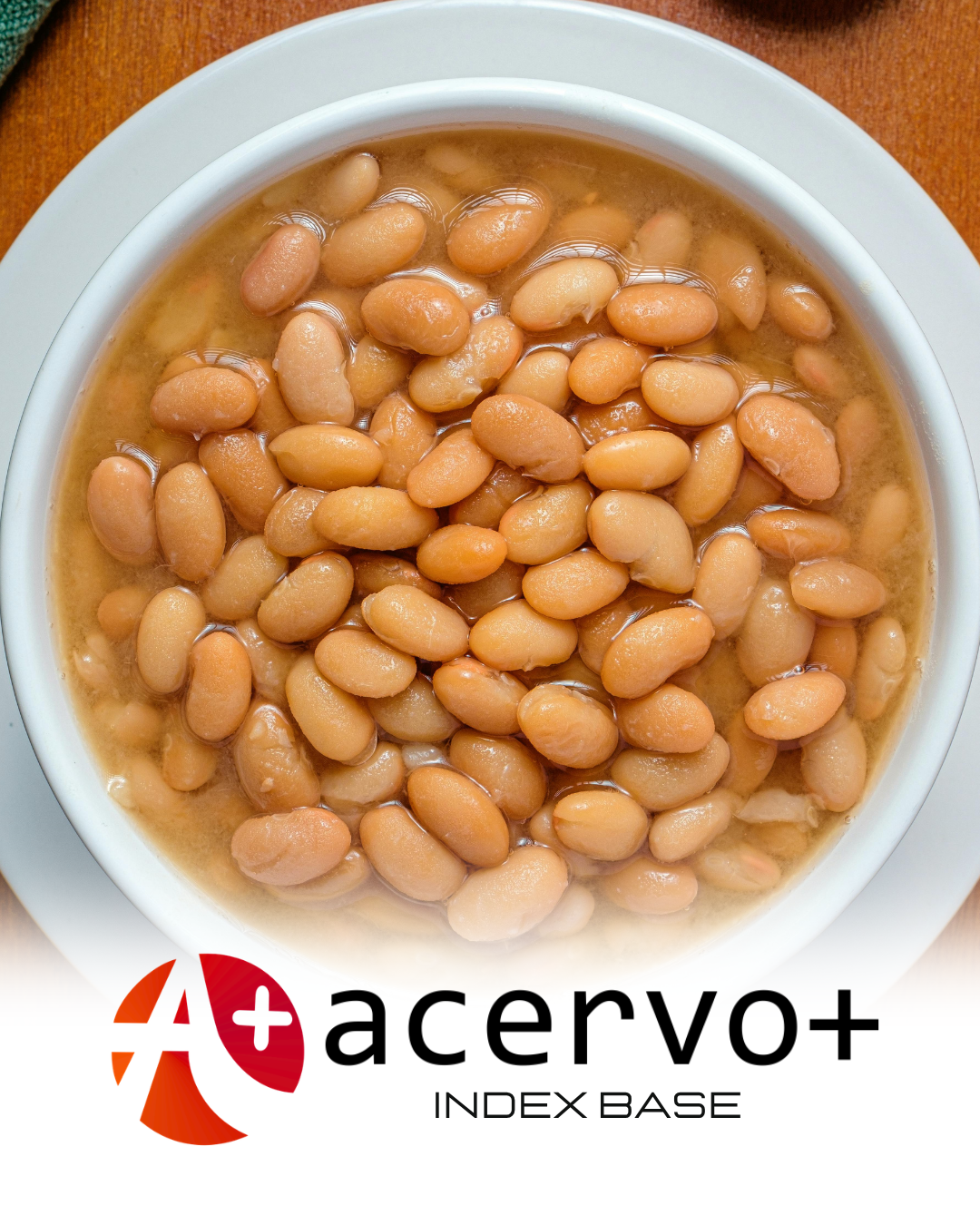
Objective: To identify changes in the trend of traditional food consumption among the Brazilian adult population, through the projection of the estimated prevalence of bean consumption up to the year 2040. Methods: Time series analysis with data from the Surveillance System for Protective and Risk Factors for Chronic Diseases by Telephone Survey (Vigitel) between 2007 and 2024. Weekly bean consumption was analyzed using Prais-Winsten regression. Based on the consumption trend between 2007 and 2024, the estimated prevalences for the analyzed indicators were projected until 2040. Results: Changes in the traditional food consumption of adults were identified. Regular bean consumption (≥ 5 days/week) showed the greatest magnitude among the indicators, with a decreasing trend between 2007 (66,8%) and 2040 (45,7%). However, in the year 2037, a reversal in the trend curves is predicted, and irregular bean consumption (1-4 days/week) will be the dominant prevalence (48.1%). Conclusion: The reduction in weekly bean consumption may represent the fragility of a traditional food culture in a globalized food system, where regular bean consumption will cease to be the predominant habit in the country, thus revealing the loss of importance of beans in the daily diet of the Brazilian population.
References
ALPINO TMA, et al. Os impactos das mudanças climáticas na Segurança Alimentar e Nutricional: uma revisão da literatura. Ciência & Saúde Coletiva, 2022; 27(1):273-286.
BECK AM, et al. Grandchildren's food workshop: Impact of an intergenerational cooking program on dietary habits, food courage, cooking skills and two-way interaction in Danish children and their grandparents. Nutr Health., 2021; 27(4): 413-421.
BÉJAR LM. Weekend-Weekday Differences in Adherence to the Mediterranean Diet among Spanish University Students. Nutrients, 2022; 14(14): 2811.
BEZERRA IN, et al. Evolution of out-of-home food consumption in Brazil in 2008-2009 and 2017-2018. Rev Saude Publica, 2021; 55(suppl 1): 6s.
BRASIL. Guia alimentar para a população brasileira. Brasília: Ministério da Saúde, 2014.
BRASIL. Vigitel Brasil 2024: vigilância de fatores de risco e proteção para doenças crônicas por inquérito telefônico: Estimativas sobre frequência e distribuição sociodemográficas de fatores de risco e proteção para doenças crônicas nas capitais dos 26 estados brasileiros e no Distrito Federal em 2024. Brasília: Ministério da Saúde, 2025.
ESPOSITO F, et al. Weekday and Weekend Differences in Eating Habits, Physical Activity and Screen Time Behavior among a Sample of Primary School Children: The "Seven Days for My Health" Project. Int J Environ Res Public Health, 2022; 19(7): 4215.
FANZO J, et al. The importance of food systems and the environment for nutrition. Am J Clin Nutr, 2021; 113(1): 7-16.
FAO. Nutritional Benefits of Pulses. Food and Agriculture Organization of the United Nations, 2021.
FAO. 2024. Food and Agriculture Organization. The Globalization of Dietary Patterns. Disponível em: https://openknowledge.fao.org/server/api/core/bitstreams/7ca7c051-6ad2-4595-820b-c373fdb365f1/content/state-of-agricultural-commodity-markets/2024/globalization-dietary-patterns.html. Acesso em: 05 de fevereiro de 2026.
GESTEIRO E, et al. Eating out of Home: Influence on Nutrition, Health, and Policies: A Scoping Review. Nutrients, 2022; 14(6): 1265.
GRANADO FS, et al. Reduction of traditional food consumption in Brazilian diet: trends and forecasting of bean consumption (2007-2030). Public Health Nutrition, 2021; 24: 1185-92.
IBGE. Avaliação nutricional da disponibilidade domiciliar de alimentos no Brasil. Rio de Janeiro: Instituto Brasileiro de Geografia e Estatística, 2020.
IBGE. Pesquisa de Orçamentos Familiares 2008-2009: Antropometria e Estado Nutricional de Crianças, Adolescentes e Adultos no Brasil. Brasília: Instituto Brasileiro de Geografia e Estatística, 2010.
LEVY RB, et al. How and why ultra-processed foods harm human health. Proc Nutr Soc, 2024; 83(1): 1-8.
MAIA EG, et al. Replacing ultra-processed foods with fresh foods to meet the dietary recomendations: a matter of cost? Cad Saude Publica, 2022; 37(Suppl 1): e00107220.
MAIA EG, et al. What to expect from the price of healthy and unhealthy foods over time? The case from Brazil. Public Health Nutrition, 2020; 23: 579-88.
MENDES LL, et al. Validade e reprodutibilidade de marcadores do consumo de alimentos e bebidas de um inquérito telefônico realizado na cidade de Belo Horizonte (MG), Brasil. Rev Bras Epidemiol, 2011; 14: 80-9.
MONTEIRO LS, et al. Consumo alimentar segundo os dias da semana – Inquérito Nacional de Alimentação, 2008-2009. Rev Saude Publica, 2017; 51:93.
QIAO J, et al. Global burden of non-communicable diseases attributable to dietary risks in 1990-2019. J Hum Nutr Diet, 2022; 35(1): 202-213.
SANTOS A, CARRARA AF. Estoques regulatórios e controle da inflação dos alimentos: impactos na política pública e segurança alimentar no Brasil. Rev. Econ. Sociol. Rural, 2025; 63: e283518.
TURNER G, et al. The association of dimensions of fruit and vegetable access in the retail food environment with consumption; a systematic review. Glob Food Sec, 2021; 29: 100528.
VASCONCELOS TM, et al. Purchase of food for away-from-home consumption according to urban and rural areas of Brazil between 2002 and 2018. Rev Bras Epidemiol, 2025; 28: e250013.
WHO. 2026. World Health Organization. Healthy diet. Disponível em: https://www.emro.who.int/noncommunicable-diseases/causes/unhealthy-diets.html. Acesso em: 05 fevereiro de 2026.
WHO. Noncommunicable diseases. Geneva: World Health Organization, 2025.
ZOU Y, LIN L. From clicks to calories: Online-to-offline food consumption and overweight and obesity. PLoS One, 2024; 19(12): e0315189.