
Keywords
COVID-19
Pregnant women
Disinformation
Vaccine hesitancy
How to Cite
Copyright © | All rights reserved.
The journal holds the exclusive copyright for the publication of this article under the terms of Brazilian law 9610/98.
Partial reproduction
The use of parts of the texts, figures and questionnaire of the article is free, being mandatory the citation of the authors and journal.
Total reproduction
It is expressly prohibited and must be authorized by the journal.
Abstract
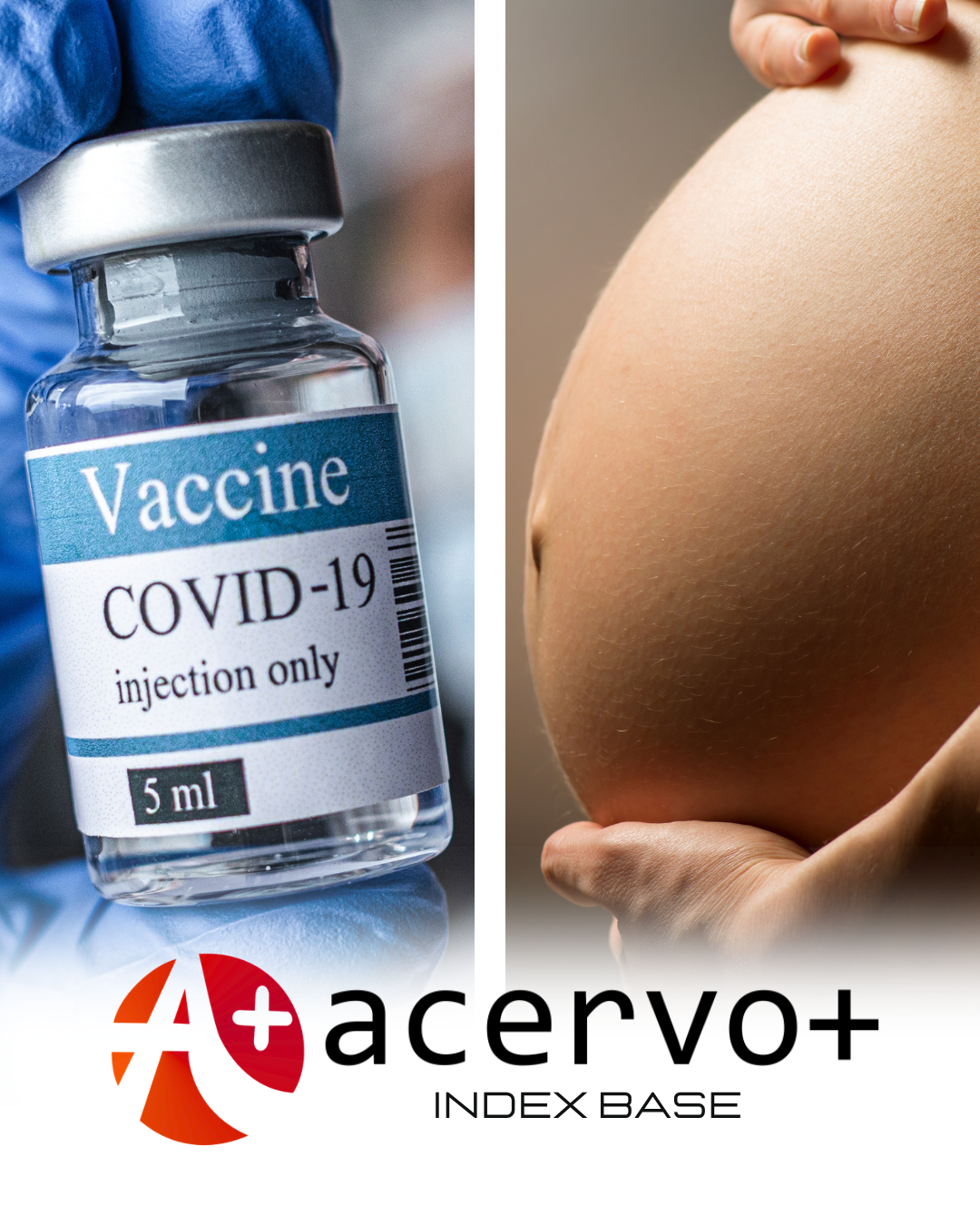
ABSTRACTObjective: To analyze, in scientific literature, how misinformation participates in the production of meaning in pregnant women's decisions about whether or not to take the COVID-19 vaccine. Methods: This is an integrative review of the literature, to conduct the search and selection, the PICO and PRISMA strategies were used, the searches were carried out in journals indexed in the PubMed and Virtual Health Library (VHL) databases, in PubMed, MeSH descriptors were used and in the VHL, DeCS descriptors were used. In addition to the use of the Boolean operators AND and OR. Results: The analysis indicated that several factors influence the vaccination decision: a) The circulation of misinformation; b) Trust in institutions and health professionals; c) Personal experience and social relationships; d) Socioeconomic conditions. Final considerations: Vaccine hesitancy is characterized as a socially constructed phenomenon, in which the meanings attributed to vaccination are produced in everyday discursive practices. Disinformation plays an active and structuring role; in addition to being characterized as an interpretative repertoire that competes in legitimacy with scientific discourse, it reorganizes perceptions about risk, safety and protection, making it possible to shift the meaning of care by making non-vaccination interpreted as a form of maternal and child protection.
References
ALHEFDHI HA, et al. COVID-19 vaccine uptake and hesitancy among pregnant and lactating women in Saudi Arabia. Vaccines, Basel, 2023; 11(2): 361.
ALKHALIFAH M, ALHUSSEINI N, MCGHEE J. COVID-19 vaccine hesitancy among pregnant women. Cureus, 2023; 15(6): e41126.
BRASIL. Ministério da Saúde. Vacinas e gravidez: uma combinação que garante saúde. Desinformação sobre vacinação gera receio do grupo e abala confiança nas vacinas. 2024. Disponível: https://www.gov.br/saude/pt-br/assuntos/saude-com- ciencia/noticias/2024/junho/vacinas-e-gravidez-uma-combinacao-que-garante- saude. Acessado: 19.04.2026.
CARVALHO DE SOUSA R, et al. Influences on COVID-19 vaccine adherence among pregnant women: the role of internet access and pre-vaccination emotions. International Journal of Environmental Research and Public Health, 2024; 21(6): 719.
CHOI Y, FOX AM. Mistrust in public health institutions is a stronger predictor of vaccine hesitancy and uptake than trust in Trump. Social Science & Medicine, 2022; 314: 115440.
CITU IM, et al. Determinants of COVID-19 vaccination hesitancy among Romanian pregnant women. Vaccines, Basel, 2022; 10(2): 275.
GALHARDI CP, et al. Fake news e hesitação vacinal no contexto da pandemia da COVID-19 no Brasil. Ciência & Saúde Coletiva, 2022; 27(5): 1849-1858.
GERGEN K J, GERGEN M. Construcionismo social: um convite ao diálogo. 1ª Edição. Instituto Noos: Rio de Janeiro-RJ, 2010.
GOMES ALS, et al. Determinantes da hesitação vacinal em gestantes no Brasil: uma revisão integrativa. Contribuciones a las Ciencias Sociales, 2025; 18(8): e20010.
KHAN S, et al. COVID-19 vaccine uptake, acceptance, and reasons for vaccine hesitancy: a cross- sectional study among pregnant women in Trinidad, West Indies. International Journal of Women’s Health, 2023; 15: 343-354.
MISKOLCI R. Muito além do negacionismo: desinformação durante a pandemia de Covid-19. Sociologias, Porto Alegre, volume 25, 2023, e-soc123090, p. 1-26.
MOHAMED PAUZI MH, et al. A qualitative study on barriers and facilitators of COVID-19 vaccination during pregnancy among pregnant women in Malaysia. PLoS One, 2025; 20(8): e0329895.
NKEREUWEM O, et al. Acceptance of a newly introduced COVID-19 vaccine among pregnant women and their decision influencers: a qualitative study in The Gambia. Vaccine, 2026; 71: 128070.
OGUNDELE OA, et al. Determinants of vaccine hesitancy among pregnant women in South-West Nigeria: an explanatory sequential mixed method design. BMJ Open, 2025; 15(10): e101767.
ORGANIZAÇÃO MUNDIAL DA SAÚDE (OMS). Vacinas e imunização. Genebra: OMS, 2026. Disponível em: https://www.who.int/health-topics/vaccines-and-immunization#tab=tab_1. Acesso em: 09/04/2026.
Portal G1 Pará e TV Liberal. Em 2025, Pará já registra mais de 3.400 casos e 27 mortes por Covid-19: Belém é o município com maior número de óbitos, com 12 mortes no total. 2025. Disponível:
https://g1.globo.com/pa/para/noticia/2025/02/19/em-2025-para- ja-registra-mais-de-3400-casos-e-27-mortes-por-covid-19.ghtml. Acessado: 19.04.2026.
RAZAI M S, et al. Navigating vaccination in pregnancy: qualitative study in 21 ethnically diverse pregnant women. PLoS One, 2025; 20(1): e0310823.
REHMAN E, et al. COVID-19 vaccine reluctance and possible driving factors: a comparative assessment among pregnant and non-pregnant women. Frontiers in Public Health, 2023; 10: 1100130.
RIBEIRO LHS, et al. Factors associated with the vaccination decision of pregnant women against COVID-19: a mixed study. Online Brazilian Journal of Nursing, 2024; 23: e20246682.
SKJEFTE M, et al. COVID-19 vaccine acceptance among pregnant women and mothers of young children: results of a survey in 16 countries. European Journal of Epidemiology, 2021; 36(2): 197-211.
SPINK MJ (Org.). Práticas discursivas e produção de sentidos no cotidiano: aproximações teóricas e metodológicas. 1ª Edição. Centro Edelstein de Pesquisas Sociais: Rio de Janeiro-RJ, 2013.
WILLIAMS E, et al. COVID-19 vaccine barriers among pregnant and lactating refugee women: a case study. Frontiers in Public Health, 2025; 13: 1600107.
ZILVER SJM, et al. Pregnant individuals’ perspectives towards receiving COVID-19 vaccination during their pregnancy: an in-depth qualitative study. Frontiers in Public Health, 2024; 12: 1415548.