
Palabras clave
Microbiota
Resistencia antimicrobiana
Potamotrygoninae
Amazonía
Cómo citar
Copyright © | Todos los derechos reservados.
La revista posee los derechos de autor exclusivos para la publicación de este artículo en los términos de la ley brasileña 9610/98.
Reproducción parcial
El uso de partes de los textos, figuras y cuestionario del artículo es libre, siendo obligatoria la citación de los autores y revista.
Reproducción total
Está expresamente prohibido y debe ser autorizado por la revista.
Resumen
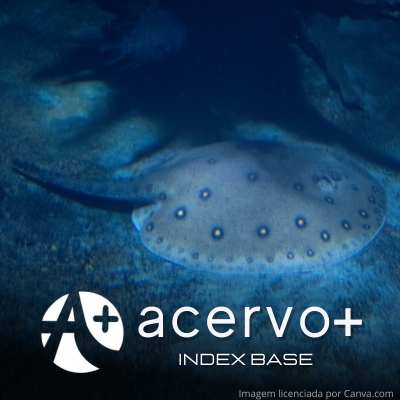
Objetivo: Estudiar la comunidad y el perfil de resistencia antimicrobiana de las bactérias aisla das del tejido cutáneo de rayas de la subfamília Potamotrygoninae, recolectadas em los ríos Amazonas y Tapajós. Métodos: Después de la captura de cuatro rayas, dos hembras y dos machos, en dos lugares de la Amazonía, se utilizóunhisopo empapado en caldo de triptona de soja para recolectar material de laregión dorsal de lapiel y el moco de los animales. El material recolectadopasó por dilución seriada hasta 10-5, y los aisla dos fueron identificados bioquímicamente. Se utilizo el método de Kirby-Bauer para evaluarel perfil de resistencia antimicrobiana frente a ocho antimicrobianos, y los resultados fueron evaluados según BrCAST. Resultados: Se aislaron 76 cepas bacterianas, predominando Corynebacterium spp. y Bacillus spp., conel 61% de las cepas resistentes a al menos un antibiótico, siendo los más comunes oxacilina y penicilina. Conclusiones: Este estudio fue el primero em aislar bactérias del género Corynebacterium de lasr ayas, com el mayor número de resistencias a oxacilina y penicilina dentro de laclase de las penicilinas. Desde la perspectiva de la salud única, el uso de peces y aguas fluviales para monitorear la diseminación de genes de resistencia es interesante, considerando la estrecha relación de las poblaciones amazónicas com los ecossistemas acuáticos y la salud de estos animales.
Referencias
ABATI PAM, et al. Injuries caused by freshwater stingrays in the Tapajós River Basin: a clinical and sociodemagraphic study. Revista da Sociedade Brasileira de Medicina Tropical, 2017; 50(03): 374-378.
AZAM MW e KHAN AU. Updates on the pathogenicity status of Pseudomonas aeruginosa. Drug Discovery Today, 2019; 24(1): 350-359.
BAUER AW e KIRBY WM, et al. Antibioticsusceptibilitytestingby a standardized single disc method. American Journalof Clinical Pathology, v. 45, p. 149-158, 1966. Disponível em: . Acesso em 03 de março de 2024.
BERGEY DH e HOLT JG. Bergey’s Manual of Determinative Bacteriology. Baltimore: The Williams & Wilkins Company, 2000.
CARVALHO MRD. Description of two extraordinary new species of freshwater stingrays of the genus Potamotrygon endemic to the Rio Tapajós basin, Brazil (Chondrichthyes: Potamotrygonidae), with notes on other Tapajós stingrays. Zootaxa, 2016; 4167 (1): 1–63.
CAZANAVE C, et al. Corynebacterium prosthetic joint infection. Journalof Clinical Microbiology, 2012; 50 (5): 1518-1523.
CHAMBERLAIN M, et al. Metabolomic Analysis of Lactobacillus acidophilus, L. gasseri, L. crispatus, and Lacticaseibacillusrhamnosus Strains in the Presence of Pomegranate Extract. Frontiers in Microbiology, 2022; 13: 863228.
CHANG RYK e NANG SC, et al. Novel antimicrobialagents for combatingantibiotic-resistantbacteria. AdvanceDrug DeliveryReviews, 2022; 187: 114378.
CONCEIÇÃO K, et al. Potamotrygon cf. henleistingraymucus: biochemical features of a novel antimicrobial protein. Toxicon, 2012; 60(5): 821-829.
CUNHA ILFD, et al. Perfil clínico e sociodemográfico de pacientes acometidos por ferroadas de arraias e terapêuticas aplicadas. Revista Pan-Amazônica de Saúde, 2021; 12.
DAS S, et al. Corynebacteriumspp as causative agents of microbial keratitis. British JournalofOphthalmology, 2016; 100(7): 939-943.
DOMINGOS MO, et al. The influence of environmental bacteria in freshwater stingray wound-healing. Toxicon, 2011; 58(2): 147-153.
DUNCAN WP, et al. Comércio de raias de água doce na Região do Médio Rio Negro, estado do Amazonas, Brasil. Revista Brasileira de Engenharia de Pesca, 2010; 5(2): XIII–XXII.
FERNANDES GST, et al. Antibiotic resistance in the superficial mucosa microbiota in an Amazonian fish, mapará (Hypophthalmus spp.). BrazilianJournalofDevelopment, 2021; 7(1): 10178–10195.
FONTENELLE JP, et al. Molecular phylogeny for the neotropical freshwater stingrays (Myliobatiformes: Potamotrygoninae) reveals limitations of traditional taxonomy. BiologicalJournalofLinnean Society. 2021; 134(2): 381–401.
FRICKE R, et al. Eschmeyer’s catalog of fishes: Genera, species, references. 2023. Disponível em: http ://researcharchive.calacademy.org/research/ichthyology/catalog/fishcatmain.asp. Acessado em: 10 novembro de 2024.
FUDOU R, et al. Corynebacterium efficiens sp. nov., a glutamic-acid-producing species from soil and vegetable. Internacional journalsystematicandevolutionarymicrobiology, 2002; 52(4): 1127–1131.
GOMES MFS, et al. Occurrence of four freshwater stingrays (Chondrichthyes: Potamotrygoninae) in the Uatumã River Basin, Amazon region: a field study. Fishes, 2024; 9(5): 186.
HADDAD JUNIOR V, et al. Injuries by marine and freshwater stingrays: history, clinical aspects of the envenomations and current status of a neglected problem in Brazil. JournalofVenomousAnimalsandToxinsIncluding Tropical Diseases, 2013; 19(00): 1-11.
HADDAD JUNIOR V, et al. Traumas e envenenamentos por arraias e outros peixes em comunidade pesqueira do Pontal do Paranapanema, estado de São Paulo, Brasil: epidemiologia, aspectos clínicos, medidas terapêuticas e preventivas. Revista da Sociedade Brasileira de Medicina Tropical, 2012; 45(2): 238-242.
HAQUE MA, et al. Pathogenicity of feed-borne Bacillus cereus and its implication on food safety. Agrobiological records, 2021; 3: 1-16.
JERIKHO R, et al. Foreign stingers: South American freshwater river stingrays Potamotrygon spp. established in Indonesia. Scientific Reports, 2023; 13(1): 7255.
KANG D, et al. Profilingemergingmicropollutants in urbanstormwaterrunoffusingsuspectand non-target screening via high-resolutionmassspectrometry. Chemosphere, 2024; 352: 141402.
LALLÈS J. Biology, environmental and nutritional modulation of skin mucus alkaline phosphatase in fish: A review. Fish&shellfishimmunology, 2019; 89: 179-186.
LAMEIRAS JLV, et al. Arraias de água doce (Chondrichthyes–Potamotrygonidae): biologia, veneno e acidentes. Scientia Amazonia, 2013; 2(3): 11-27.
LULIJWA R, et al. Antibiotic use in aquaculture, policies andregulation, healthandenvironmentalrisks: a review ofthe top 15 major producers. Reviews in Aquaculture, 2020; 12(2): 640–663.
MOMBERG DJ, et al. Rethinking water, sanitation, and hygiene for human growth and development. Global publichealth, 2022; 17(12): 3815–3824.
MULANI MS, et al. Emerging Strategies to Combat ESKAPE Pathogens in the Era of Antimicrobial Resistance: A Review. Front. Microbiol. 2019; 10: 539.
PEDROSO CM, et al. Morphological characterization of the venom secretory epidermal cells in the stinger of marine and freshwater stingrays. Toxicon, 2017; 50(5): 688-97.
RENSCH GP e ELSTON DM. Aquatic antagonists: stingray injury update. Cutis, 2019; 103(3): 138-140.
SANTANA EHW, et al. Estafilococos em alimentos. Arquivos do Instituto Biológico, 2010; 77(3): 545-554.
SANTOS ELQV. A Pesca Comercial de Raias para Consumo Alimentar no Eixo Fluvial Solimões-Amazonas; Dissertação de Mestrado do Programa de Pós-graduação em Ciência Animal e Recursos Pesqueiros; Universidade Federal do Amazonas: Manaus, Brazil, 2022; 47.
SILVA F, et al. Transcriptomic Characterization of the South American Freshwater Stingray Potamotrygon motoro Venom Apparatus. Toxins, 2018; 10(12): 544.
SILVA JPCB e LOBODA TS. Potamotrygon marquesi, a new species of neotropical freshwater stingray (Potamotrygonidae) from the Brazilian Amazon Basin. JournalofFishBiology, 2019; 95(2): 594‒612.
SILVA JUNIOR NJ, et al. A severe accident caused by an ocellate river stingray (Potamotrygon motoro) in Central Brazil: how well do we really understand stingray venom chemistry, envenomation, and therapeutics? Toxins, 2015; 7(6): 2272-2288.
TIZABI D e HILL RT. Micrococcus spp. as a promising source for drug discovery: A review. Journalof Industrial MicrobiologyandBiotechnology, 2023; 50(1): 17.
UDDIN MG, et al. A comprehensive method for improvement of water quality index (WQI) models for coastal water quality assessment. Waterresearch, 2022; 219: 118532.
VENNILA R, et al. Preliminary investigation on antimicrobial and proteolytic property of the epidermal mucus secretion of marine stingrays. Asian Pacific Journalof Tropical Biomedicine, 2011; 1(2): 239- 243.
WEINSTEIN RA. Controllingantimicrobialresistance in hospitals: infectioncontroland use ofantibiotics. EmergingInfectiousDiseases, 2001; 7(2): 1888-92.
YANG Y, et al. Occurrences and removal of pharmaceuticals and personal careproducts (PPCPs) in drinkingwaterandwater/sewagetreatmentplants: A review. Science ofthe Total Environment, 2017; 596: 303-320.
ZHENG J, et al. A taxonomic note on the genus Lactobacillus: Description of 23 novel genera, emended description of the genus LactobacillusBeijerinck 1901, and union of Lactobacillaceae and Leuconostocaceae. InternationalJournalofSystematicandEvolutionaryMicrobiology, 2020; 70(4): 2782-2858.