
Palabras clave
Dianas proteicas
Desarrollo de insecticidas
Dianas moleculares
Cómo citar
Copyright © | Todos los derechos reservados.
La revista posee los derechos de autor exclusivos para la publicación de este artículo en los términos de la ley brasileña 9610/98.
Reproducción parcial
El uso de partes de los textos, figuras y cuestionario del artículo es libre, siendo obligatoria la citación de los autores y revista.
Reproducción total
Está expresamente prohibido y debe ser autorizado por la revista.
Resumen
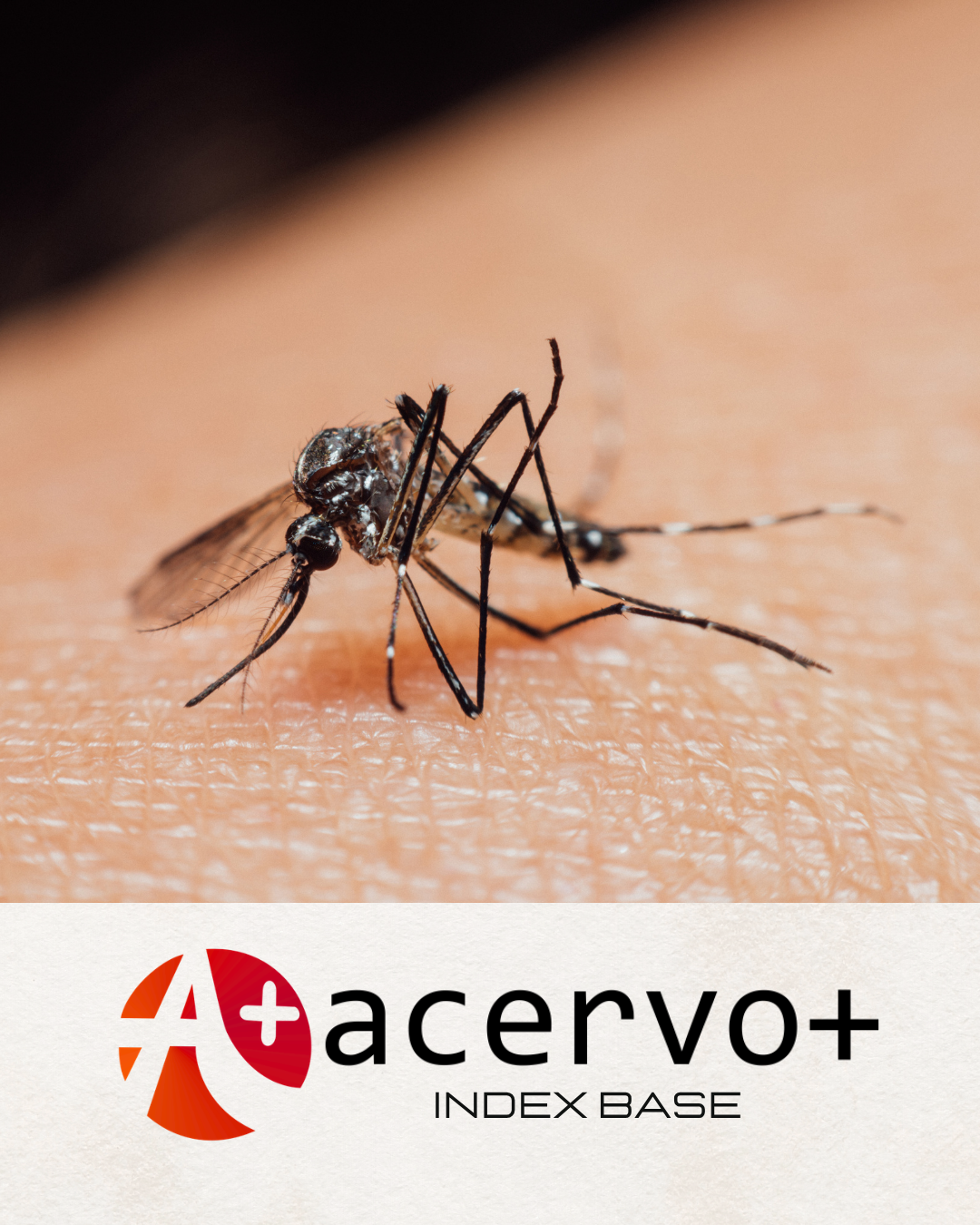
Objetivo: Identificar las principales proteínas de Aedes aegypti investigadas en el desarrollo de insecticidas. Métodos: Se realizó una revisión de la literatura científica publicada entre 2014 y 2024 utilizando las bases de datos PubMed, ScienceDirect y Scopus, con los descriptores "Aedes aegypti", "protein targets" y "mode of action". Se incluyeron artículos experimentales revisados por pares y publicados en inglés. Los estudios seleccionados se analizaron según los tipos de proteínas diana investigadas y los enfoques metodológicos utilizados (in silico, in vitro e in vivo). Resultados: De los 335 artículos recuperados inicialmente, 17 cumplieron los criterios de inclusión. El glutatión S-transferasa (GST) fue la diana de desintoxicación investigada con mayor frecuencia, seguida de varias isoformas de GST. Las dianas metabólicas clave incluyeron la proteína fijadora de olores 1 (OBP1), la 3-hidroxiquinurenina transaminasa (HKT), la acetilcolinesterasa (AChE), la proteína transportadora de esteroles 2 (SCP-2) y la anhidrasa carbónica (CA). Las dianas relacionadas con la neurotransmisión incluyeron el receptor dopaminérgico AaDOP2 y los cotransportadores de cationes cloruro CCC2 y CCC3. Conclusión: Los resultados destacan las dianas proteicas como una estrategia prometedora para el control de A. aegypti y enfatizan la necesidad de identificar nuevas dianas moleculares para insecticidas más eficaces y sostenibles.
Referencias
AGUIAR GRF, et al. Common arboviruses and the kidney: a review. Brazilian Journal of Nephrology, 2024; 46(3), 1-11.
ALBUQUERQUE BNL, et al. Oviposition deterrence, larvicidal activity and docking of β-germacrene-D-4-ol obtained from leaves of Piper corcovadensis (Piperaceae) against Aedes aegypti. Industrial Crops and Products, 2022; 182: 1-11.
ARAÚJO MO, et al. Larvicidal activity of cinnamic acid derivatives: investigating alternative products for Aedes aegypti L. control. Molecules, 2020; 26(1): 1-21.
BEYENBACH KW, et al. Targeting renal epithelial channels for the control of insect vectors. Tissue Barriers, 2015; 3(1): 1-14.
BEZERRA WAS, et al. In vitro and in silico evaluation of plant compounds as inhibitors of glutathione S-transferase from Rhipicephalus microplus and R. decoloratus. Molecular and Biochemical Parasitology, 2026; 1-7.
CONLEY JM, et al. Evaluation of AaDOP2 receptor antagonists reveals antidepressants and antipsychotics as novel lead molecules for control of the yellow fever mosquito, Aedes aegypti. The Journal of Pharmacology and Experimental Therapeutics, 2015; 352(1): 53-60.
DONG S, et al. Pleiotropic Odorant-Binding Proteins Promote Aedes aegypti Reproduction and Flavivirus Transmission. mBio, 2021; 12(5): 1-18.
EBIHARA K, and NIWA, R. Compounds inhibiting noppera-bo, a glutathione S-transferase involved in insect ecdysteroid biosynthesis: novel insect growth regulators. Biomolecules, 2023; 13(3): 1-12.
FARIA-REIS A, et al. Silencing of the 20S proteasomal subunit-α6 triggers full oogenesis arrest and increased mRNA levels of the selective autophagy adaptor protein p62/SQSTM1 in the ovary of the vector Rhodnius prolixus. PLOS Neglected Tropical Diseases, 2023; 17(6): 1-23.
HIBINO H, et al. Inwardly rectifying potassium channels: their structure, function, and physiological roles. Physiological Reviews, 2010; 90(1): 1-76.
JOHNSON EJ, et al. Bioinsecticidal activity of cajeput oil to pyrethroid-susceptible and-resistant mosquitoes. Pesticide Biochemistry and Physiology, 2023; 193:1-10.
KOK BH, et al. Dengue virus infection–a review of pathogenesis, vaccines, diagnosis and therapy. Virus research, 2023; 324: 11-17.
KOSTAROPOULOS I, et al. Glutathione S-transferase in the defence against pyrethroids in insects. Insect Biochem Mol Biol. 2001; 31(4-5): 1-7.
LIMA-CÂMARA TN, et al. Arboviroses emergentes e desafios de saúde pública no Brasil. Revista Saúde Púlica, 2016; 50: 1-7.
MACIEL LG, et al. Discovery of 1, 2, 4-oxadiazole derivatives as a novel class of noncompetitive inhibitors of 3-hydroxykynurenine transaminase (HKT) from Aedes aegypti. Bioorganic & Medicinal Chemistry, 2020; 28(2): 1-20.
MACIEL LG, et al. A second generation of 1,2,4-oxadiazole derivatives with enhanced solubility for inhibition of 3-hydroxykynurenine transaminase (HKT) from Aedes aegypti. RSC Medicinal Chemistry, 2021; 12(2): 1-15.
MACIEL LG, et al. Inhibition of 3-Hydroxykynurenine Transaminase from Aedes aegypti and Anopheles gambiae: a mosquito-specific target to combat the transmission of arboviruses. ACS Bio & Med Chem Au, 2023; 3(2):1-12.
MANNERVIK B. Glutathione transferases structure and catalytic activity. CRC Crit. Rev. Biochem, 1976;23(281-334): 1-55.
MEYER JM, et al. A “Genome-to-Lead” Approach for Insecticide Discovery: Pharmacological Characterization and Screening of Aedes aegypti D(1)-like Dopamine Receptors. PLoS Neglected Tropical Diseases, 2012; 6(1):1-15.
MOURÃO EDS, et al. Identification of molecular scaffolds from Caatinga Brazilian biome with potential against Aedes aegypti by molecular docking and molecular dynamics simulations. Journal of Molecular Structure, 2021; 1229: 1-7.
MUTUNGA JM. et al. Mosquito acetylcholinesterase as a target for novel phenyl-substituted carbamates. International Journal of Environmental Research and Public Health, 2019; 16(9): 1-13.
OLIVEIRA JHM, et al. Blood-feeding triggers heme-induced oxidative stress and differential expression of GSTs in Aedes aegypti. Frontiers in Physiology, 2020;4(11): 1-11.
PELOSI P, et al. Beyond chemoreception: diverse tasks of soluble olfactory proteins in insects. Biological Reviews, Cambridge, 2018; 93(1): 1-17.
PIERMARINI PM, et al. Localization and role of inward rectifier potassium channels in Malpighian tubules of the yellow fever mosquito Aedes aegypti. Insect Biochemistry and Molecular Biology, 2015; 66: 1–15.
PIERMARINI PM, et al. Malpighian Tubules as Novel Targets for Mosquito Control. International Journal of Environmental Research and Public Health, 2017; 14(2): 1-15.
POURZANGIABADI M. et al. Dengue virus: Etiology, epidemiology, pathobiology, and developments in diagnosis and control – A comprehensive review. Infection, Genetics and Evolution, 2024; 127: 1-14.
RANA A, et al. Insight into insect odorant binding proteins: an alternative approach for pest management. Journal of Natural Pesticide Research, 2024; 8: 1-11.
RANSON H, et al. The role of alternative mRNA splicing in generating heterogeneity within the Anopheles gambiae class I glutathione S-transferase family. Proceedings of the National Academy of Sciences, 1998;95(24): 1-6.
RAPHEMOT R, et al. Eliciting renal failure in mosquitoes with a small-molecule inhibitor of inward-rectifying potassium channels. PloS ONE, 2013; 8(5): 1-7.
ROUHIER MF, et al. Pharmacological validation of an inward-rectifier potassium (Kir) channel as an insecticide target in the yellow fever mosquito Aedes aegypti. PloS One, 2014; 9(6): 1-7.
SANTOS ELVS, et al. Essential Oil of Ocimum basilicum against Aedes aegypti and Culex quinquefasciatus: Larvicidal activity of a nanoemulsion and in silico study. Separations, 2024; 11(4): 1-21.
SANTOS LLM et al. Dengue, chikungunya, and Zika virus infections in Latin America and the Caribbean: a systematic review. Revista panamericana de salud publica, 2023; 47: 1-9.
SETLUR AS, et al. Comprehensive molecular interaction studies to construe the repellent/kill activity of geraniol during binding event against Aedes aegypti proteins. Molecular Biotechnology, 2022; 65(5): 726-740.
SHAHID M, et al. Synthesis, DFT study, molecular docking and larvicidal activity of Chitin inhibitor alanine derived compounds. Polyhedron, 2023; 245: 1-4.
SILVA AS, et al. Larvicidal activity and docking study of Ramalina complanata and Cladonia verticillaris extracts and secondary metabolites against Aedes aegypti. Industrial Crops and Products, 2023; 195: 1-8.
SPADAR A, et al. Uncovering the genetic diversity in Aedes aegypti insecticide resistance genes through global comparative genomics. Scientific Reports, 2024; 14(1): 1-12.
SUSSMAN JL, et al. Atomic structure of acetylcholinesterase from Torpedo californica: a prototypic acetylcholine-binding protein. Science, 1991; 253(5022): 1-8.
SWALE DR, et al. An insecticide resistance-breaking mosquitocide targeting inward rectifier potassium channels in vectors of Zika virus and malaria. Scientific Reports, 2016; 6(1): 1-11.
WANG J, et al. Aedes aegypti Odorant Binding Protein 22 selectively binds fatty acids through a conformational change in its C-terminal tail. Scientific Reports, 2020. 1-15.
WORLD HEALTH ORGANIZATION (WHO). Dengue – the Region of the Americas. Situation Report, 14
December 2023. Disponível em PAHO/WHO on-line. Acesso em: 29 de julho de 2025.