
Keywords
Cognitive dysfunction
Older adults
How to Cite
Copyright © | All rights reserved.
The journal holds the exclusive copyright for the publication of this article under the terms of Brazilian law 9610/98.
Partial reproduction
The use of parts of the texts, figures and questionnaire of the article is free, being mandatory the citation of the authors and journal.
Total reproduction
It is expressly prohibited and must be authorized by the journal.
Abstract
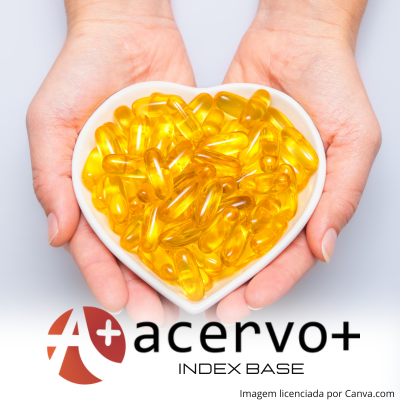
Objective: To evaluate the effects of omega-3 fatty acid supplementation in preventing cognitive decline in older adults, focusing on preserving brain function during aging. Methods: This is an integrative literature review conducted according to the PICO strategy. Searches were conducted in PubMed Central, Periódico CAPES, and the Virtual Health Library databases, using the descriptors "Omega-3 Fatty Acids," "Cognitive Dysfunction," and "Older Adults." Articles published between 2020 and 2025, in English, and available in full text were included. After applying the eligibility criteria, 19 studies were selected for analysis. Results: Omega-3 supplementation can reduce the progression of mild cognitive impairment and improve memory, attention, and executive functions. The benefits are more evident in older adults with low serum n-3 PUFA levels, metabolic alterations, or genetic predisposition. Efficacy also depends on the dose, duration of use, and the aging phase at which the intervention begins. Final considerations: Omega-3 supplementation shows promise in preventing cognitive decline in older adults, with neuroprotective effects associated with its anti-inflammatory and structural action on neurons. However, more robust and standardized studies are still needed to confirm its efficacy and guide its clinical use.
References
AKHGARJAND C, et al. The relationship between micronutrients and cognitive ability in an elderly population with mild cognitive impairment and Alzheimer’s disease: a cross-sectional study. BMC Neurology, 2024; 24: 416.
ARELLANES IC, et al. Brain delivery of supplemental docosahexaenoic acid (DHA): A randomized placebo-controlled clinical trial. EBioMedicine, 2020; 59(102883): 102883.
BARNES S, et al. Omega-3 fatty acids are associated with blood-brain barrier integrity in a healthy aging population. Brain and Behavior, 2021; 11(8): e2273.
CHU CS, et al. Higher serum DHA and slower cognitive decline in patients with Alzheimer’s disease: Two-year follow-up. Nutrients, 2022; 14(6): 1159.
COLEY N, et al. Disparities in the participation and adherence of older adults in lifestyle-based multidomain dementia prevention and the motivational role of perceived disease risk and intervention benefits: an observational ancillary study to a randomised controlled trial. Alzheimer’s Research & Therapy, 2021; 13(1): 157.
DE OLIVEIRA OTTO MC, et al. Circulating omega-3 and omega-6 fatty acids, cognitive decline, and dementia in older adults. Journal of Alzheimer’s Disease: JAD, 2023; 95(3): 965–979.
DUAN H, et al. Effects of a food supplement containing phosphatidylserine on cognitive function in Chinese older adults with mild cognitive impairment: A randomized double-blind, placebo-controlled trial. Journal of Affective Disorders, 2025; 369: 5–42.
EISER AR. Mild cognitive impairment and the missed opportunity to prevent dementia. The American Journal of Medicine, 2024; 137(8): 689–691.
FABLICIA I, et al. Suplementação de ácidos graxos ômega-3 na saúde cognitiva de idosos: revisão integrativa. Rev. Ciênc. Plural, 2024; 10(2): 1–13.
FU Q, et al. Supplementation and mitigating cognitive decline in older adults with or without mild cognitive impairment or dementia: A systematic review. Nutrients, 2024; 16(20).
KANG JH, et al. Marine n-3 fatty acids and cognitive change among older adults in the VITAL randomized trial. Alzheimer’s & Dementia (New York, N. Y.), 2022; 8(1): e12288.
KUSZEWSKI JC, et al. Evaluation of cognitive performance following fish-oil and curcumin supplementation in middle-aged and older adults with overweight or obesity. The Journal of Nutrition, 2020; 150(12): 3190–3199.
LECKIE RL, et al. The effects of omega-3 fatty acids on neuropsychological functioning and brain morphology in mid-life adults: a randomized clinical trial. Psychological Medicine, 2020; 50(14): 2425–2434.
MALTAIS M, et al. Omega-3 supplementation for the prevention of cognitive decline in older adults: Does it depend on homocysteine levels? The Journal of Nutrition, Health & Aging, 2022; 26(6): 615–620.
MARRIOTT BP, et al. Impact of fatty acid supplementation on cognitive performance among United States (US) military officers: The ranger resilience and improved performance on phospholipid-bound omega-3’s (RRIPP-3) study. Nutrients, 2021; 13(6): 1854.
MARTINS IC, et al. Impacto da suplementação nutricional na saúde, desempenho físico e qualidade de vida dos idosos: revisão integrativa. Lumen et Virtus, 2025; 16(49): 6475–6490.
MENGELBERG A, et al. The effects of docosahexaenoic acid supplementation on cognition and well-being in mild cognitive impairment: A 12-month randomised controlled trial. International Journal of Geriatric Psychiatry, 2022; 37(5).
RIBEIRO ET, et al. Ômega 3 como possível auxiliar no tratamento de transtornos cognitivos. Revista Ibero-Americana de Humanidades, Ciências e Educação, 2023; 9(8): 1653–1667.
ROUCH L, et al. Associations of erythrocyte omega-3 fatty acids with cognition, brain imaging and biomarkers in the Alzheimer’s Disease Neuroimaging Initiative: cross-sectional and longitudinal retrospective analyses. The American Journal of Clinical Nutrition, 2022; 116(6): 1492–1506.
TORRES NETO AC, et al. Papel da dieta e suplementação nutricional na prevenção e manejo de doenças neurodegenerativas: uma revisão sistemática. Brazilian Journal of Health Review, 2025; 8(1): e76654.
VAUZOUR D, et al. A combined DHA-rich fish oil and cocoa flavanols intervention does not improve cognition or brain structure in older adults with memory complaints: results from the CANN randomized, controlled parallel-design study. The American Journal of Clinical Nutrition, 2023; 118(2): 369–381.
WOOD AHR, et al. Dietary and supplemental long-chain omega-3 fatty acids as moderators of cognitive impairment and Alzheimer’s disease. European Journal of Nutrition, 2022; 61(2): 589–604.
YANG L, et al. N-3 polyunsaturated fatty acids in elderly with mild cognitive impairment: A systemic review and meta-analysis. Journal of Alzheimer’s Disease: JAD, 2024; 99(1): S81–S95.