
Palavras-chave
Menopausa
Teste de Papanicolau
Colposcopia
Estrogênio
Como Citar
Copyright © | Todos os direitos reservados.
A revista detém os direitos autorais exclusivos de publicação deste artigo nos termos da lei 9610/98.
Reprodução parcial
É livre o uso de partes do texto, figuras e questionário do artigo, sendo obrigatória a citação dos autores e revista.
Reprodução total
É expressamente proibida, devendo ser autorizada pela revista.
Resumo
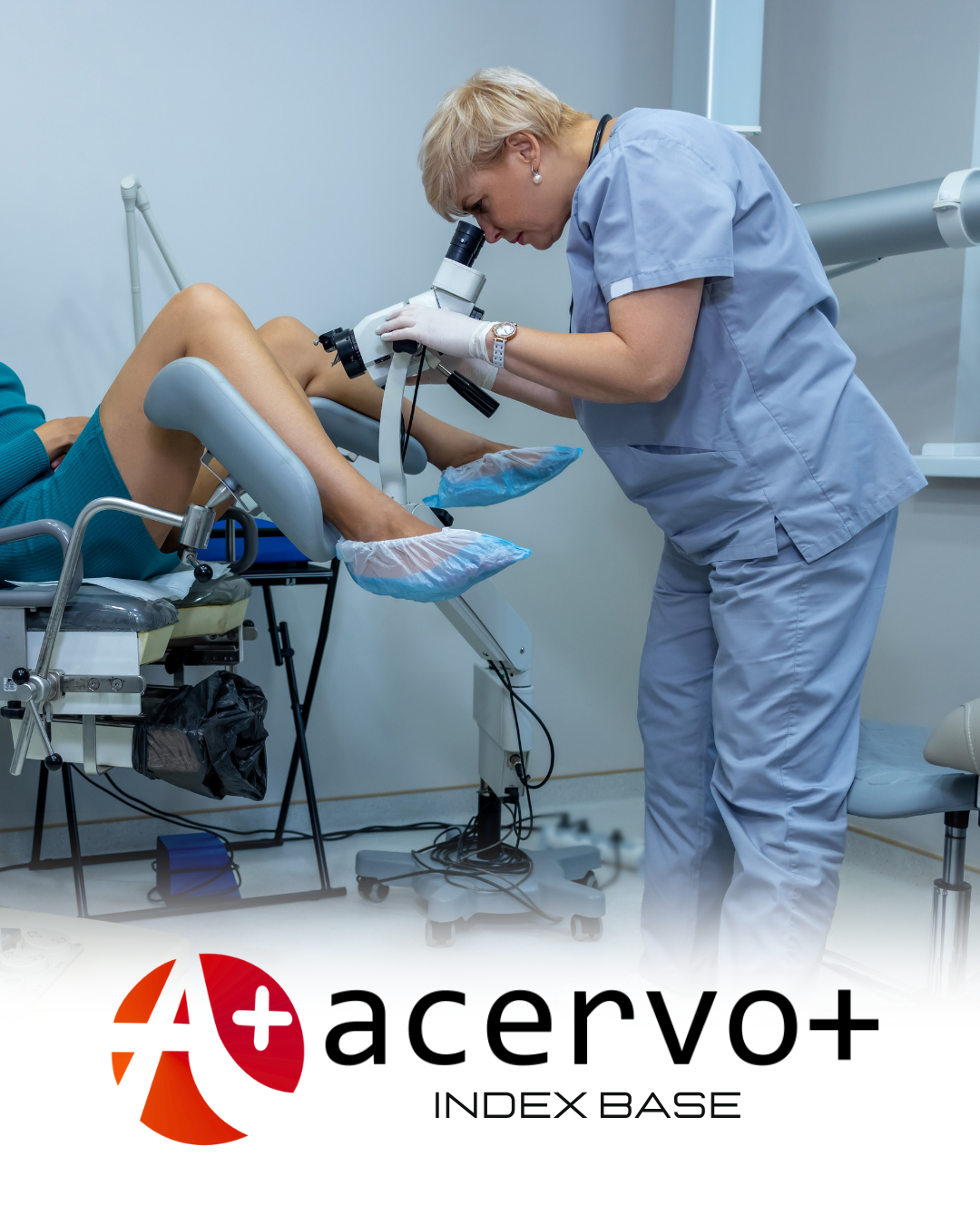
Objetivo: Verificar o efeito do estrogênio tópico na topografia da zona de transformação na colposcopia de pacientes hipoestrogênicas, e seu seu impacto na diferenciação entre alterações citológicas secundárias a atrofia e lesões intraepiteliais verdadeiras, visando melhorar o manejo das doenças cervicais na pós-menopausa. Métodos: Avaliação retrospectiva de mulheres climatéricas, com 50 anos ou mais com citologias cervicais anormais e colposcopia inicial negativa, que foram submetidas à terapia com estrogênio tópico conjugado e reavaliadas por nova citologia e colposcopia. Resultados: Foram incluídas 98 pacientes, com média de 57 anos e 9,5 anos de menopausa. Após 3 meses de estrogênio tópico conjugado, a taxa de colposcopia satisfatória aumentou de 20,4% para 32,7%. Das 78 pacientes com zona de transformação tipo 3 na colposcopia inicial, 66 mantiveram a mesma topografia. Além disso, 67 (68%) das 98 pacientes tiveram citologia negativa após o tratamento. A persistência de lesão intraepitelial de alto grau (HSIL) ocorreu em 33,3% dos casos, sendo que 16,7% desses foram diagnosticados com carcinoma microinvasor. Conclusão: O uso de estrogênio tópico conjugado melhorou a acurácia da citologia cervical em mulheres na pós menopausa tardia. Não houve melhora significativa na topografia da zona de transformação nem na taxa de colposcopias satisfatórias.
Referências
ABATI A, et al. Squamous atypia in the atrophic cervical vaginal smear: a new look at an old problem. Cancer, 1998; 84: 218–25.
ANSARI M, et al. Smear patterns and spectrum of premalignant and malignant cervical epithelial lesions in postmenopausal Indian women: a hospital-based study. Diagn Cytopathol, 2012; 40: 976–83.
BACKES LTH, et al. Cytomorphological analysis of cervical cytological smears of women aged over 60 years. J Bras Patol Med Lab, 2019; 55: 1-5.
BRUNO MT, et al. Management of ASC-US/HPV positive post-menopausal woman. Virol J, 2019; 16: 39.
CAKMAK B, KOSEOGLU DR. Comparison of cervical cytological screening results between postmenopausal and elderly women. Turkish Journal of Pathology, 2014; 30: 38.
CANO A, et al. Expression of estrogen receptors, progesterone receptors, and an estrogen receptor-associated protein in the human cervix during the menstrual cycle and menopause. Fertil Steril, 1990; 54: 1058–64.
CHUERY ACS, et al. Efficacy of vaginal use of topical estriol in postmenopausal women with urogenital atrophy. Clin Exp Obstet Gynecol, 2011; 38: 143–5.
EUN TJ, PERKINS RB. Screening for Cervical Cancer. Medical Clinics of North America, 2020; 104: 1063–78.
FLANNELLY G, et al. A study of treatment failures following large loop excision of the transformation zone for the treatment of cervical intraepithelial neoplasia. Br J Obstet Gynaecol, 1997; 104: 718–22.
FLYNN K, RIMM DL. Diagnosis of “ASCUS” in women over age 50 is less likely to be associated with dysplasia. Diagn Cytopathol, 2001; 24: 132–6.
FREEMAN-WANG T, WALKER P. Colposcopy in special circumstances: Pregnancy, immunocompromise, including HIV and transplants, adolescence and menopause. Best Pract Res Clin Obstet Gynaecol, 2011; 25: 653–65.
GHOUSSOUB RA, RIMM DL. Degree of dysplasia following diagnosis of atypical squamous cells of undetermined significance is influenced by patient history and type of follow-up. Diagn Cytopathol, 1997; 17: 14–9.
HALFORD J, et al. A review of histological outcomes from peri-menopausal and post-menopausal women with a cytological report of possible high grade abnormality: an alternative management strategy for these women. Pathology, 2010; 42: 23–7.
KISHI Y, et al. Colposcopy for postmenopausal women. Gynecol Oncol, 1985; 20: 62–70.
MANLEY KM, et al. Unsatisfactory colposcopy: Clinical decision-making in conditions of uncertainty. BMC Med Inform Decis Mak, 2017; 17: 1-7.
MUSTAFA FE-ZA, ELHANBALY R. Distribution of estrogen receptor in the rabbit cervix during pregnancy with special reference to stromal elements: an immunohistochemical study. Sci Rep, 2020; 10: 13655.
PATERSON ME, et al. Effects of the climacteric and sequential mestranol and norethisterone on the cervix and genital tract. Br J Obstet Gynaecol, 1982; 89: 657–64.
PATTON AL, et al. Atypical squamous cells, cannot exclude a high-grade intraepithelial lesion and its clinical significance in postmenopausal, pregnant, postpartum, and contraceptive-use patients. Cancer, 2008; 114: 481–8.
PICCOLI R, et al. Atypical squamous cells and low squamous intraepithelial lesions in postmenopausal women: implications for management. Eur J Obstet Gynecol Reprod Biol, 2008; 140: 269–74.
PRENDIVILLE WJ, et al. Medical dilatation of the non-pregnant cervix: the effect of ethinyl oestradiol on the visibility of the transformation zone. Br J Obstet Gynaecol, 1986; 93: 508–11.
RATREE S, et al. Histopathology of Women with “Atypical Squamous Cells Cannot Exclude High-Grade Squamous Intraepithelial Lesion” (ASC-H) Smears. Asian Pac J Cancer Prev, 2019; 20: 683–6.
REMOUE F, et al. High intraepithelial expression of estrogen and progesterone receptors in the transformation zone of the uterine cervix. Am J Obstet Gynecol, 2003; 189: 1660–5.
RICHARDS A, DALRYMPLE C. Abnormal cervicovaginal cytology, unsatisfactory colposcopy and the use of vaginal estrogen cream: an observational study of clinical outcomes for women in low estrogen states. J Obstet Gynaecol Res, 2015; 41: 440–4.
ROBERTS ADG, et al. The Value of Cervical Colposcopic Assessment in the Management of Genital Hormone Deficiency. J Gynecol Surg, 1986; 2: 141–6.
SAAD RS, et al. Cytomorphologic analysis and histological correlation of high-grade squamous intraepithelial lesions in postmenopausal women. Diagn Cytopathol, 2006; 34: 467–71.
SAUNDERS N, et al. Unsatisfactory colposcopy and the response to orally administered oestrogen: a randomized double blind placebo controlled trial. Br J Obstet Gynaecol, 1990; 97: 731–3.
SELVAGGI SM. Clinical significance of atypical squamous cells cannot exclude high grade squamous intraepithelial lesion with histologic correlation: a 9-year experience. Diagn Cytopathol, 2013; 41: 943–6.
WRIGHT TC JR, et al., for the ASCCP-Sponsered Consensus Conference. 2001 consensus guidelines for the management of women with cervical cytological abnormalities. Jama, 2002; 287: 2120-2129.
ZANINE RM, et al. Doenças do Trato Genital Inferior e Colposcopia: Um Enfoque na Terapêutica. 1a edição. Rio de Janeiro: Thieme Revinter, 2021; 5-6.