
Palavras-chave
Fabricação Assistida por Computador
Impressão Tridimensional
Análise de Custo-efetividade
Como Citar
Copyright © | Todos os direitos reservados.
A revista detém os direitos autorais exclusivos de publicação deste artigo nos termos da lei 9610/98.
Reprodução parcial
É livre o uso de partes do texto, figuras e questionário do artigo, sendo obrigatória a citação dos autores e revista.
Reprodução total
É expressamente proibida, devendo ser autorizada pela revista.
Resumo
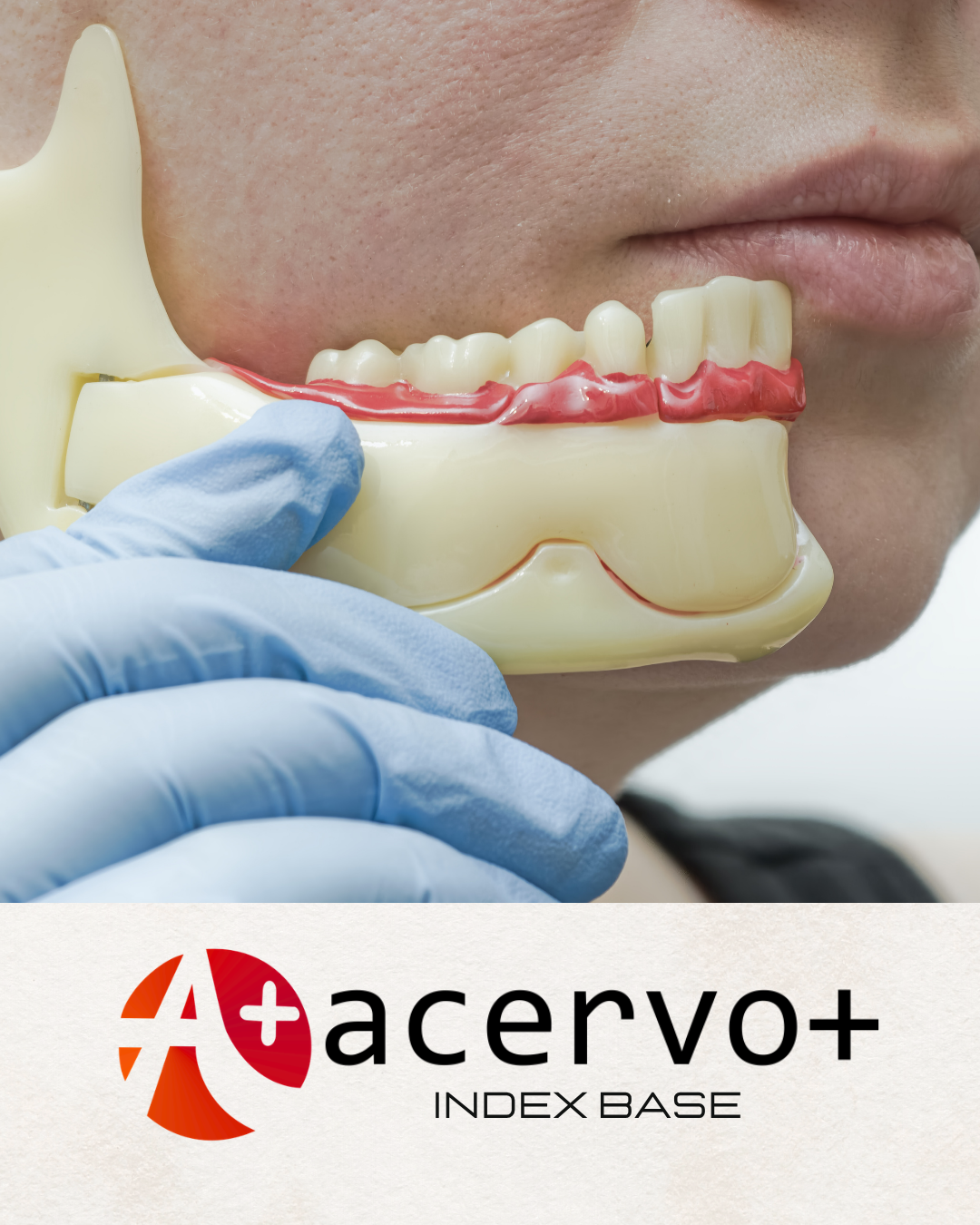
Objetivo: Analisar a precisão técnica e a relação custo-benefício das tecnologias de impressão 3D Digital Light Processing (DLP) e Fused Deposition Modeling (FDM) na cirurgia ortognática. Métodos: Realizou-se uma revisão integrativa com busca nas bases PubMed, Scopus e Cochrane Library, selecionando ensaios clínicos e estudos experimentais comparativos. Os parâmetros avaliados incluíram precisão dimensional, redução do tempo operatório e viabilidade econômica de insumos. Resultados: O planejamento virtual associado à impressão 3D reduziu o tempo cirúrgico entre 40 e 83 minutos, apresentando erros lineares médios inferiores a 1,1 mm, o que satisfaz plenamente os requisitos clínicos. Enquanto a tecnologia DLP oferece ajuste clínico superior para splints oclusais devido à alta resolução, a técnica FDM com filamento PLA demonstrou ser a alternativa mais viável para produção interna hospitalar, reduzindo custos de insumos. Considerações finais: De modo geral, a tecnologia FDM demonstra potencial para democratizar o acesso à cirurgia de alta precisão devido à sua excepcional custo-efetividade. O estudo limita-se pela escassez de ensaios clínicos randomizados de longo prazo comparando diretamente ambas as tecnologias no desfecho de tecidos moles.
Referências
ABOUL-HOSN CENTENERO S, HERNÁNDEZ-ALFARO F. 3D planning in orthognathic surgery: CAD/CAM surgical splints and prediction of the soft and hard tissues results - our experience in 16 cases. Journal of Cranio-Maxillo-Facial Surgery, 2012; 40(2): 162–168.
ALHABSHI MO, et al. Role of three-dimensional printing in treatment planning for orthognathic surgery: A systematic review. Cureus, 2023; 15(10): e47979.
CHEN H, et al. Comparison of three different types of splints and templates for maxilla repositioning in bimaxillary orthognathic surgery: a randomized controlled trial. International Journal of Oral and Maxillofacial Surgery, 2021; 50(5): 635–642.
CONLEY RS, EDWARDS SP. Three-dimensional treatment planning for maxillary and mandibular segmental surgery for an adult Class III: Where old meets new. The Angle Orthodontist, 2019; 89(1): 138–148.
DUMRONGWONGSIRI S, et al. Customized three-dimensional printing spacers for bone positioning in orthognathic surgery for correction and prevention of facial asymmetry. Plastic and Reconstructive Surgery, 2019; 144(2): 246e–251e.
ELNAGAR MH, et al. Digital workflow for Combined orthodontics and orthognathic surgery. Oral and Maxillofacial Surgery Clinics of North America, 2020; 32(1): 1–14.
FARRELL BB. Evolving management of dentofacial deformities with digital planning and patient-specific fixation. Atlas of the Oral and Maxillofacial Surgery Clinics of North America, 2020; 28(2): 59–71.
HOANG D, et al. Surgical applications of three-dimensional printing: a review of the current literature & how to get started. Annals of Translational Medicine, 2016; 4(23): 456.
JUNEJA M, et al. Accuracy in dental surgical guide fabrication using different 3-D printing techniques. Additive Manufacturing, 2018; 22: 243–255.
KIM SH, et al. Effectiveness of individualized 3D titanium-printed Orthognathic osteotomy guides and custom plates. BMC Oral Health, 2023; 23(1): 255.
LEE CKJ, et al. Accuracy and clinical fit of milled versus rapid prototyped orthognathic surgical splints. Journal of Stomatology, Oral and Maxillofacial Surgery, 2025; 126(2): 102069.
LIU S, et al. Effect of computer-assisted design and manufacturing cutting and drilling guides accompanied with pre-bent titanium plates on the correction of skeletal class II malocclusion: a randomized controlled trial. International Journal of Oral and Maxillofacial Surgery, 2021; 50(10): 1320–1328.
MA C, et al. Accuracy of maxillary repositioning in le fort I osteotomy using a mixed reality based navigation system versus CAD/CAM splints and patient-specific surgical plates: A preclinical study. Journal of Dentistry, 2025; 162: 106032.
MCALLISTER P, et al. A cost-effective, in-house, positioning and cutting guide system for orthognathic surgery. Journal of Maxillofacial and Oral Surgery, 2018; 17(1): 112–114.
NGUYEN VA, NGUYEN TM. Digitally planned bimaxillary orthognathic surgery with 3D-printed splints for skeletal class III malocclusion: A case series. Medicine, 2025; 104(39): e44726.
PILLAI S, et al. Dental 3D-printing: Transferring art from the laboratories to the clinics. Polymers, 2021; 13(1): 157.
SCHNEIDER D, et al. Customized virtual surgical planning in bimaxillary orthognathic surgery: a prospective randomized trial. Clinical Oral Investigations, 2019; 23(7): 3115–3122.
SEO HJ, CHOI YK. Current trends in orthognathic surgery. Archives of Craniofacial Surgery, 2021; 22(6): 287–295.
SUN Y, et al. Accuracy of upper jaw positioning with intermediate splint fabrication after virtual planning in bimaxillary orthognathic surgery. The Journal of Craniofacial Surgery, 2013; 24(6): 1871–1876.
ZHENYU Q, et al. Application of bone-support guide by three-dimensional printing technique in maxillary Lefort osteotomy. West China Journal of Stomatology, 2018; 36(1): 60–65.