
Palavras-chave
Proteínas transportadoras de glicose
Hiperglicemia
Resistência à insulina
Diabetes mellitus
Como Citar
Copyright © | Todos os direitos reservados.
A revista detém os direitos autorais exclusivos de publicação deste artigo nos termos da lei 9610/98.
Reprodução parcial
É livre o uso de partes do texto, figuras e questionário do artigo, sendo obrigatória a citação dos autores e revista.
Reprodução total
É expressamente proibida, devendo ser autorizada pela revista.
Resumo
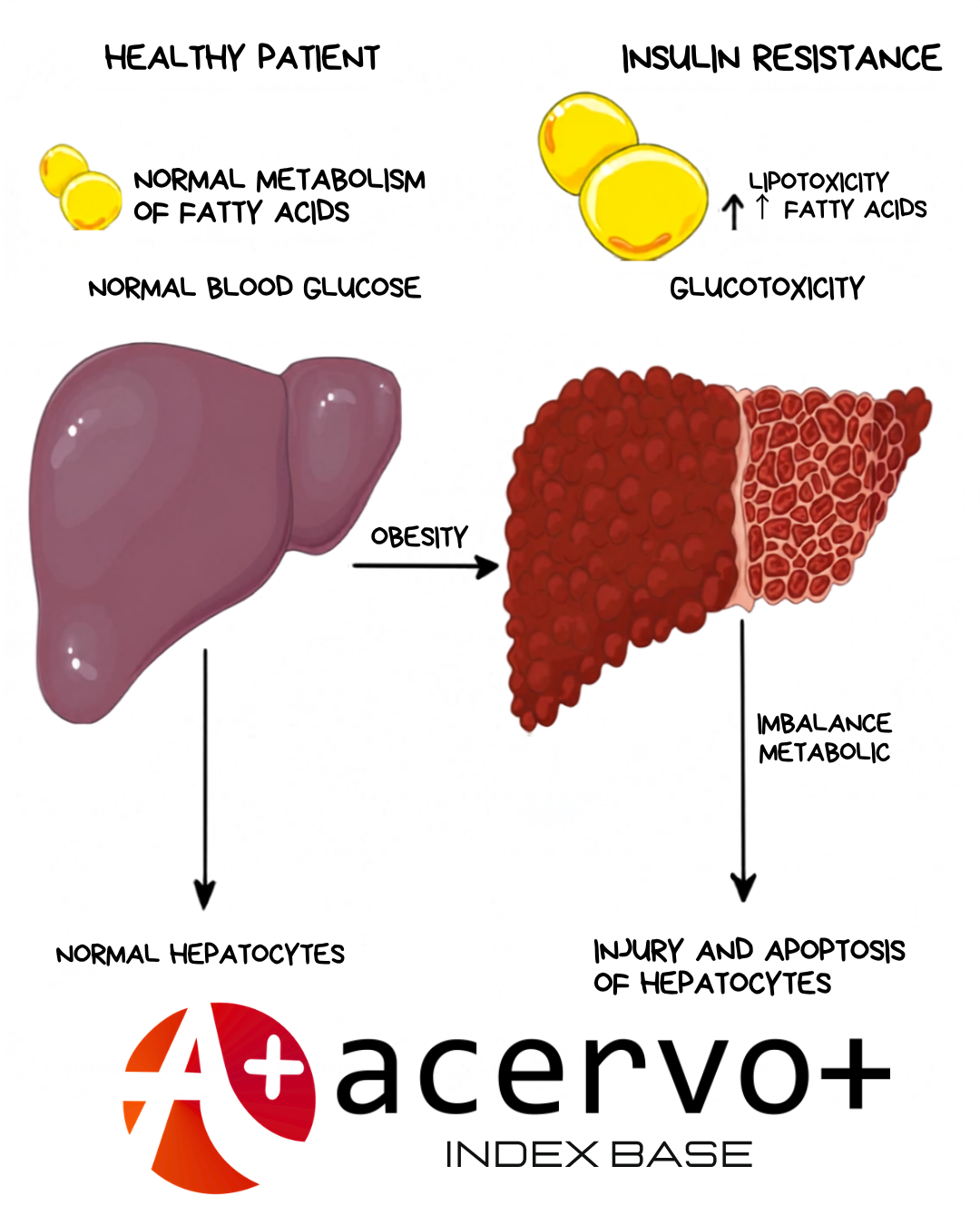
Objetivo: Descrever os principais mecanismos moleculares envolvidos na regulação dos transportadores de glicose durante a síndrome metabólica. Revisão bibliográfica: A síndrome metabólica é um distúrbio metabólico multifatorial associado a fatores ambientais, comportamentais e genéticos. A compreensão dos mecanismos moleculares que levam a essa patologia contribui para o entendimento das alterações sistêmicas observadas e auxilia na busca por novos tratamentos. A expressão dos transportadores de glicose (GLUTs) está intimamente ligada à regulação da homeostase da glicose nos tecidos. Na síndrome metabólica, a regulação da expressão de GLUT sofre alterações, levando a alterações nos fluxos de glicose nos tecidos. Em relação ao GLUT4, sua concentração nas membranas de adipócitos e miócitos diminui em consequência da obesidade e da resistência à insulina. Em relação ao GLUT2, sua expressão ocorre de forma diferente nos hepatócitos e nas células pancreáticas durante a síndrome metabólica, com aumento no primeiro e diminuição no segundo. Em relação ao GLUT1, sua endocitose ocorre nas células epiteliais em resposta à hiperglicemia gerada pela síndrome metabólica. Considerações finais: Na síndrome metabólica, a regulação da expressão de GLUT sofre alterações, levando a alterações nos fluxos de glicose nos tecidos. Essas alterações contribuem para distúrbios na homeostase da glicose e no metabolismo do substrato intracelular, responsáveis, em última análise, pelas alterações funcionais observadas.
Referências
ALGHANNAM AF, et al. Regulation of Energy Substrate Metabolism in Endurance Exercise. Int J Environ Res Public Health, 2021; 18(9):4963.
ANADERSSON DP, et al. Relationship Between a Sedentary Lifestyle and Adipose Insulin Resistance. Diabetes, 2023; 1;72(3):316-325.
BAUMEL-ALTERZON S, SCOTT DK. Regulation of Pdx1 by oxidative stress and Nrf2 in pancreatic beta-cells. Front Endocrinol (Lausanne), 2022;13:1011187.
BURHANS MS, et al. Contribution of Adipose Tissue Inflammation to the Development of Type 2 Diabetes Mellitus. Compr Physiol. 2018; 9(1):1-58.
CHOO YN, et al. Insulin resistance induced by obesity: Mechanisms, metabolic implications and therapeutic approaches. Mol Biol Rep, 2026; Feb 4;53(1):357.
CLEMENTE-SUÁREZ VJ, et al. The Role of Adipokines in Health and Disease. Biomedicines, 2023; 11(5):1290.
DRAGOO JL, et al. The essential roles of human adipose tissue: Metabolic, thermoregulatory, cellular, and paracrine effects. Journal of Cartilage & Joint Preservation, 2021; v. 1, n. 3, p. 100023.
DROBIOVA H, et al. GLUT4 Trafficking and Storage Vesicles: Molecular Architecture, Regulatory Networks, and Their Disruption in Insulin Resistance. Int J Mol Sci, 2025; 26(15):7568.
DYKSTRA H, et al. TXNIP interaction with GLUT1 depends on PI(4,5)P2. Biochim Biophys Acta Biomembr, 2021; 1863(12):183757.
FAHED G, et al. Metabolic Syndrome: Updates on Pathophysiology and Management in 2021. International Journal of Molecular Sciences, 2022; 23(2):786.
GARCIA D, SHANW RJ. AMPK: Mechanisms of Cellular Energy Sensing and Restoration of Metabolic Balance. Mol Cell, 2017; 66(6):789-800.
HATAKEYAMA H, et al. Cooperative actions of Tbc1d1 and AS160/Tbc1d4 in GLUT4-trafficking activities. Journal of Biological Chemistry, 2019; 294(4):1161-1172.
JIANG H, et al. Omega-3 polyunsaturated fatty acid biomarkers and risk of type 2 diabetes, cardiovascular disease, cancer, and mortality. Clinical Nutrition, 2022; 41(8):1798-1807.
KOEPSEL H. Glucose transporters in the small intestine in health and disease. Pflugers Arch. 2020; 472(9):1207-1248.
KOLB H. Obese visceral fat tissue inflammation: from protective to detrimental? BMC Med, 2022; 27;20(1):494.
LAIR B, et al. Novel Insights and Mechanisms of Lipotoxicity-Driven Insulin Resistance. Int J Mol Sci, 2020; 21(17):6358.
LEE JH, LEE J. Endoplasmic Reticulum (ER) Stress and Its Role in Pancreatic β-Cell Dysfunction and Senescence in Type 2 Diabetes. Int J Mol Sci, 2022; 23(9):4843.
LI M, et al. Trends in insulin resistance: insights into mechanisms and therapeutic strategy. Signal Transduct Target Ther, 2022; 7(1):216.
MARTÍNEZ BÁEZ A, et al. Phosphorylation Codes in IRS-1 and IRS-2 Are Associated with the Activation/Inhibition of Insulin Canonical Signaling Pathways. Curr Issues Mol Biol, 2024; 46(1):634-649.
MIAO L, et al. Metabolic reprogramming of pancreatic beta cells in type 2 diabetes and its therapeutic strategy. Ageing Res Rev, 2026; 113:102938
MIAO R, et al. Akt: A Potential Drug Target for Metabolic Syndrome. Front Physiol, 2022; 13:822333.
NAVALE, A. Glucose transporters and their cellular form, role and function. Molecular Nutrition: Carbohydrates, 2019; 21–34.
PEREIRA S, et al. Tissue-Specific Effects of Leptin on Glucose and Lipid Metabolism. Endocrine Reviews, 2021; 42(1):1-28.
POLLAK N, et al. Crosstalk Between Skeletal Muscle and Proximal Connective Tissues in Lipid Dysregulation in Obesity and Type 2 Diabetes. Metabolites, 2025; 15(9):581.
PRAGALLAPATI S, MANYAM R. Glucose transporter 1 in health and disease. J Oral Maxillofac Pathol, 2019; 23(3):443-449.
SHEN Z, et al. Physiological functions of glucose transporter-2: From cell physiology to links with diabetes mellitus. Heliyon, 2024; 10(3): e25459.
SUN B, et al. The role of GLUT2 in glucose metabolism in multiple organs and tissues. Mol Biol Rep, 2023;50(8):6963-6974.
VAN GERWEN J, et al. Insulin Signalling and GLUT4 Trafficking in Insulin Resistance. Biochemical Society Transactions, 2023; 51(3):1057-1069.
WALDHART AN, et al. Phosphorylation of TXNIP by AKT Mediates Acute Influx of Glucose in Response to Insulin. Cell Rep, 2017; 19(10):2005-2013.
WANG T, et al. Current understanding of glucose transporter 4 expression and functional mechanisms. World J Biol Chem, 2020; 11(3):76-98.
WANG X, et al. A high-cholesterol diet promotes steatohepatitis and liver tumorigenesis in HCV core gene transgenic mice. Arch Toxicol, 2019; 93(6):1713-1725.
WU N, et al. AMPK-dependent degradation of TXNIP upon energy stress leads to enhanced glucose uptake via GLUT1. Mol Cell, 2013; 49(6):1167-75.
ZAMOLODCHIKOVA TS, et al. Insulin in the regulation of the renin-angiotensin system: a new perspective on the mechanism of insulin resistance and diabetic complications. Front Endocrinol (Lausanne), 2024; 15:1293221.
ZHANG M, et al. Saturated fatty acids entrap PDX1 in stress granules and impede islet beta cell function. Diabetologia, 2021;64(5):1144-1157.
ZHANG Y, et al. PDX-1: A Promising Therapeutic Target to Reverse Diabetes. Biomolecules, 2022;12(12):1785.