
Palavras-chave
Infecções por Chlamydia
Gonorreia
Reação em cadeia da polimerase
Como Citar
Copyright © | Todos os direitos reservados.
A revista detém os direitos autorais exclusivos de publicação deste artigo nos termos da lei 9610/98.
Reprodução parcial
É livre o uso de partes do texto, figuras e questionário do artigo, sendo obrigatória a citação dos autores e revista.
Reprodução total
É expressamente proibida, devendo ser autorizada pela revista.
Resumo
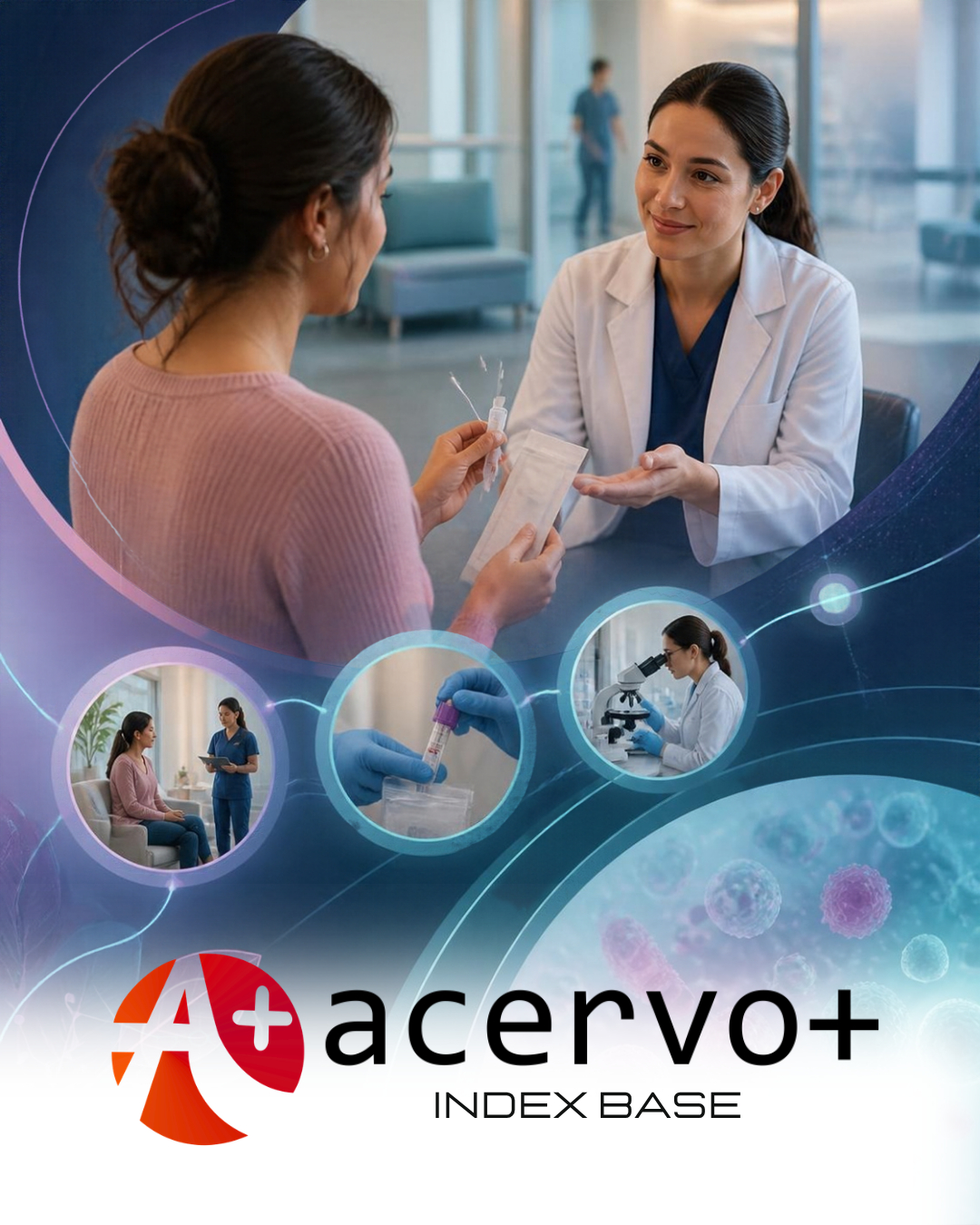
Objetivo: Caracterizar mulheres com 25 anos ou mais, com diferentes perfis clínicos ou comportamentais associados ao risco de infecções sexualmente transmissíveis (IST), estimar a prevalência de Chlamydia trachomatis (CT) e Neisseria gonorrhoeae (NG) e comparar o desconforto entre amostras auto coletadas e coletadas por um profissional. Métodos: Estudo prospectivo, observacional e descritivo com 47 mulheres sexualmente ativas, de 25 a 65 anos, atendidas em serviço terciário de ginecologia no Brasil com diagnóstico ou risco de IST. Foram coletados dados sociodemográficos e cada participante forneceu amostra de urina auto coletada e, posteriormente, amostra cervicovaginal coletada por profissional. As amostras foram analisadas pelo ensaio Abbott RealTime CT/NG. O desconforto também foi avaliado. Resultados: A média de idade foi 35,1 anos e 29,8% relataram uso regular de preservativo. A autocoleta foi associada a menor desconforto (p=0,013). A prevalência de CT foi 2,1% e não foram detectadas infecções por NG. Conclusão: O perfil sociodemográfico foi heterogêneo. A autocoleta urinária foi mais confortável que a coleta por profissional e apresentou concordância completa para detecção de CT/NG nesta amostra. Estudos maiores são necessários para estimar o desempenho diagnóstico e avaliar a aplicabilidade da estratégia em diferentes contextos assistenciais.
Referências
1. AGRESTI A. Categorical data analysis. New York: Wiley, 1990.
2. BOREK AJ, et al. Acceptability of self-sampling and self-testing for infections: a rapid systematic review on public users' views. BMC Public Health, 2025; 25(1): 695.
3. BORGES ALV, et al. ERICA: sexual initiation and contraception in Brazilian adolescents. Rev Saude Publica, 2016; 50 Suppl 1: 15s.
4. CANTOR A, et al. Screening for chlamydial and gonococcal infections: updated evidence report and systematic review for the US Preventive Services Task Force. JAMA, 2021; 326(10): 957-966.
5. FELISBINO-MENDES MS, et al. Comportamento sexual e uso de preservativos na população brasileira: análise da Pesquisa Nacional de Saúde, 2019. Rev Bras Epidemiol, 2021; 24(Suppl 2): e210018.
6. FERNANDES AMS, et al. Infecção por Chlamydia trachomatis e Neisseria gonorrhoeae em mulheres atendidas em serviço de planejamento familiar. Rev Bras Ginecol Obstet, 2009; 31(5): 235-240.
7. FUNDAÇÃO OSWALDO CRUZ. Pesquisa Nacional de Saúde, 2019. Rio de Janeiro: Fundação Oswaldo Cruz, 2021. Disponível em: https://www.pns.icict.fiocruz.br.
8. LARA L e ABDO CHN. Age at time of initial sexual intercourse and health of adolescent girls. J Pediatr Adolesc Gynecol, 2016; 29(5): 417-423.
9. LOPES F, et al. The Brazilian army and the low prevalence of sexually transmitted infections in women of the military garrison of Campinas between 2017 to 2020: a prospective, cross-sectional epidemiological study. Sao Paulo Med J, 2023; 142(2): e2022557.
10. MALEKINEJAD M, et al. Sexual practice changes post-HIV diagnosis among men who have sex with men in the United States: a systematic review and meta-analysis. AIDS Behav, 2023; 27(1): 257-278.
11. MIRANDA AE, et al. Prevalence of Chlamydia trachomatis and Neisseria gonorrhoeae and associated factors among women living with human immunodeficiency virus in Brazil: a multicenter study. Braz J Infect Dis, 2017; 21(4): 402-407.
12. PIAZZETTA RCPS, et al. Prevalência da infecção por Chlamydia trachomatis e Neisseria gonorrhoeae em mulheres jovens sexualmente ativas em uma cidade do Sul do Brasil. Rev Bras Ginecol Obstet, 2011; 33(11): 328-333.
13. PINTO VM, et al. Prevalence and factors associated with Chlamydia trachomatis infection among women with HIV in São Paulo. Rev Soc Bras Med Trop, 2016; 49(3): 312-318. doi:10.1590/0037-8682-0169-2016.
14. R CORE TEAM. R: A language and environment for statistical computing. Version 3.6.3. Vienna: R Foundation for Statistical Computing, 2020.
15. SIEGEL S e CASTELLAN NJ JR. Nonparametric statistics for the behavioral sciences. 2nd ed. New York: McGraw-Hill, 1988.
16. SMITH AC, et al. At-home specimen self-collection as an additional testing strategy for chlamydia and gonorrhoea: a systematic literature review and meta-analysis. BMJ Glob Health, 2024; 9(8): e015349.
17. TAVARES MCM, et al. Chlamydia trachomatis infection and human papillomavirus in women with cervical neoplasia in Pernambuco-Brazil. Mol Biol Rep, 2014; 41(2): 865-874.
18. TRAVASSOS AG, et al. Anogenital infection by Chlamydia trachomatis and Neisseria gonorrhoeae in HIV-infected men and women in Salvador, Brazil. Braz J Infect Dis, 2016; 20(6): 569-575.
19. UNEMO M, et al. Gonorrhoea. Nat Rev Dis Primers, 2019; 5(1): 79.
20. VIALARD F, et al. Self-sampling strategies (with/without digital innovations) in populations at risk of Chlamydia trachomatis and Neisseria gonorrhoeae: a systematic review and meta-analyses. Sex Transm Infect, 2023; 99(6): 420-428.
21. WORKOWSKI KA, et al. Sexually transmitted infections treatment guidelines, 2021. MMWR Recom Rep, 2021; 70(4): 1-187.
22. WORLD HEALTH ORGANIZATION. Global health sector strategies on, respectively, HIV, viral hepatitis and sexually transmitted infections for the period 2022-2030. Geneva: World Health Organization, 2022.
23. WORLD HEALTH ORGANIZATION. WHO consolidated guideline on self-care interventions for health: sexual and reproductive health and rights. Geneva: World Health Organization, 2019.