
Keywords
Estrogen
Progesterone
Menstrual cycle
How to Cite
Copyright © | All rights reserved.
The journal holds the exclusive copyright for the publication of this article under the terms of Brazilian law 9610/98.
Partial reproduction
The use of parts of the texts, figures and questionnaire of the article is free, being mandatory the citation of the authors and journal.
Total reproduction
It is expressly prohibited and must be authorized by the journal.
Abstract
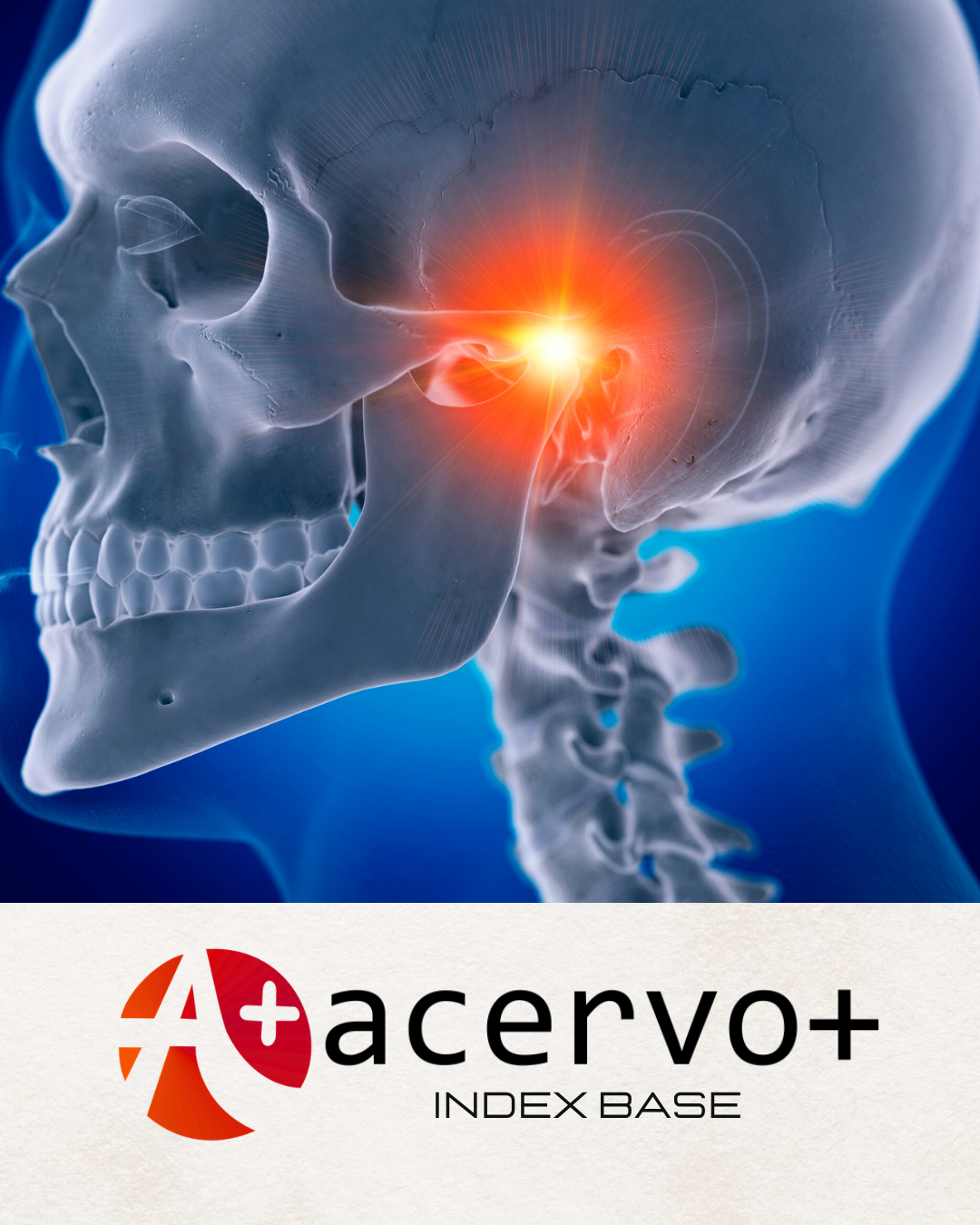
Objective: To analyze the role of hormonal variations in the higher prevalence and severity of TMD in women and to explore their clinical implications. Methods: A systematic review was conducted using PubMed, SciELO, and LILACS databases, including studies published between 2010 and 2025. Cross-sectional, experimental, and cohort studies investigating the association between hormonal factors and the prevalence or severity of TMD were included. The article followed the PRISMA recommendations and was registered in PROSPERO under the number CRD420251236682. Results: Nine studies were included, comprising human populations and animal models. A higher prevalence and greater pain intensity were observed in women, particularly between 20 and 45 years of age. Experimental evidence indicated that estradiol may enhance nociceptive responses in inflammatory conditions of the temporomandibular joint. However, clinical studies demonstrated limitations regarding the control of specific hormonal variables. Conclusion: Hormonal variations appear to contribute to the increased susceptibility and severity of TMD in women. Further well-controlled clinical studies are needed to clarify endocrine influences and support more individualized therapeutic approaches.
References
ALRIZQI AH, ALEISSA BM. Prevalence of temporomandibular disorders between 2015-2021: A literature review. Cureus, 2023; 15(4): e37028.
BATAGLION C. Disfunção temporomandibular na prática: diagnóstico e terapias. Manole Saúde: São Paulo-SP, 2021.
BEN KHALIFA H, et al. The epidemiological profile of temporomandibular joint disorders in the Tunisian population: A cross-sectional study. Saudi Dental Journal, 2024; 36(5): 799-803.
BI RY, et al. Estradiol upregulates voltage-gated sodium channel 1.7 in trigeminal ganglion contributing to hyperalgesia of inflamed TMJ. PLOS ONE, 2017; 12(6): e0178589.
CORDEIRO IB, GUIMARÃES AS. Características dos pacientes com disfunção temporomandibular quanto à queixa principal, sinais, sintomas, sexo e idade. Revista Gaúcha de Odontologia, 2012; 60(2).
DANTAS AMX, et al. Perfil epidemiológico de pacientes atendidos em um serviço de controle da dor orofacial. Revista de Odontologia da UNESP, 2015; 44(6): 313-319.
DOETZER A, et al. Association of estrogen receptor alpha 1 and temporomandibular joint dysfunction: A pilot study. Oral Surgery Oral Medicine Oral Pathology Oral Radiology, 2021; 131(4): e89-e94.
FERREIRA CLP, et al. Sinais e sintomas de desordem temporomandibular em mulheres e homens. CoDAS, 2016; 28(1): 17-21.
HERRERA-FERREIRA M, et al. Experimental pain thresholds and psychosocial features across menstrual cycle in myofascial orofacial pain compared to healthy individuals: cross-sectional study. Brazilian Journal of Pain, 2023; 6(2).
KROEFF GPH, et al. Hormone replacement therapy did not alleviate temporomandibular joint inflammatory pain in ovariectomized rats. Journal of Physiological Sciences, 2025; 113(1): 232-244.
LA ROSA GRM, et al. Association between estrogen receptor polymorphisms and temporomandibular joint disorders: A systematic review. Archives of Oral Biology, 2025; 170: 106130.
LEUCUȚA DC, et al. Estrogen hormones’ implications on the physiopathology of temporomandibular dysfunction. Journal of Clinical Medicine, 2024; 13(15): 4406.
MAZZETTO MO, et al. Severity of TMD related to age, sex and electromyographic analysis. Brazilian Dental Journal, 2014; 25(1): 54-58.
MINERVINI G, et al. The relationship between pregnancy and temporomandibular disorder through diagnostic criteria for temporomandibular disorders axis II evaluation: A case-control cross-sectional study. BMC Oral Health, 2024; 24: 342.
ROUDGARI H, et al. Association of catechol-O-methyl-transferase and estrogen receptors polymorphism with severity of temporomandibular disorder in Iranian patients. Avicenna Journal of Medical Biotechnology, 2023; 15(4): 245-252.
SANNAJUST S, et al. Females have greater susceptibility to develop ongoing pain and central sensitization in a rat model of temporomandibular joint pain. Pain, 2019; 160(9): 2036-2049.
SASSI FC, et al. Tratamento para disfunções temporomandibulares: uma revisão sistemática. Audiology – Communication Research, 2018; 23: e1871.
SILVA MAMR, et al. Diagnóstico de subtipos de disfunção temporomandibular em uma população que busca atendimento especializado. Brazilian Journal of Pain, 2023; 6(1).
TSUCHIDA J, et al. Effects of estrogen and mechanical loading on cultured cells derived from mandibular condylar cartilage. Scientific Reports, 2025; 15: 23470.
UÇAR D, et al. Temporomandibular dysfunction syndrome: A prospective study of 255 consecutive patients. Journal of International Medical Research, 2013; 41(3): 804-808.
WITZEL AL, et al. Correlation between gender, temporomandibular joint disc position and clinical findings in patients with temporomandibular disorder. Medical Express, 2015; 2(4).
ZIELIŃSKI G, PAJĄK-ZIELIŃSKA B. Association between estrogen levels and temporomandibular disorders: An updated systematic review. International Journal of Molecular Sciences, 2024; 25(18): 9867.