
Keywords
Contraception
Expulsion
Family planning
How to Cite
Copyright © | All rights reserved.
The journal holds the exclusive copyright for the publication of this article under the terms of Brazilian law 9610/98.
Partial reproduction
The use of parts of the texts, figures and questionnaire of the article is free, being mandatory the citation of the authors and journal.
Total reproduction
It is expressly prohibited and must be authorized by the journal.
Abstract
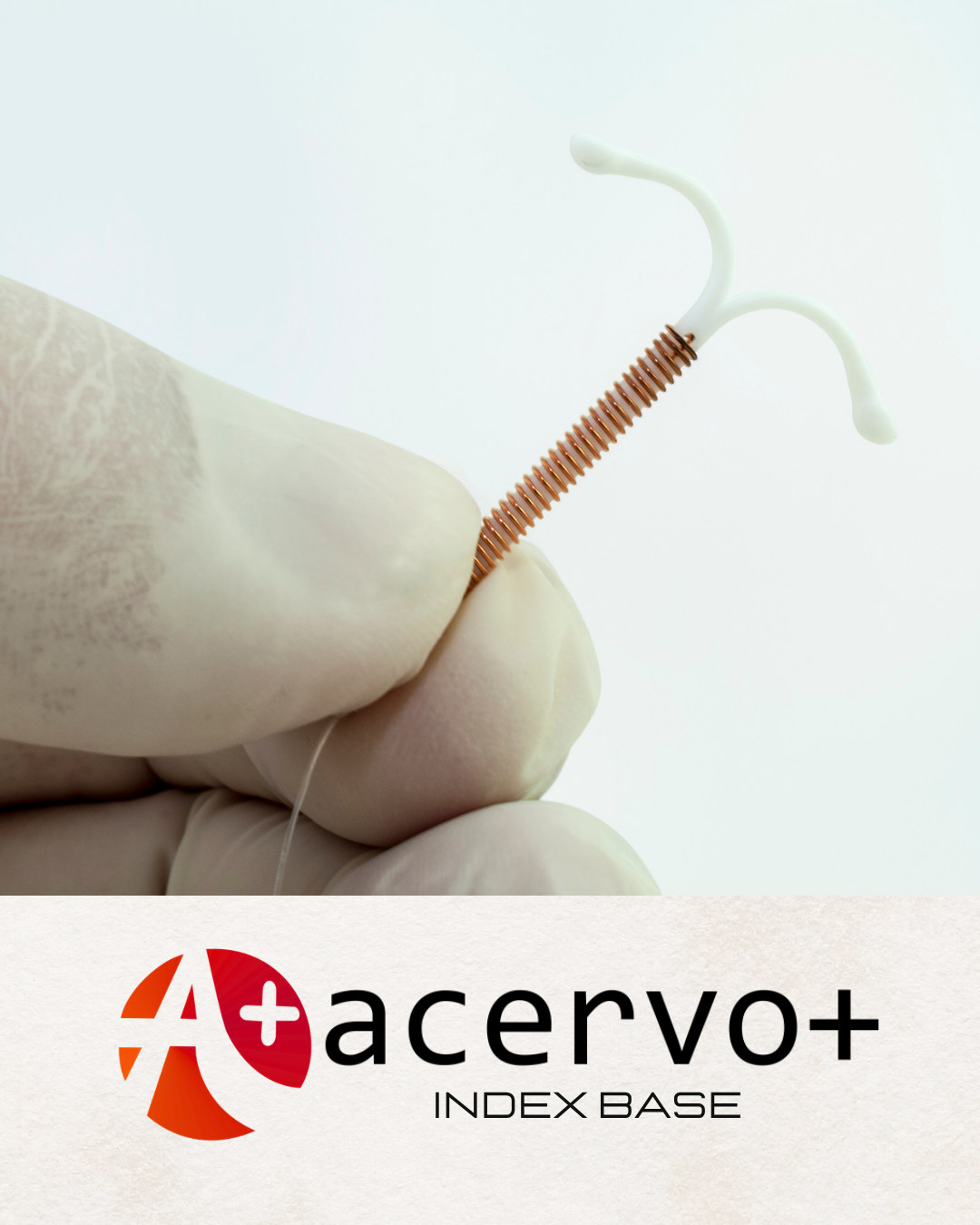
Objective: This study aimed to analyze the complications that led to removal of the copper Intrauterine Device (IUD) among women treated at a university hospital in northeastern Brazil, as well as the factors associated with device removal. Methods: This retrospective study analyzed medical records and institutional registries of 488 women who underwent Cu-IUD insertion between February 2022 and December 2023. Complications were defined as events leading to device removal, including malposition, pelvic pain, abnormal uterine bleeding, or the combination of pain and bleeding. Results: Among the 488 women evaluated, 139 (28.5%) required device removal due to complications. Malposition was the most frequent complication (61.1%), followed by pelvic pain associated with abnormal uterine bleeding (14.4%). Lower parity and shorter postpartum intervals were significantly associated with a higher likelihood of device removal. Conclusion: Malposition was the main complication associated with copper IUD removal in the sample analyzed. Nulliparity, age ≤19 years, and insertion between six weeks and three months postpartum were associated with a higher likelihood of device removal. These findings reinforce the importance of individualized assessment before insertion, post-procedure follow-up, and adequate counseling of users. As this was a retrospective study based on institutional records and conducted at a single center, the results should be interpreted with caution, without direct causal inference.
References
ANDRADE I, et al. A importância da contracepção reversível de longa duração. Rev Bras Ginecol Obstet, 2015; 43(Suppl 1).
BLUMENTHAL PD, et al. Postpartum intrauterine device placement: a systematic review. Contraception, 2022; 106:1–10.
BORGES ALV, et al. Uso de métodos contraceptivos de longa ação e principais preocupações de suas usuárias. Revista Brasileira de Saúde Materno Infantil. 2024; 24.
BRAATEN KP, GOLDBERG AB. Malpositioned intrauterine devices: when you should intervene. Obstet Gynecol Clin North Am, 2015; 42(4): 687–96.
CHRISTELLE D, et al. Immediate postpartum insertion of intrauterine device (IUD) for contraception. Cochrane Database Syst Rev, 2022; 10.
FEBRASGO. Contracepção reversível de longa ação. Federação Brasileira das Associações de Ginecologia e Obstetrícia (FEBRASGO), Brasil, 2022; p44.
HEINEMANN K, et al. Risk of uterine perforation and expulsion associated with intrauterine devices. Contraception, 2015; 91(4): 274–9.
HUBACHER D, et al. Side effects from the copper IUD: do they decrease over time? Contraception. 2009; 79(5): 356-362.
LANZOLA EL, et al. Intrauterine Device Placement and Removal. In: StatPearls [Internet]. Treasure Island (FL): StatPearls Publishing; 2026. Disponível em: https://www.ncbi.nlm.nih.gov/books/NBK557403/. Acessado em: 20 de março de 2026.
MINISTÉRIO DA SAÚDE. Protocolos da Atenção Básica: Saúde das Mulheres. Ministério da Saúde, Brasil, 2016; p231.
NOWITZKI KM, et al. Ultrasonography of intrauterine devices. Ultrasonography, 2015; 34(3): 183-194.
OMS. Medical eligibility criteria for contraceptive use. 6th ed. Geneva: Organização Mundial da Saúde (OMS); 2025. Disponível em: https://iris.who.int/server/api/core/bitstreams/9f048e30-0d14-4187-b167-9c24b9102092/content. Acessado em: 20 de março de 2026.
ORTIZ ME, CROXATTO HB. The mode of action of intrauterine devices. Contraception, 2007; 75(6 Suppl): S16–30.
PEIPERT JF, et al. Preventing unintended pregnancies by providing no-cost contraception. Obstet Gynecol., 2012; 120(6): 1291–7.
POCIUS K, BARTZ D. Intrauterine contraception: management of side effects and complications. UpToDate [Internet]. Waltham (MA): UpToDate Inc.; 2023.
RIVERA R, et al. The mechanism of action of intrauterine devices. Fertil Steril., 1999; 72(3): 516–22.
SCHIRMER J, et al. Assistência pré-natal: manual técnico. 3rd ed. Ministério da Saúde, Brasil, 2000.
TRINDADE RE, et al. Uso de contracepção e desigualdades do planejamento reprodutivo das mulheres brasileiras. Ciência & Saúde Coletiva. 2021; 26(Suppl. 2): 3493-3504.
TRUSSELL J. Contraceptive failure in the United States. Contraception, 2011; 83(5): 397–404.
WHO. Medical eligibility criteria for contraceptive use. 5th ed. Geneva: World Health Organization; 2015. Disponível em: https://iris.who.int/server/api/core/bitstreams/1c2ec8b3-6653-44fc-83fc-d03bef8287ca/content. Acessado em: 20 de março de 2026.