
Palavras-chave
Ageusia
Terapia com luz de baixa intensidade
Como Citar
Copyright © | Todos os direitos reservados.
A revista detém os direitos autorais exclusivos de publicação deste artigo nos termos da lei 9610/98.
Reprodução parcial
É livre o uso de partes do texto, figuras e questionário do artigo, sendo obrigatória a citação dos autores e revista.
Reprodução total
É expressamente proibida, devendo ser autorizada pela revista.
Resumo
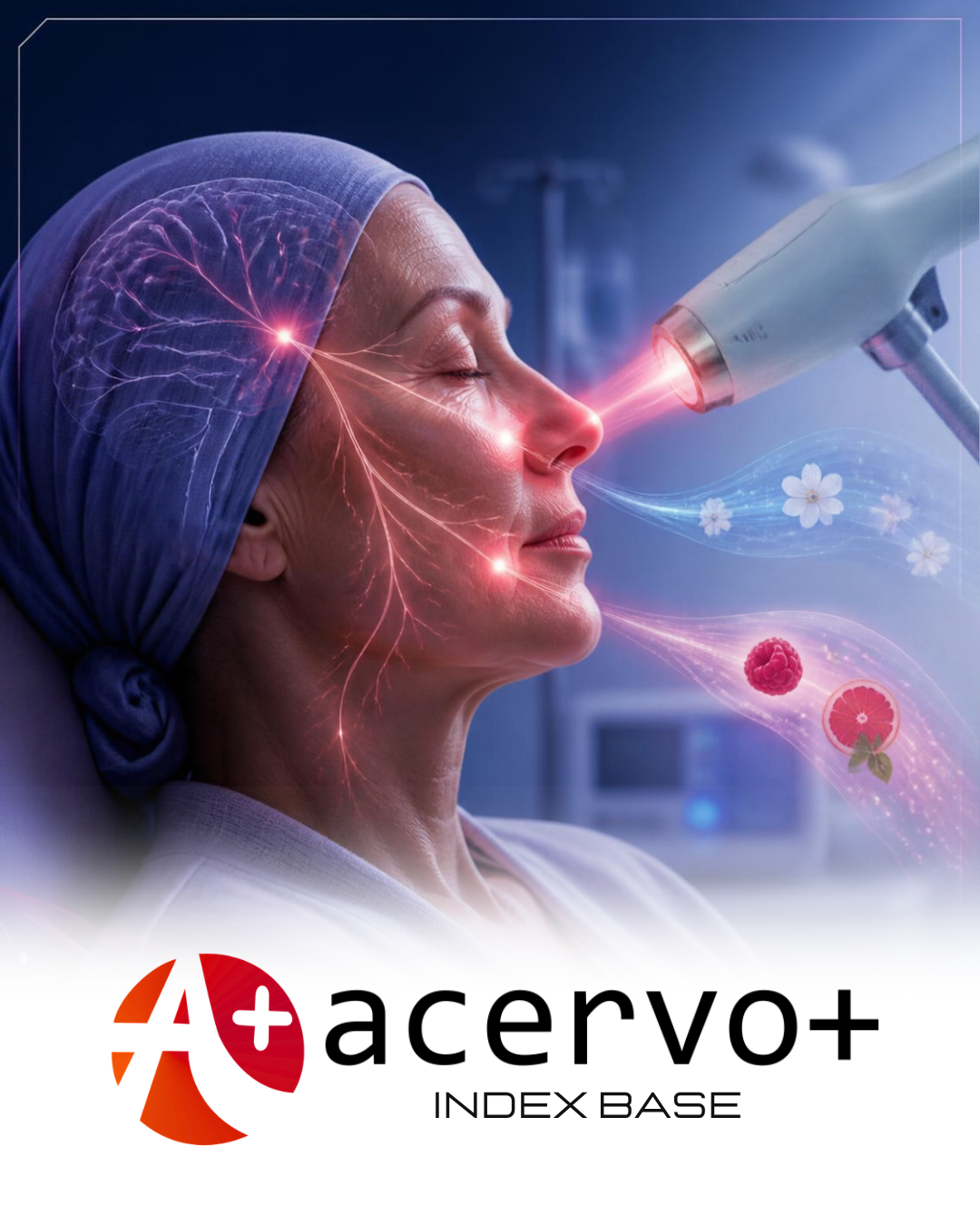
Objetivo: Relatar o manejo de queixas autorreferidas de ageusia e anosmia em paciente oncológico em tratamento quimioterápico, por meio de fotobiomodulação a laser associada a estímulos sensoriais domiciliares. Detalhamento do caso: Paciente masculino, 75 anos, diagnosticado com mieloma múltiplo com depósito amiloide e em quimioterapia, foi encaminhado pelo serviço de Oncologia após queixa de perda progressiva do paladar, relatando posteriormente ausência do olfato. Foram realizadas 15 sessões de fotobiomodulação, duas vezes por semana, utilizando laser infravermelho de 808 nm, potência de 100 mW e área do feixe/spot de 0,03 cm². A abordagem foi associada a exercícios domiciliares com estímulos gustativos e olfatórios. A evolução foi monitorada por Escala Numérica de 0 a 10, antes de cada sessão. Ao longo do acompanhamento, observou-se melhora parcial autorrelatada, com identificação de odores e sabores específicos, oscilação dos sintomas e diferenciação entre doce e salgado ao final do protocolo. Na consulta de retorno, o paciente referiu ganho ponderal de 5 kg e retomada gradual do prazer alimentar. Considerações finais: A abordagem combinada mostrou viabilidade clínica e ausência de intercorrências registradas; entretanto, os resultados não podem ser atribuídos exclusivamente à fotobiomodulação, sendo necessários novos estudos com testes gustativos e olfatórios padronizados.
Referências
BUTTIRON WT, et al. Taste and smell disorders in cancer treatment: results from an integrative rapid systematic review. International Journal of Molecular Sciences, 2023; 24(3): 2538.
CHENG K, et al. Mechanisms and pathways of pain photobiomodulation: a narrative review. The Journal of Pain, 2021; 22(7): 763-777.
DRARENI K, et al. Chemotherapy-induced taste and smell changes influence food perception in cancer patients. Supportive Care in Cancer, 2021; 29(4): 2125-2132.
EL MOBADDER M, NAMMOUR S. Photobiomodulation for taste alteration. Encyclopedia, 2021; 1(1): 240-248.
HAWKINS D, ABRAHAMSE H. Effect of multiple exposures of low-level laser therapy on the cellular responses of wounded human skin fibroblasts. Photomedicine and Laser Surgery, 2006; 24(6): 705-714.
HERNÁNDEZ-BULE ML, et al. Unlocking the power of light on the skin: a comprehensive review on photobiomodulation. International Journal of Molecular Sciences, 2024; 25(8): 4483.
HOSSEINI SF, et al. The brain functional connectivity alterations in traumatic patients with olfactory disorder after low-level laser therapy demonstrated by fMRI. Neuroradiol J. 2023;36(6):716-727.
MAGHFOUR J, et al. Photobiomodulation CME part I: overview and mechanism of action. Journal of the American Academy of Dermatology, 2024; 91(5): 793-802.
MALTA CEN, et al. Photobiomodulation therapy prevents dysgeusia chemotherapy induced in breast cancer women treated with doxorubicin plus cyclophosphamide: a triple-blinded, randomized, placebo-controlled clinical trial. Supportive Care in Cancer, 2022; 30(3): 2569-2580.
MAZZOLENI B, et al. Non-pharmacological strategies to alleviate dysgeusia in patients undergoing chemotherapy: a systematic review. European Journal of Oncology Nursing, 2024; 70: 102569.
OLIVEIRA PC, et al. Efficacy of the adjunctive use of photobiomodulation therapy in olfactory disorders in post-COVID-19 patients: a randomized controlled trial. Brazilian Journal of Otorhinolaryngology, 2025; 91(4): 101583.
ROBIJNS J, et al. Photobiomodulation therapy in management of cancer therapy-induced side effects: WALT position paper 2022. Frontiers in Oncology, 2022; 12:1-26.
RODRIGUES I, et al. Photobiomodulation therapy on chemo- and radiotherapy induced oral conditions: an umbrella review. BMC Oral Health, 2024; 24: 1106.
ROSATI D, et al. Taste and smell alterations (TSAs) in cancer patients. Diseases, 2024; 12(6): 130.
SALES DS, et al. Post-COVID-19 olfactory and gustatory dysfunction: photobiomodulation therapy as a treatment option in a series of cases. The Open Neurology Journal, 2023; 17: e1874205X2309190.
SALES PVA, et al. Mechanisms of photobiomodulation therapy in treating and preventing antineoplastic-induced oral mucositis: a systematic review. Acta Cirúrgica Brasileira, 2025; 40: e403125.
SEVRYUGIN O, et al. Taste and smell disturbances in cancer patients: a scoping review of available treatments. Supportive Care in Cancer, 2021; 29(1): 49-66.
SHABAAN AA, et al. Diode laser in management of loss of taste sensation in patients with post-COVID syndrome: a randomized clinical trial. BMC Oral Health, 2023; 23(1): 263.
SOARES LES, et al. Intranasal photobiomodulation therapy for COVID-19-related olfactory dysfunction: a Brazilian multicenter case series. Photodiagnosis and Photodynamic Therapy, 2021; 36: 102574.
TELLES-ARAUJO GT, et al. Photobiomodulation in the management of persistent olfactory and gustatory dysfunction post-COVID-19: a systematic review. Lasers in Medical Science, 2025; 40: 283.
YADAV N, et al. A subjective assessment of chemotherapy drug-induced taste and smell alteration in non-head and neck cancer patients: a questionnaire-based cross-sectional study. Cureus, 2024; 16(4): e57787.